
Could an All-Powerful God Be Tricking You Right Now?
Augustine’s Unshakeable Question

Augustine of Hippo (354–430) had tried out many philosophies before becoming a Christian. One school that troubled him was skepticism — the view that humans cannot know anything for certain. The skeptic’s goal was epochê, a total suspension of belief, which they believed would bring a calm, untroubled mind. Ancient skeptics used little argumentative tools called tropes: if your senses can be fooled by a dream or a mirage, how can you ever be sure that what you see is real?
Augustine thought that was a dangerous dead end. In his book Against the Academicians, he attacked several skeptical claims. The most important one was this: absolutely nothing can be known. The Academic skeptics said that knowledge required a mental image so clear that nothing else could possibly cause it. Since dreams or illusions could always mimic a true experience, you could never meet that standard. Therefore, nothing could be known.
Augustine fired back with a clever type of statement. He listed disjunctions like “Either there is one world or there is not,” and “Either this world always existed or it began to exist.” These statements cover every possible option — no opposite could ever be true. Could a skeptic confuse one of these with a falsehood? Augustine was certain they could not, even if the whole external world were an illusion.
But the skeptic pushed further: what if the external world itself doesn’t exist? Augustine answered with a move that would echo through the centuries. Even if my senses are lying, he argued, it still seems to me that I’m seeing a world. In fact, to be mistaken at all, something must appear to me. He also pointed to mathematical truths like “2 + 3 = 5” and logical truths like “nothing both is and is not” — these could be known without trusting eyes or ears. Most famously, he realized that doubting itself proves one thing: “Even if he doubts, he lives; if he doubts, he knows that he does not know.” The very act of doubt confirms your own existence.
The Condemnation That Unleashed New Doubts
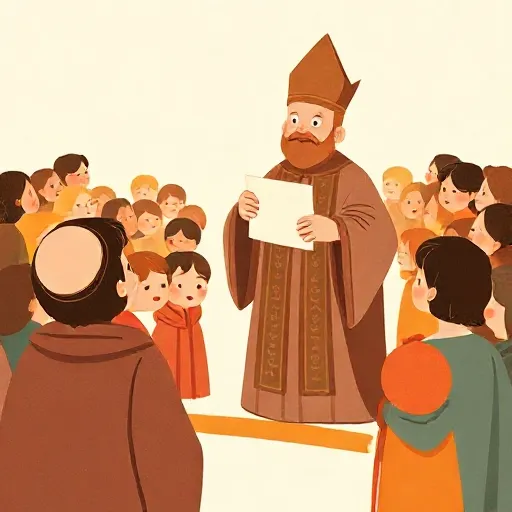
For a while, most medieval thinkers treated Augustine’s refutation as the final word. That changed dramatically after the Condemnation of 1277. At the University of Paris, Bishop Étienne Tempier, with the help of thinkers like Henry of Ghent (ca. 1217–1293), drew up a list of 219 propositions that were declared heretical. Many of those propositions had tried to set limits on what God could do. The Condemnation roared back: God is omnipotent — all-powerful — and no earthly philosopher gets to fence him in.
The unintended side effect was a burst of radical doubt. If God can do absolutely anything (except logical contradictions), couldn’t he make you see a tree where no tree exists? Couldn’t he keep that vision alive long after the tree was destroyed? Could he, in fact, turn your entire life into a perfect, ongoing illusion? The Condemnation forced scholars to face a terrifying possibility: a divine deceiver might be behind every perception you have.
Henry of Ghent, who helped draft the list, tried to reclaim certainty by arguing that God illumines the mind with Divine Ideas — perfect templates in God’s own intellect that allow us to recognize truth. But Henry also warned that God could withdraw this light from anyone he wished, leaving that person in complete error. So certainty depended entirely on God’s free choice. The very effort to save knowledge ended up tying it to a divine whim.
Illusions, Dreams, and the Fiery Circle

A generation later, Peter Auriol (1280–1322) dug deeper into sensory trickery. He introduced a key distinction between intuitive cognition — the vivid awareness of something as present and real, like seeing your friend walk through the door — and abstractive cognition, which is knowledge at a distance, like remembering a past conversation or working out a math proof behind a closed window. The problem was that intuitive cognition, with its strong “as if present” feeling, could happen even when the object wasn’t there. Dreams, hallucinations, after-images, and reflections all felt intuitively real.
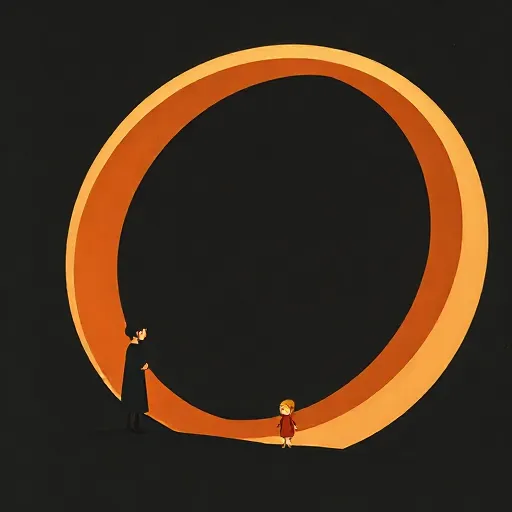
Auriol rattled off a list of illusions: the stick that looks bent in water, the shimmering colors on a pigeon’s neck, the double image of a candle when you squish your eye, the afterglow of the sun burned into your vision. His favorite example was a torch whirled quickly through the dark air. Your eyes see a continuous, glowing ring of fire, but no ring exists. If you can have a powerful experience of a fiery circle that isn’t real, how can you ever tell when an experience matches something outside your mind? Auriol suggested that illusions have only apparent being (esse apparens), not real being outside the mind, but scholars still argue about whether that truly solves the skeptical problem.
William Crathorn (fl. 1330) pushed the nightmare further. God, he said, could preserve that fiery-circle image in your head for a whole year — or create a sensation of color without any physical object having ever existed. You could be wide awake and yet think you might be dreaming. If God is all-powerful, even a stone could be made to think, though not even God could make a stone be a thinker (that’s a logical contradiction).
The Philosopher Who Doubted Everything

Nicholas of Autrecourt (ca. 1300–ca. 1350) took divine-deception skepticism to its logical endpoint, and it got him into serious trouble. In his Letters to his friend Bernard of Arezzo, he argued that if God can cause you to see something that isn’t there, then you cannot be certain of any external thing at all — not trees, not your own hands, not even the past or the existence of other people’s minds. Worse, you can’t be sure “whether anything appears to you,” since God could make you think you’re having an experience when you aren’t.
What could you be certain of? Autrecourt pared knowledge down to almost nothing. The only undeniable truth was the principle of non-contradiction — you cannot have something both be and not be at the same time in the same way — and propositions that flow strictly from it. Beyond that, no inference is ever guaranteed. If you see smoke, you cannot prove there is fire. If you see a person, you cannot prove they have a mind. The only substance you can know with certainty, he concluded, is your own soul.
Autrecourt’s views were condemned by church authorities, and his writings were publicly burned. He was the most radical medieval skeptic, and his punishment shows just how dangerous those ideas felt to his society.
Fighting Back with Induction and Goodness

Not everyone followed Autrecourt into the abyss. John Duns Scotus (1265–1308) argued that God’s ordinary way of creating the world gives us reliable patterns. If a certain herb is hot every time you touch it, and this happens through something that isn’t freely interfering (like a capricious demon), then you can infer a natural cause. Scotus called this the “lowest degree of scientific knowledge,” but it still counts as a form of certainty. He also insisted that when your senses disagree — say, a stick looks bent in water but your intellect knows a soft liquid can’t break a hard object — you can rationally sort out the correct report.
John Buridan (ca. 1295–1361), a Paris master who clashed with Autrecourt, accepted that an omnipotent God could deceive us. Therefore, absolute certainty about the physical world is impossible. But Buridan lowered the bar to what he called conditional evidentness. Given that God is not, in fact, running a constant trick on us, our regular experience holds good. Mathematical certainty isn’t required for everything; in daily life, a reliable pattern is enough. Some even appealed to God’s goodness: a perfectly benevolent being, Crathorn argued, would not systematically fool us. So the divine deceiver remains a logical possibility, but not something we need to fear.
Why This Still Matters

You may not worry about a God-powered illusion, but you face small-scale versions of medieval doubt every day. Optical illusions, manipulated videos, and photo filters show that what seems perfectly real can be a construction. Medieval thinkers hit a wall: if a perfect being could trick you totally, can you ever be 100% certain of anything outside your own mind? Their answers ranged from slimmed-down certainties (self-knowledge, logic) to practical trust in patterns.
Later, René Descartes would famously imagine an “evil demon” causing universal illusion, a direct heir to the divine-deceiver problem. The medieval debate trained philosophers to ask, “What must be true if I can be fooled?” — and it forced them to examine the foundations of knowledge itself. When you double-check a suspicious message or question a viral video, you’re doing your own small version of that work. You don’t need to solve the problem of global doubt to recognize that careful thinking, and a bit of healthy suspicion, can keep you from chasing fiery circles that don’t exist.
Think about it
- If you could be dreaming right now, does it still make sense to trust your senses most of the time? Why or why not?
- Medieval philosophers worried about a perfect God tricking them. If there is no God, could something else (like a supercomputer simulation) be tricking you? Would that change how you live?
- Nicholas of Autrecourt was punished for his extreme doubts. Should a person be punished for thinking something too dangerous, even if it might be true? Where would you draw the line?