
Can You Prove God Exists? David Hume Said You Can’t
A Student, a Professor, and a Dangerous Idea

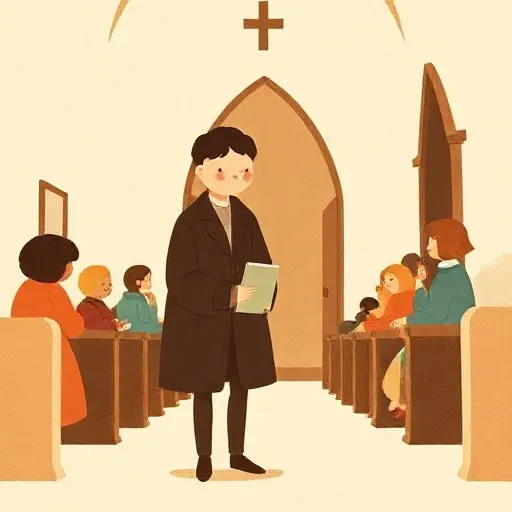
In the 1720s, a young Scottish student named David Hume (1711–1776) sat in the lecture halls of Edinburgh University. His professors were locked in a fierce battle. On one side were religious philosophers like Samuel Clarke (1675–1729), who believed human reason could prove God’s existence with mathematical certainty. On the other side were speculative atheists like Thomas Hobbes (1588–1679), who insisted our minds are too limited to form a clear idea of God. Hume listened and began to ask: What can we actually know?
Hume’s own philosophy started from a simple rule: all our ideas come from impressions — the sights, sounds, feelings, and emotions we directly experience. This is his copy‑principle. An idea of a unicorn is just a mix of impressions of a horse and a horn. So, to have a meaningful idea of God, we must trace it back to some impression.
But what impression could give us a clear idea of an infinite, all‑powerful being? None, Hume suspected. He admired Hobbes’s blunt comparison: a person born blind has no idea of fire except a vague “something that warms.” Likewise, we have no positive idea of God’s infinite qualities. When religious thinkers try to describe God’s nature, they often just enlarge human qualities — but that’s like a blind person imagining fire by making a candle ten times warmer. The result, Hume thought, is a fuzzy, uncertain idea. And if our idea of God is that fuzzy, all grand arguments for God’s existence start on shaky ground.
Can You Trace Everything Back to a First Cause?
One of the most popular proofs was the cosmological argument (or “first cause” argument). Clarke’s version ran like this: Every thing that exists must have a cause. If we trace back the chain of causes, we can’t have an infinite regress with no ultimate cause — that would leave the whole chain unexplained. Therefore, there must be a first cause that exists necessarily, meaning it cannot not exist. That necessary being, Clarke said, is God.
Hume attacked this argument at its root. He denied that it’s logically impossible for something to pop into existence without a cause. Try to picture a new universe appearing out of nowhere — you might object, but you don’t see a flat contradiction, just an unfamiliar idea. Since we can conceive it without contradiction, it’s at least possible. So the demand that everything must have a cause isn’t a logical absolute; it’s just a habit we’ve built from experience.
Even worse, Hume thought the whole idea of “necessary existence” was confused. Take any being you can think of — your best friend, a tree, or even God — and you can imagine it not existing without any logical contradiction. Existence isn’t a special ingredient you add to a thing; it’s just that the thing is there. So saying God necessarily exists adds no clear meaning.
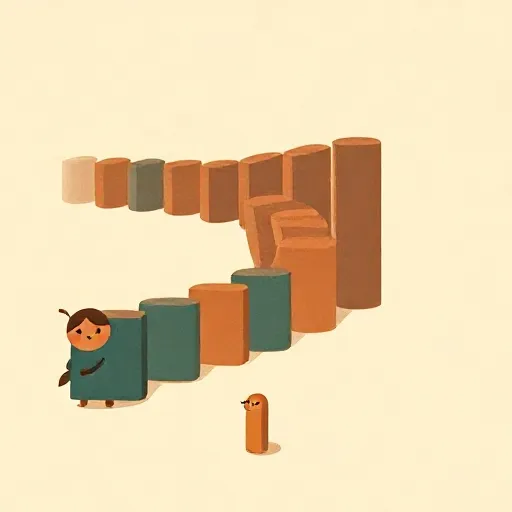
Hume also questioned whether asking for a cause of an infinite chain makes sense. If each domino in an endless line has a cause (the one before it), explaining the whole chain piece by piece is all the explanation you get. Demanding a cause for the whole chain, he said, is like asking what causes a collection of twenty marbles after you’ve already explained why each individual marble is in the box.
The Universe as a Giant Machine

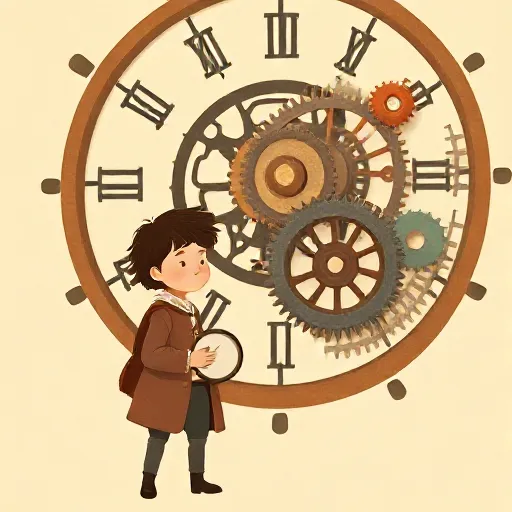
If the cosmological argument was too abstract for ordinary people, the argument from design seemed much more down‑to‑earth. In Hume’s Dialogues Concerning Natural Religion, the character Cleanthes points at the world: Look at the eye, the wing, the planets’ orbits — they all show intricate order, like a watch or a house. When we see a watch, we infer a watchmaker. So when we see the universe, which is even more magnificent, we should infer a divine designer — a mind somewhat similar to human intelligence but greater.
Hume (speaking through the skeptic Philo) wasn’t impressed. First, analogies work well only when the things compared are closely similar. A watch and the whole universe are so vastly different that any inference is weak. We’ve seen many watches being made by human minds, but we have only one partial experience of the universe and zero experience of its cause. Drawing a conclusion from one unique, incomplete effect is like guessing the entire blueprint of a skyscraper after seeing only a single brick.
Moreover, if the universe resembles a machine, what else should we infer? Human minds are always connected to bodies, so why not suppose God has a body? Human builders sometimes work in teams — maybe many gods teamed up? And if the world shows imperfections, we must proportion the cause to the effect: perhaps the creator was an infant deity still learning, or an old one past its prime. Cleanthes’s analogy, Hume argued, leads not to a perfect, infinite God but to a very human‑like one — which most believers would reject.
The deeper trap, Hume noted, was that if believers avoid anthropomorphism and insist God’s nature is utterly mysterious, they land in the same place as skeptics: we know nothing about God except that something caused the world. At that point, the difference between a religious believer and a skeptic is almost just a choice of words.
If God Is All‑Good, Why So Much Pain?

Even if we could accept a designer, a darker puzzle remained. The ancient philosopher Epicurus had already asked: If God is willing to prevent evil but can’t, then he isn’t all‑powerful. If he can but won’t, then he isn’t all‑good. If he is both able and willing, why is there evil? This is the problem of evil.
Hume stacked up example after example of suffering — animals devouring each other, illness, grief, even the fear of death that keeps miserable people alive. Some theists replied that all evil is really necessary for the greater good, like a patch of dark colour in a beautiful painting. But Hume pointed out that you can’t prove every single evil is necessary just by saying it might be. To conclude that God is infinitely good, you need clear evidence from the world, not the mere possibility that somehow things add up.
The world we actually see is a mixture of good and bad, pleasure and pain. From that mixed evidence, we could just as reasonably guess that the first cause is indifferent — neither loving nor cruel — as that it is perfectly good. Nature seems blind to our happiness. Hume’s point was not that God cannot exist, but that the suffering we observe gives us strong reasons not to believe in an all‑good, all‑powerful creator. The amount of evil is simply too much to explain away.
Miracles: Can We Ever Believe a Testimony?

To many Christians, miracles like the resurrection were the bedrock of faith. Hume defined a miracle as a violation of a law of nature, caused by a special act of God. A law of nature is a uniform regularity we’ve observed over and over — for instance, that dead people stay dead. A report of someone rising from the grave contradicts all of our uniform experience.
Hume’s approach was to weigh the evidence for a miracle. On one side, you have the testimony of witnesses. On the other, you have the entire weight of human experience that the law in question holds. A wise person, Hume said, proportions belief to the evidence. For a miracle claim to be believable, the testimony’s falsehood would have to be even more miraculous than the event itself. That’s a nearly impossible standard, because human reporters are often unreliable.
Hume didn’t just rely on the logic of evidence; he also pointed to human psychology. People love wonder and astonishment; religious passion makes us more credulous. Miracle stories, he noted, abound especially among “ignorant and barbarous nations” and spread through repeated telling. Moreover, when different religions report incompatible miracles, they cancel each other out. So, in practice, the testimony for any miracle is never strong enough to outweigh the steady proof of nature’s laws. Hume concluded that no historical miracle has ever met the test of rational credibility.
Why Hume’s Questions Still Echo

Hume never shouted, “God does not exist!” In fact, he sometimes allowed that the cause of the universe might bear some remote, barely noticeable resemblance to human intelligence — like a candle compared to the sun. But such a distant analogy tells us nothing useful. It leaves us in “profound ignorance.” Practically speaking, a God that is completely unknowable and irrelevant to how we live is no different from no God at all.
What Hume really wanted was to pull down the confident rational proof‑building that had been used to defend religious orthodoxy. He wanted to show that the big questions — Why is there a universe? Why do we suffer? What can we expect after death? — cannot be settled by pure reason. In doing so, he hoped to make room for honest doubt, to check dogmatic certainty, and to push people to ground morality not in religion but in human nature and sympathy.
Today, the same arguments Hume attacked are still used in debates between believers and non‑believers. The problem of evil remains deeply troubling. The limits of analogy in the design argument are still debated. And Hume’s razor‑sharp question — “Does your evidence really support your conclusion?” — remains a tool every curious mind can use, whether in a science lab or a philosophy class. The Scottish student who once listened to grand lecture‑hall proofs would be pleased: his questions are still making us think.
Think about it
- If a friend tells you they witnessed a miracle, what kind of evidence would you need before you believed them?
- Could we ever know that every evil in the world is truly necessary for some greater good? Why or why not?
- Is it better to admit we don’t know the answer to the biggest questions, or to hold a belief for which we have no proof? Why?