
Can You Prove God Exists? The Centuries-Old Argument
The Invisible Gardener: A Story That Shook the Debate

In 1955 the British philosopher Antony Flew (1923–2010) told a strange story. Two explorers come across a clearing in the jungle. Flowers grow in neat rows. “A gardener must tend this place,” says the first explorer. The second points out they see no gardener, hear no footsteps, and smell nothing but damp earth. The first replies, “But the gardener is invisible, makes no sound, and has no scent. You cannot detect him at all.” At that point the second explorer asks, “Then what is left of your claim? How is an undetectable gardener any different from no gardener at all?”
Flew used this tale to challenge religious belief. He was part of a movement called logical positivism. Logical positivists insisted that a statement is meaningful only if you can check it through sensory experience—or if it is a mathematical or logical truth. Anything else, they said, is literally nonsense. A.J. Ayer (1910–1989) brought these ideas to Britain in his book Language, Truth, and Logic. He argued that claims about a God you cannot see or measure have no factual meaning. Saying “God exists” and saying “God does not exist” were, in his view, both equally meaningless noises.
The logical positivist attack caused an earthquake. But cracks soon appeared. Critics pointed out that the positivist’s own rule—“a claim is meaningful only if it is verifiable by the senses”—is not itself verifiable by the senses. It was a recommendation, not a discovery. Others argued that we believe many meaningful things that are not directly checkable, like the mental states of other people or that the cosmos had a beginning. By the 1960s most philosophers had abandoned strict positivism. Yet the gardener story stayed alive. It sharpened a deeper question: if we cannot see, hear, or measure God, can it still be reasonable to believe?
The Case for God: Big Bangs, Design, and Dominoes
Once you accept that religious statements can be meaningful, the next question is whether they are true. Many philosophers adopt evidentialism: the view that you should believe only what your total evidence supports. Richard Swinburne (1934–) is a leading evidentialist. Over decades he has built a cumulative case for theism using arguments that look at the world around us.
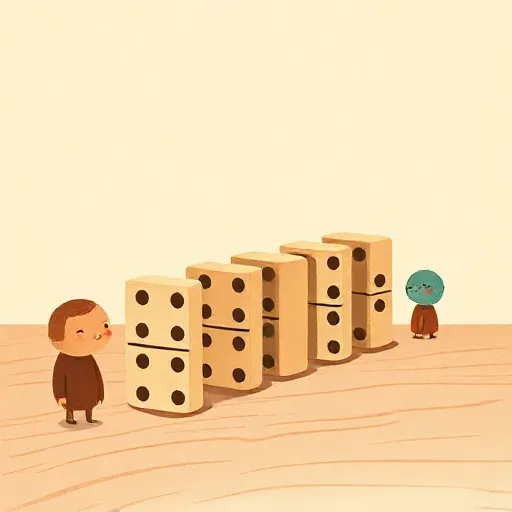
One of the oldest is the cosmological argument. It asks: why is there a universe at all? Every event has a cause, and those causes have further causes. But a chain of causes stretching back forever would never really explain why anything exists. So, the argument goes, there must be a First Cause—a powerful being that is not itself caused by anything. Think of dominoes falling. If each domino knocks over the next, you eventually need a first domino that was tipped by no other domino.
Another key argument is teleological, from the Greek telos, meaning purpose or design. When we see a watch, we infer a watchmaker. The universe, theists point out, appears exquisitely fine-tuned for life. If the expansion speed of the early cosmos had been different by less than one part in a billion, stars never would have formed. If the ratio of gravity to electromagnetism were slightly altered, organic life would be impossible. For Swinburne and others, the simplest explanation for this order is a mind—a designer.
These arguments do not claim to be proof. They suggest that a world with God makes more sense of the evidence than a world without one. But the evidence cuts in more than one direction.
Why Isn’t God More Obvious? The Hiddenness Problem

If God exists and is loving, many philosophers argue, God would want a personal relationship with every person. That relationship would be the greatest possible good. So we should expect God to be clearly available to anyone who sincerely seeks. Yet many thoughtful people search and find only silence. J.L. Schellenberg (1959–) calls this the argument from divine hiddenness. He claims the absence of such experience is strong evidence that no loving God exists.
This is not just “we haven’t found God yet.” Schellenberg argues that a truly loving parent would not hide forever from a child who desperately wants to know them. If God is perfectly good, the hiddenness cries out for explanation. Theists reply that maybe God’s noticeable presence would overwhelm our freedom. If you are certain a powerful judge is watching, you might act morally out of fear rather than genuine goodness. Or perhaps the very struggle of faith builds virtues that a visible God would erase. The debate remains wide open.
The Problem of Evil: The Toughest Challenge
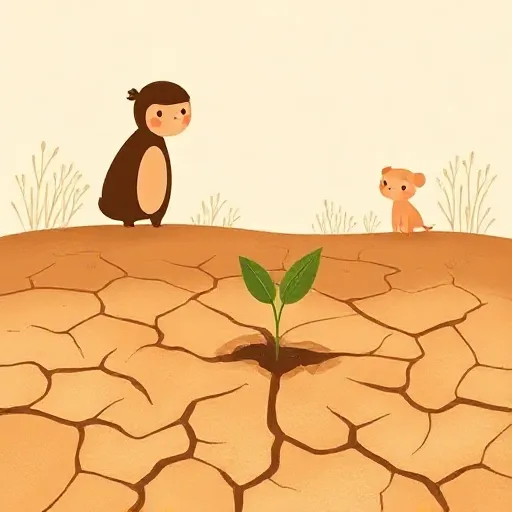
No argument against God has more emotional weight than the problem of evil. The logical version is stark: if God is all-powerful and all-good, evil should not exist. Yet children suffer. Animals die in forest fires. Innocent people are victims of cruelty. Many philosophers concede that some evil might be necessary for a greater good—like the pain of surgery that saves a life—but they ask whether the amount of evil in the world makes God improbable.
Theists offer defenses. The free will defense says that a world with genuinely free creatures who can love and choose is so valuable that even the evil those creatures cause does not rule out a good Creator. A broader greater good defense claims that courage, compassion, and forgiveness are goods that can only exist in a world that contains real suffering. Some defend skeptical theism: if a great mind had reasons to permit evil, we limited humans might simply be unable to grasp them, just as a dog cannot understand a trip to the vet.
The objection that sticks: even if some suffering has a purpose, the sheer amount of apparently pointless agony seems hard to square with a loving God. Philosophers on both sides treat this as a deep, unsolved tension.
Plantinga’s Unusual Idea: You Might Just Know
What if the whole project of gathering evidence misses the point? That is the position of reformed epistemology, championed by Alvin Plantinga (1932–). Plantinga draws on the theologian John Calvin (1509–1564), who taught that humans are born with a sensus divinitatis—a sense of the divine. Just as you reasonably believe you are reading words right now without first checking a scientific paper on vision, you might reasonably believe in God without constructing a logical argument. The belief is properly basic, like trusting your memory or your senses.
Plantinga does not claim to prove God exists. He argues instead that if God exists and made us with this sense, then belief in God can be warranted even in the absence of presented evidence. It is a defensive strategy: religious belief is not irrational just because it lacks a chain of arguments. Critics counter that we have a shared way to test faulty eyesight, but no shared way to test whether a feeling really comes from God or from imagination.
Living Without a Knockdown Proof

In the end, no single argument satisfies everyone. That might bother someone who wants philosophy to settle the God question once and for all. But life rarely offers knockout proofs about the things that matter most. We trust friends, fall in love, and commit to careers without mathematical certainty. The French thinker Blaise Pascal (1623–1662) famously proposed a wager: if you live as if God exists and you are wrong, you lose little; if you live as if God does not exist and you are wrong, you lose everything. So betting on God is the safer choice. Critics say you cannot simply decide to believe something; genuine belief is not a light switch.
Other philosophers take a different route entirely. Inspired by Ludwig Wittgenstein (1889–1951), thinkers like D.Z. Phillips (1934–2006) argued that religious language is not about describing invisible facts. When believers say “God exists,” they are not making a scientific claim. They express a commitment to a way of life—to praying, forgiving, and hoping. On this view, the hunt for evidence misses what religion actually is. It is less like checking a weather report and more like learning to play a piece of music that gives your life shape.
So here we are, in the jungle clearing. One explorer sees neat rows and believes in a gardener. The other sees only weeds and empty air. They aren’t fighting about a single missing fact. They are fighting about what counts as good reason, about what a meaningful life looks like, and about whether it is wise to trust what remains invisible. That argument has been running for centuries, and it will be yours to join.
Think about it
- If you had to decide whether an invisible gardener was real, what kind of evidence would you accept? At what point would you say, “That’s enough”?
- Imagine a world with no suffering at all. Would it be easier or harder to believe in a good God? Why?
- Can you treat something as true in your daily life—like trusting a friend’s loyalty—even if you do not have airtight proof? Is religious faith similar?