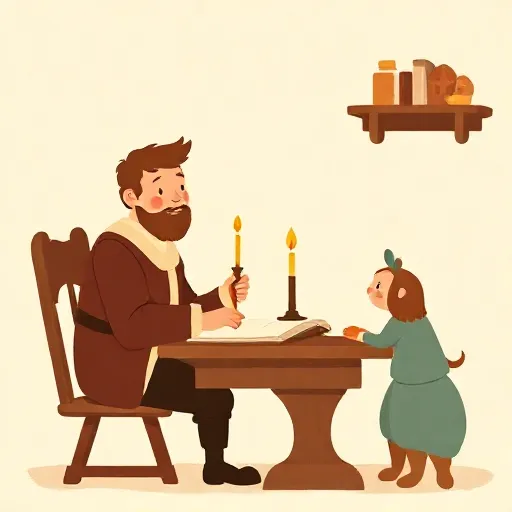
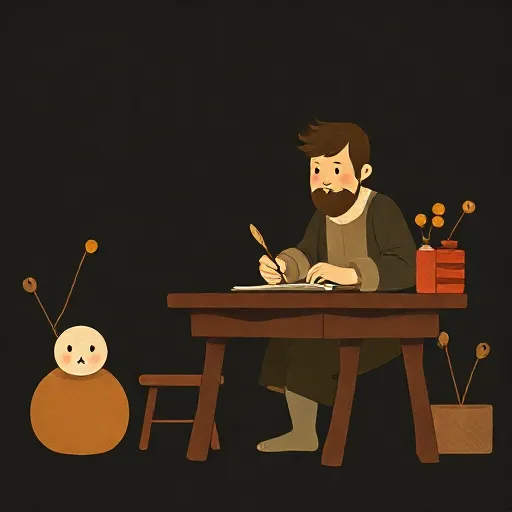
Is There Something You Can Never Be Wrong About?
The Demon That Could Fool You About Everything
Imagine a whisper in your mind that can twist every thought you have. It could make you believe you are sitting in a room full of books, when in fact you are floating in empty space. It could convince you that 2+2=5, that your own hands don’t exist, that the sun won’t rise tomorrow. You would never catch on — because the demon would control even your checking and your doubts.
That’s the wild thought experiment René Descartes (1596–1650) put in the reader’s head in 1641. He wasn’t claiming there really was such a demon. He was trying to find something, just one thing, that he could know with absolute certainty. So he decided to tear down all his beliefs as if the demon existed. If even a tiny doubt was possible, he threw the belief away — at least for the moment. His aim was to find bedrock: a truth so firm that no demon, no dream, and no mistake could topple it.
That search gave birth to one of the most famous sentences in philosophy: “I am thinking, therefore I exist” (the cogito, Latin for “I think”). Even if a demon made you doubt everything, you’d still have to exist to be deceived. The very act of thinking proved your existence, at least for that instant. Descartes thought he had found his first indubitable truth — a belief you simply cannot doubt.
But philosophers have been wrestling with what it really means for a belief to be certain ever since. Is there truly a belief you could never be wrong about — and if there is, what makes it so?
Kinds of Certainty: What Your Gut Feels vs. What Your Mind Knows
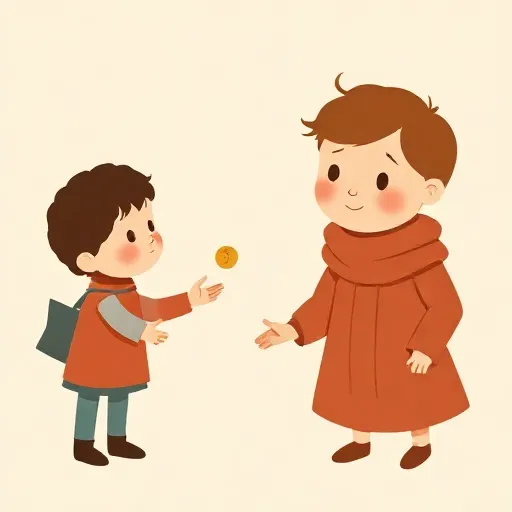
Not all certainty is the same. You might feel 100% sure that your team will win the championship — but that’s just a strong feeling. Philosophers distinguish between at least two flavors.
Psychological certainty is the gripping feeling of total confidence. It’s when you’d bet your life savings on something, even if you’re wrong. For instance, someone might be psychologically certain that a magic trick is real: they just can’t shake the illusion.
Epistemic certainty is different. It’s the highest possible status a belief can have from the standpoint of knowledge — it means your belief is not just strong, but perfectly backed by evidence or reasons. Imagine a detective who has video proof, fingerprints, and a confession: their belief about who did it might be epistemically certain. But even here, surprises can lurk: the video might be faked. Epistemic certainty is a tough prize.
The two don’t always go together. You can feel totally sure about a belief that is actually flimsy (psychological but not epistemic), or you might have incredible evidence and still not feel fully confident because you’re cautious. Descartes was after epistemic certainty — the real deal, not just the feeling.
The Dream of an Unshakeable Belief
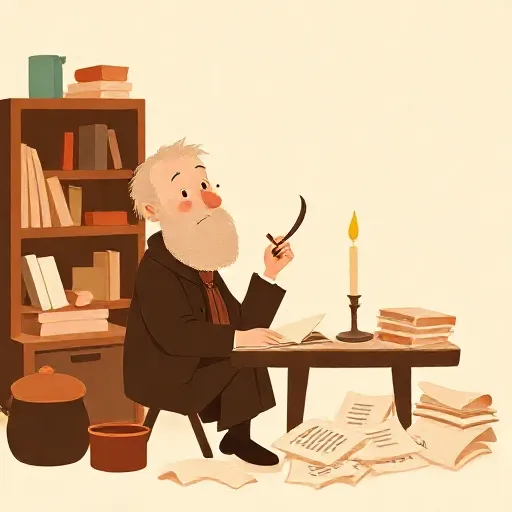
Many philosophers have thought that certainty is a belief you simply cannot doubt. They call this view indubitability. If a belief is indubitable, even the most powerful trickster or cleverest argument can’t make you question it. Descartes’s cogito seemed to fit: try to doubt your own existence, and you’re still there doubting.
Centuries later, Ludwig Wittgenstein (1889–1951) pointed to everyday beliefs that work like hinges on a door. You can’t open a door without hinges, and you can’t play the game of doubting without some fixed points. He said, “If you tried to doubt everything you would not get as far as doubting anything.” For example, you probably can’t genuinely doubt that the Earth has existed for more than five minutes. These hinge propositions are so deep in our thinking that we feel unable to pull them out.
But here’s the puzzle. Suppose you can’t bring yourself to doubt a belief. Is that because you have good reasons for it — or just because your brain won’t let you? If it’s only your brain’s grip (like a mother who can’t stop believing her son is innocent even when the evidence is overwhelming), then the certainty is merely psychological, not epistemic. If you do have rock-solid reasons, then those reasons, not the fact that you can’t doubt it, are what makes the belief certain. So indubitability might be a symptom of certainty, not the thing itself.
Worse, some beliefs we take as absolutely certain can still be reasonably doubted. Descartes himself later worried that, without knowing a good God exists, maybe his clear thinking wasn’t reliable after all. That means even the cogito could be called into question later. Indubitability, it turns out, is slippery.
The Search for a Belief That Couldn’t Be Wrong
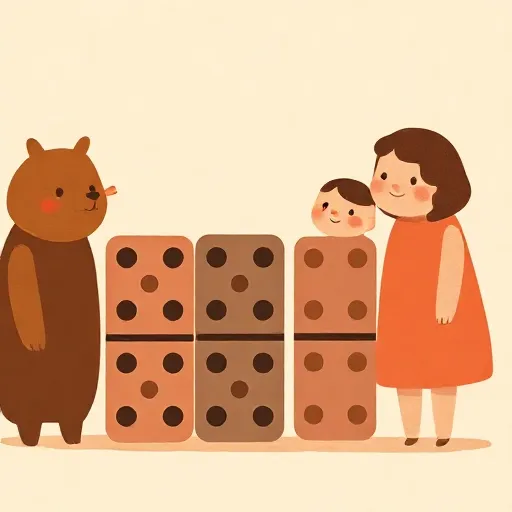
Another powerful idea is infallibility. A belief is infallible if it cannot be false. In the strongest sense, being certain means it’s impossible for you to be wrong. This sounds perfect: if a belief is guaranteed true, then it’s certain.
But this runs into trouble. First, plenty of beliefs we think are certain — like “I exist” — aren’t impossible to be false. You might not have existed; it’s possible that your parents never met. So if certainty requires impossibility across all possible worlds, we’d lose even the cogito. Perhaps we can say the guarantee comes from your grounds for the belief. But then the grounds themselves must provide a perfect guarantee, leading to a regress: you’d need a certainty to support a certainty to support a certainty, and so on forever.
There’s a second snag. Some truths are necessary (true in every possible world), like “2+2=4.” According to the infallibility model, any belief in a necessary truth would automatically be certain — even if you believe it for a silly reason, like a cartoon character told you. That seems wrong. If you guess the answer to a math problem and accidentally hit on a necessary truth, you aren’t certain; you just got lucky. So infallibility needs a way to include the quality of your evidence, not just whether the statement could be false.
Philosophers have tried using probability: you’re certain when your evidence gives the belief a probability of exactly 1. But then your evidence itself must be certain, and we’re back to the regress. Some have even suggested that maybe some basic beliefs have an “intrinsic probability” of 1, like a starter domino. But it’s hard to see how that could work.
All this leaves infallibility looking like a beautiful but cracked picture. Can any belief ever really be guaranteed against all possible error? Most philosophers today are skeptical.
Descartes’ Big Puzzle: Certainty for a Moment vs. Certainty That Lasts
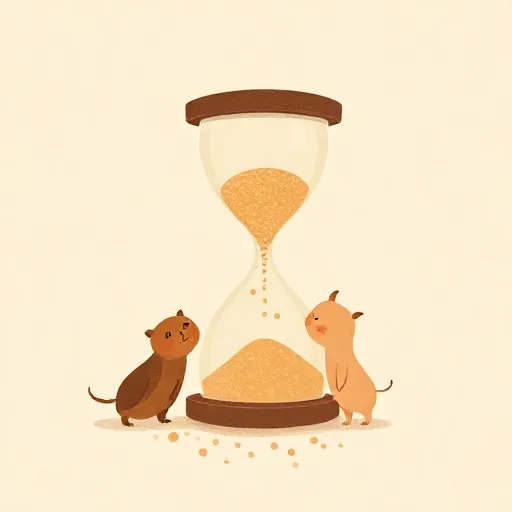
Even if you manage to be certain right now, can you keep that certainty? Descartes saw a deep problem. He imagined an atheist mathematician who understands a simple truth, like that the angles of a triangle add up to 180 degrees. While she’s focusing on it, she has a clear and distinct perception — a kind of mental spotlight that leaves no room for doubt. Descartes called that state cognitio, a form of knowledge that is certain at that moment.
But the moment her attention wanders, doubt can creep back. Without knowing that her mind was built by a truthful God, she can’t be sure that her clear perceptions were reliable when she wasn’t looking at them. To have lasting, bulletproof certainty — scientia — she’d need to know that God exists and wouldn’t let her be deceived even when she’s not paying attention. Only then could she build a whole system of secure knowledge.
This distinction between momentary and lasting certainty sparked the famous Cartesian Circle objection. Descartes seemed to need clear perception to prove God’s existence, yet also needed God to guarantee that clear perception is trustworthy. Critics said he was chasing his own tail. Descartes responded that you can use a faculty while you’re clearly focusing on it, without yet knowing it’s generally reliable. Think of riding a bike: you don’t need to know the physics to balance; you just do it. Likewise, the meditator can use clear rational steps to reach God, and only later reflect on why those steps were safe.
Still, the dream of scientia — absolute, permanent certainty — looks out of reach for humans. We might snatch moments of clarity, but the doubts return. So even Descartes ended up with a more modest kind of certainty, one that can live alongside occasional uncertainty.
Why We Still Chase Certainty (Even if We’ll Never Catch It)

You’ve probably felt the itch. You want to know that your memory of yesterday is accurate. You’d like to be sure your friend didn’t sneak a bite of your cake. As you grow, you’ll face bigger questions: Can I trust my own judgment? Can I be certain that a news story is true? The search for an unshakeable starting point isn’t only for 17th-century philosophers.
Some thinkers today argue that certainty is the rule for speaking and acting. You shouldn’t say the bus comes at three unless you’re certain, the idea goes. You shouldn’t bank on a belief unless it’s certain. But others point out that if certainty is so rare, we’d almost never be allowed to talk or plan at all. So they suggest that “certain” can mean different things in different contexts — in casual chat, the bar is lower; in a courtroom, it’s higher. This is called contextualism about certainty.
Still, when the stakes are high, we still hunger for the real thing. We want to know that our doctors, our bridges, our planes are not just probably safe. Descartes’s ambition — to build knowledge on a rock rather than sand — hasn’t vanished. It’s why science double-checks its results, why mathematics demands proofs, why you might stay up late second-guessing a decision.
Absolute certainty may be impossible for most of our beliefs. But the chase has given us sharper tools for thinking about evidence, reasons, and doubt. And every time you ask, “How do I really know that?” you’re stepping into the same river Descartes waded into. The current is strong, but the swim is worth it.
Think about it
- If a machine could predict every move you’ll make tomorrow with 100% accuracy, would you still feel you have freedom? Or would you be certain of your choices in a different way?
- Think of a belief you feel absolutely sure about (like “the sun will rise tomorrow”). What’s the best reason you have for it? What would make you change your mind?
- If absolute certainty is impossible, should we ever act as if we’re 100% sure? Or is it better to always say “probably”?