Are You a Brain in a Vat? The Philosopher Who Said You Can’t Be
One Evening by the Fire

It’s 1641. The philosopher René Descartes (1596–1650) is sitting by the fire, holding a piece of paper. The flames feel warm. The paper feels solid. But then he thinks: could I be dreaming right now? In a dream, you can also feel fire and paper, and you don’t realize you’re dreaming while it happens. So how can Descartes know that he’s actually awake?
That question launches a problem that still won’t go away. If you can’t be sure you’re not dreaming, then maybe you don’t really know anything about the world around you — not that you’re holding a phone, not that the sky is blue, not even that you have hands. That might sound extreme, but the logic is simple. And it doesn’t stop with dreams.
From Dreams to Brains in Vats
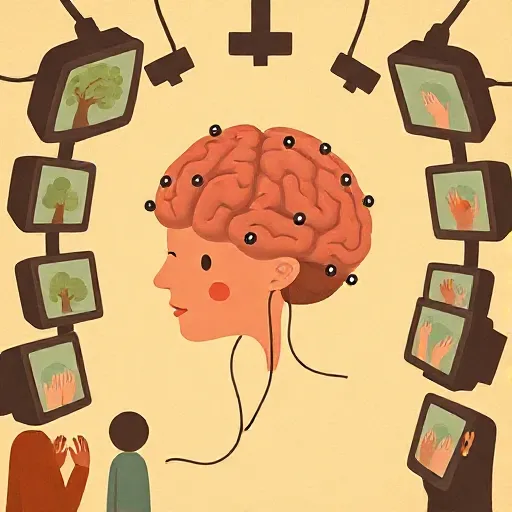
Descartes imagined an even stronger version of the dream worry: an evil demon that uses magic to make you hallucinate your entire life. That demon scenario is now updated to something that feels more technological: the brain in a vat.
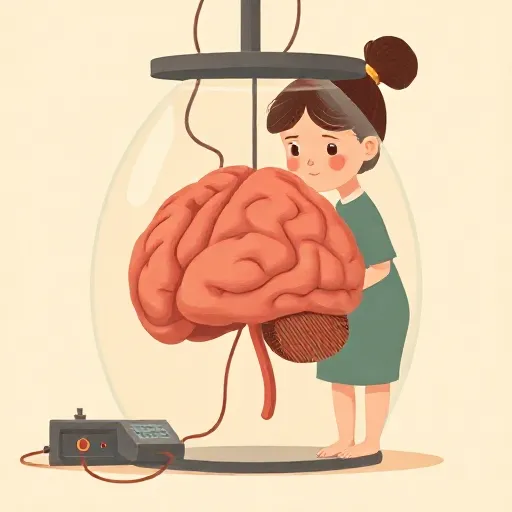
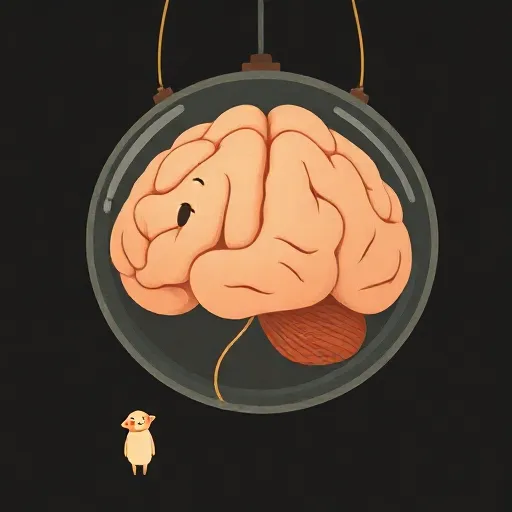
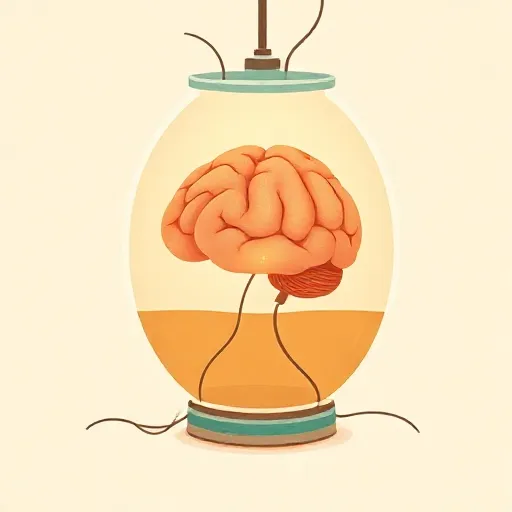
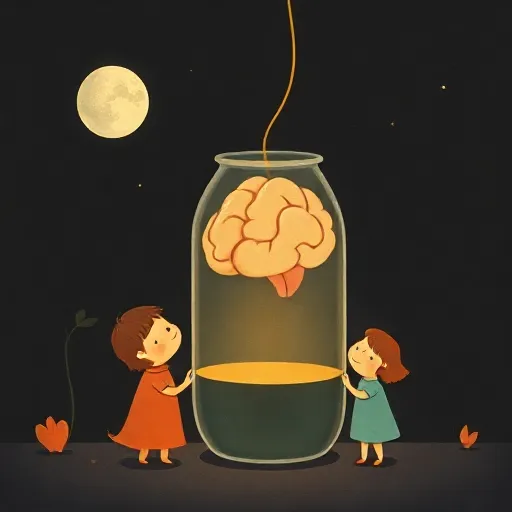
Picture this. A scientist removes your brain and keeps it alive in a jar of nutrients. A supercomputer feeds signals into your brain exactly like the signals a body normally sends — touch, sight, sound. You think you’re walking through a park, but your brain is just floating in liquid, getting electrical impulses. The computer simulation is so perfect that every experience you have feels completely real.
That’s a skeptical hypothesis: a story where everything seems the same to you, but your beliefs about the world are all wrong. If you can’t tell whether you’re a brain in a vat, then (the argument goes) you don’t know that you have hands, or that trees exist, or even that you’re reading this right now. And that seems like a catastrophe for knowledge.
A Strange Twist: Words Aren’t Just in Your Head
In the late twentieth century, philosophers like Hilary Putnam (1926–2016) noticed something about how words get their meaning. The idea is called content externalism: what your words and thoughts are about isn’t fixed just by what’s inside your skull. It also depends on what you’ve actually interacted with in the world.
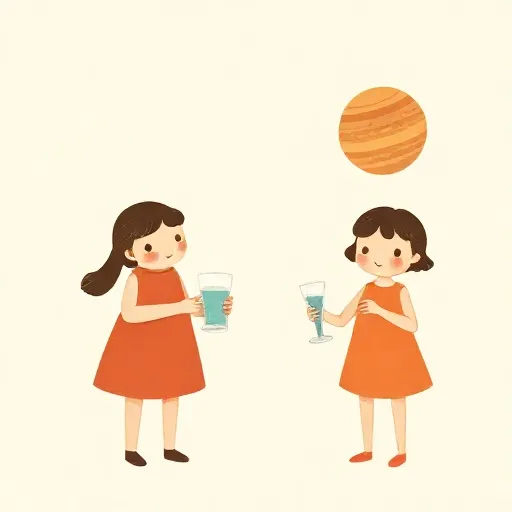
Imagine a planet called Twin Earth. It’s exactly like Earth except the clear liquid that fills its lakes and comes out of its taps is not H₂O but a different chemical, XYZ. On Earth, a girl named Maya points to a glass and says, “That’s water.” On Twin Earth, her exact duplicate — same brain, same feelings — points to a glass and says the same words. But on Twin Earth, the word “water” picks out XYZ, not H₂O, because that’s the stuff the speakers have always been around. Even if neither Maya knows any chemistry, their words mean different things.
The same goes for thoughts. If Maya thinks, Water is wet, the content of her thought depends on which substance she’s connected to. And that has a wild consequence: if you’ve never had any contact with real brains, vats, or computers, your words and thoughts can’t be about them.
The Thought That Defeats Itself
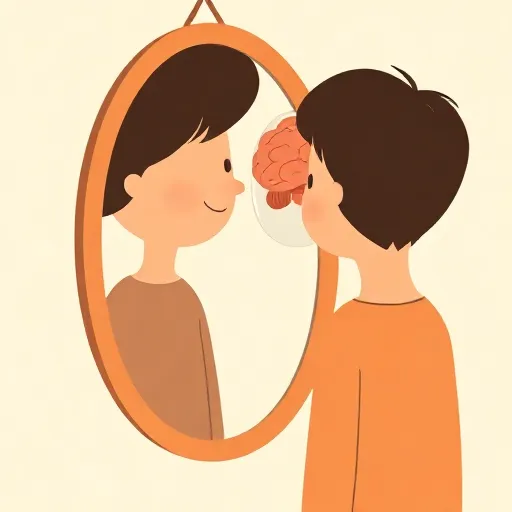
Putnam took that insight and aimed it at the brain-in-a-vat hypothesis. He called the idea self-refuting — a thought that, if you try to think it, undermines itself.
Here’s why. A brain in a vat has never touched a brain, a vat, or a computer. All it has ever “experienced” are the electrical signals that the computer sends. According to content externalism, the words such a brain uses can only refer to things in its own stream of signals — what Putnam described as brains in the image, vats in the image, or patterns in the computer program. So when a brain in a vat thinks the sentence “I am a brain in a vat,” it isn’t actually thinking about real brains and vats. It’s thinking something like I am a brain-in-the-image in a vat-in-the-image. And that thought is false — because the hypothesis says it’s a real brain in a real vat, not an image.
So the statement “I am a brain in a vat” always comes out false. If you’re a normal person, it’s false because you have a body. If you’re a brain in a vat, the words don’t express the thought you think they do, and that thought is also false. Either way, you can’t truthfully say you’re a brain in a vat. The scary possibility seems to erase itself.
A Puzzle About Words and Knowing

But not everyone is convinced. The argument depends on a simple-looking step: you assume your word “brain” really does refer to brains. That’s an instance of disquotation — the idea that we can say “my word ‘brain’ refers to brains” just by using the word itself. After all, you don’t need a dictionary to explain what your own words mean when you’re speaking your own language.
The trouble is, if you’re trying to figure out whether you might be a brain in a vat, you can’t just assume you’re speaking the language you think you are. If you’re a brain in a vat, you’re actually speaking Vat-English, a language where “brain” picks out brain-in-the-image, not real brains. And if you don’t know which world you’re in, how can you be sure that your word “brain” refers to brains?
Some philosophers reply that this objection asks too much. When you reason, you’re already inside your own language — you don’t have to step outside it to use it. But the puzzle remains: you seem to need some independent way to check that your words are about the real world, and that’s exactly what the skeptic says you can’t do. So Putnam’s argument might not be a complete knockout. It does, however, force the skeptic to think differently: the most extreme nightmare scenario might not even be thinkable in the way we imagine.
Why It Still Matters: Simulating Reality
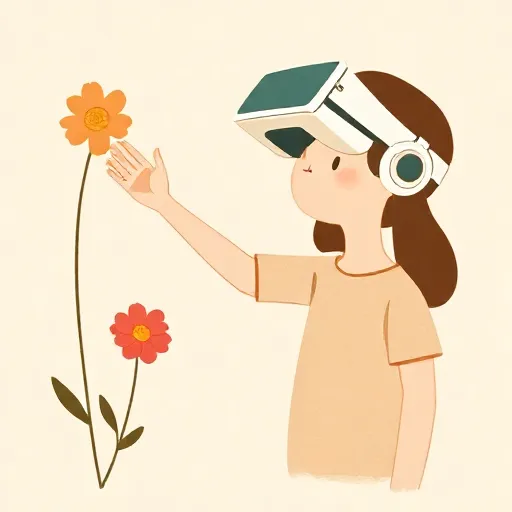
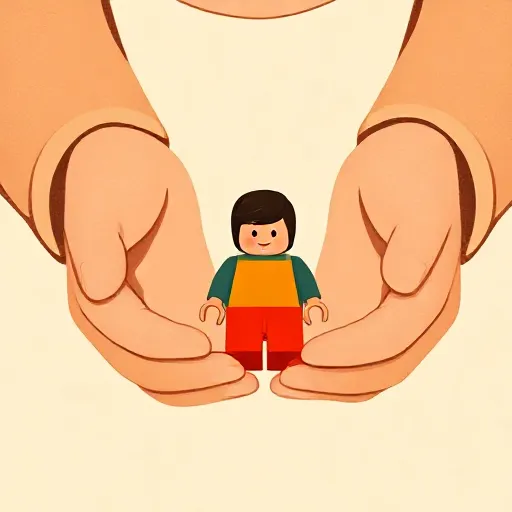
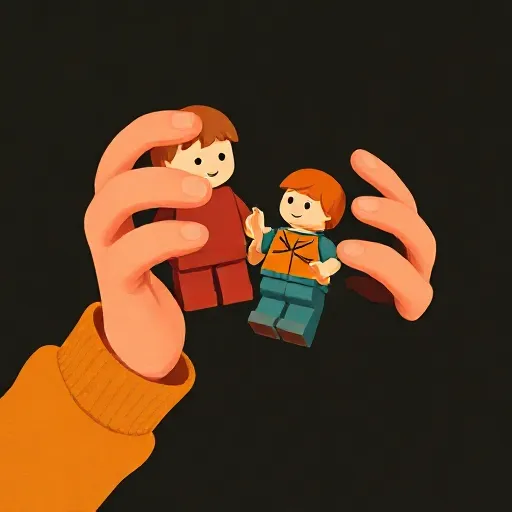
Today you don’t need a brain in a vat to wonder about fake realities. Virtual reality headsets can already fool your eyes and ears. Scientists debate whether we might ourselves be living in a computer simulation. The tools are new, but the question is old: how do you know the world is real?
Putnam’s argument doesn’t prove that you’re definitely not in a simulation. But it does suggest that some global doubts — the kind that try to wipe away everything — might contain a kind of logical glitch. If the very thought “I am a brain in a vat” can’t be true no matter what world you’re in, then that particular skeptical worry isn’t as threatening as it first appeared.
Philosophy rarely gives final answers. Instead it teaches you to notice when an idea turns back on itself. The next time you feel unsure whether anything is real, you can ask: could I even form that thought if it were true? Just asking the question carefully is already doing what philosophers do.
Think about it
- If you were a character in a video game and you said “I’m in a video game,” would your statement be true? What would you need to know to decide?
- Suppose you can’t prove that other people aren’t highly realistic robots. Does that stop you from treating them as friends? Why or why not?
- Imagine we really are living in a simulation, but all our experiences feel exactly the same as before. Would anything important change? Why might that matter — or not matter — to you?