
How Do You Know You Aren’t Dreaming Right Now?
When a Dream Feels Real

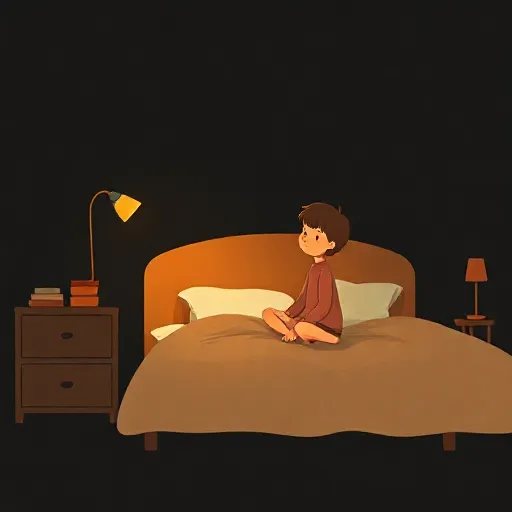
You wake in the dark and look at your hands. They feel solid. The blanket is soft. But then a thought sneaks in: I’ve had dreams where everything felt just as real. How do I know I’m not still dreaming right now?
Most of us would say we know ordinary facts — that the sun will rise tomorrow, that our hands are real. That is normal. Yet some philosophers argue we don’t truly know any of those things. They call this philosophical skepticism. It is not like ordinary skepticism, where you happily admit you don’t know how many stars are in the sky. Philosophical skepticism says you don’t even know the things you were sure you knew: that this chair is solid, that you ate breakfast, that your best friend’s name is what you think it is.
To get there, skeptics ask what it takes to know something. Nearly everyone agrees that knowing requires justification — you need good reasons for your belief, not just a lucky guess. If you guess that a flipped coin will land heads and it does, you had a true belief but no knowledge, because you weren’t justified. Belief, justification, and truth are the usual ingredients for knowledge.
But justification isn’t an all‑or‑nothing switch. Think about the Milky Way’s number of stars: you might not believe one way or the other. You could simply suspend judgment — neither believe nor disbelieve, just wait. Suspending judgment is itself a genuine attitude, and sometimes that’s the smartest move. Philosophical skepticism says that, for huge swaths of what we claim to know, suspending judgment is the only justified attitude.
The Evil Genius Who Might Be Tricking You
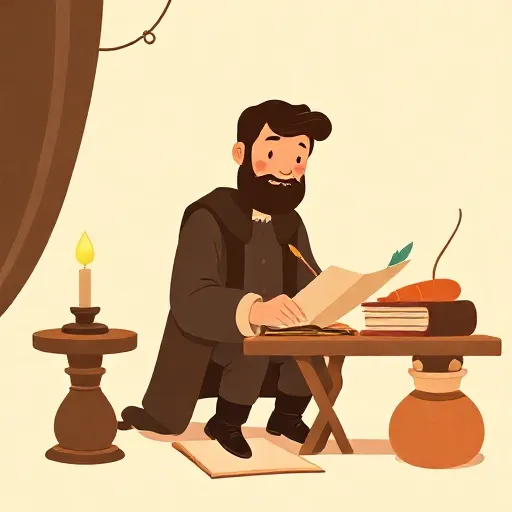
In the mid‑1600s, René Descartes (1596–1650) pushed doubt to the limit. He imagined an evil demon — a being so powerful it could feed him fake experiences of hands, sky, sounds, everything. If such a demon existed, Descartes would have the same vivid experiences he had now, but all of them would be illusions. Could he prove he wasn’t being fooled? He thought not, unless he could first find a foundation that was absolutely certain.
This is the seed of Cartesian skepticism about the external world. A Cartesian skeptic says that, for any claim about the world outside your own mind, the only justified attitude is to suspend judgment — but you should believe that you should suspend judgment. In other words, Cartesian skeptics are not skeptical about their skeptical rule itself.
An even more radical view, named after the ancient Greek skeptic Pyrrho of Elis (c. 365–c. 275 BCE), is Pyrrhonian skepticism. A Pyrrhonian skeptic suspends judgment on all propositions — including the claim that you should suspend judgment. They don’t even assert that nothing can be known; they just keep withholding. Many philosophers find Pyrrhonism more a fascinating puzzle than a serious way to live, but the arguments that support it are so tough that they force every theory of knowledge to show its cards.
For the Cartesian skeptic, the standard move uses a skeptical hypothesis — a story in which everything seems exactly the same as now, but your beliefs about the world are false. Descartes’s demon is one. A modern version imagines you are a brain in a vat, fed computer‑generated experiences. The core argument goes like this, using a simple hand belief, made famous by G. E. Moore’s “here’s a hand.”
- If I am justified in believing I have hands, then I am justified in believing I am not being deceived by a demon (or I am not a brain in a vat).
- I am not justified in believing I am not being deceived in that way.
So, I am not justified in believing I have hands.
Premise 1 relies on a closure principle: if you are justified in believing one thing, and that thing logically entails a second, you are justified in believing the second too. If I’m justified in believing “this is a hand”, and “this is a hand” entails “this is not a clever hologram produced by a demon”, then closure says I’m also justified in denying the demon. Premise 2 says that, in fact, we can’t justify the denial of such a huge skeptical scenario — because all our evidence (what we see, hear, touch) would be exactly the same in the fake world.
If both premises stand, you lose your knowledge of hands, chairs, and the sun. The only escape is to deny at least one of them — or to argue the reasoning is invalid.
Why a Zebra Isn’t a Disguised Mule

Many philosophers attack Premise 1 by trying to punch holes in the closure principle. The late philosopher Fred Dretske (1932–2013) gave a famous example. You take your child to the zoo, see a striped animal in a pen marked “Zebras,” and believe it’s a zebra. Surely you’re justified. The proposition “that animal is a zebra” entails “that animal is not a mule painted to look like a zebra.” But, Dretske argued, your evidence — the stripes, the sign — has been “neutralized” for the painted‑mule claim. The same evidence that justifies your zebra belief doesn’t automatically give you a reason to rule out a clever fake. So closure fails: you can be justified in believing the first without being justified in believing the second.
Not everyone agrees. Some say that as soon as the painted‑mule possibility is raised, your justification for “zebra” evaporates too — so closure holds after all. Others point out that closure doesn’t demand the same evidence for both beliefs. Sometimes the justification flows backward: you might need independent reason to rule out fakes before you can be justified in believing it’s a zebra. Or, a proposition itself can serve as evidence for what it entails — if you’re justified in believing 2 is prime, that very fact justifies you in believing there is at least one even prime.
Other critics of the skeptic’s argument focus on Premise 2. Robert Nozick (1938–2002) proposed that knowledge requires sensitivity: if what you believed were false, you wouldn’t still believe it. If you were in a demon world, you’d still believe you had hands, so your belief isn’t sensitive — and you don’t know you have hands. Ernest Sosa suggested that sensitivity is too demanding; we should instead require safety: you wouldn’t easily believe something on the same basis without it being true. Your belief that you are not a brain in a vat is safe, because in the real world it’s true and you don’t easily get it wrong — even though it’s insensitive. So, you can know you’re not in a skeptical scenario without violating a proper condition on knowledge.
Another reply questions whether the good case and the skeptical case are truly symmetric. In the fake world, your experiences are the same, but some philosophers argue that your total evidence includes more than experiences — it includes what you actually know. In the real world, you know you have hands, so you have more evidence than the brain in a vat. Then denying the skeptical hypothesis might be justified after all.
Shifting the Goalposts

A different strategy, contextualism, says that the word “justified” works like “tall.” If I say “Jaden is tall,” I need a comparison class — tall for a fifth‑grader, or tall for an NBA player? Similarly, saying “I am justified in believing I have hands” is true only if my reasons meet a context‑set standard. In everyday conversation, the bar is low, and I easily clear it. In a philosophy seminar discussing demons, the bar skyrockets, and I might not.
So the Cartesian argument isn’t one argument, the contextualist claims, but many. In ordinary contexts, Premise 2 (“I’m not justified in denying the demon”) is false, so the conclusion is false. In skeptical contexts, Premise 2 is true, and the argument is sound — but that just means “I’m not justified” by extremely strict standards, which doesn’t shock anyone. Contextualism thus grants the skeptic a limited victory without wrecking everyday knowledge.
Skeptics push back. They say you aren’t even a little bit justified in denying the demon — not just that you fail a super‑high bar. The contextualist needs some separate argument that we do have at least weak justification, and that’s not supplied by shifting word meaning.
The Skeptic Who Wouldn’t Budge: Agrippa’s Trilemma

Pyrrhonian skepticism puts even more pressure on our idea of justification. It uses a set of ancient strategies called the modes of Agrippa, named after a later Greek skeptic. Imagine a dogmatist — someone who firmly believes something — says, “I’m justified in believing p.” The Pyrrhonian asks, “Why?” The dogmatist offers a reason, q. Then “Why believe q?” Eventually, only three outcomes are possible:
- Infinity: you keep giving new reasons forever, never finishing.
- Circularity: you reuse a reason that appeared earlier, so your chain loops.
- A brute stop: you assert something without any further reason — a bare claim.
The Pyrrhonian says none of these can truly justify a belief. An infinite chain is impossible for a human to complete. A circle is like saying “p because q, and q because p” — it can’t give new support. And a brute stop is just an unsupported assertion. So, the Pyrrhonian concludes, no belief is ever justified. This structure is known as Agrippa’s trilemma.
Philosophers have responded by rejecting different parts of the trilemma. Foundationalism denies that every belief needs another belief to support it. It claims there are basic justified beliefs — beliefs justified directly by experience, not by other beliefs. When you see a red tomato, your visual experience justifies the belief “there is something red in front of me,” without needing a further statement. Foundationalists still have to explain what makes experiences capable of doing that, but many think it’s the only way to stop the regress without falling into brute assertion.
Coherentism denies that circularity is always bad. It says justification is a matter of how well your entire belief system hangs together — like a raft where each plank supports the others. No single belief is foundational; the whole network is more or less coherent. The problem, critics say, is that a purely coherent system could be completely disconnected from the world, like a well‑organized fairy tale. Adding a requirement that the system must include beliefs about your experiences tries to fix that, but it’s hotly debated.
Infinitism bites the bullet: an infinite chain of reasons can justify a belief, as long as you can keep producing new, non‑repeating reasons when asked. You don’t need to have all of them in your head at once; you just need the ability to continue. The difficulty is showing that each new link actually adds justification rather than just passing the problem down the line.
Positism (inspired partly by Ludwig Wittgenstein, 1889–1951) says that some beliefs at the bottom of our reasoning are neither justified nor unjustified — they are “posits” that we accept without evidence, simply because thinking at all requires them. For instance, we must assume we aren’t being massively deceived just to engage in any investigation. The Pyrrhonian replies: just because you must assume something doesn’t mean it’s rationally justified to do so.
Why This Still Matters When You Reach for a Glass of Water
Skepticism looks like a game of “what if” that never ends. But the fight about it isn’t just for philosophers in armchairs. Every time you trust a photograph, believe what a friend says, or rely on a scientific measurement, you’re taking a leap over skeptical possibilities. You can’t conclusively prove you’re not a brain in a vat — yet you get out of bed, pour cereal, and plan for tomorrow.
Pyrrhonian skeptics thought that giving up the demand for certainty would bring ataraxia — a calm peace of mind. Whether or not that’s true, the pressure they created has built our best theories of knowledge. Foundationalism, coherentism, contextualism, and their rivals were all born from trying to give a satisfactory answer to the question “How do you know?” The debate reshapes how we think about evidence, science, and the limits of human understanding.
So the next time you look at your own hands and wonder, you’re in good company. You can’t prove the demon isn’t there. But you can ask what makes your belief reasonable — and that question is the starting point of all philosophy.
Think about it
- If a scientist could prove tomorrow that you’re a brain in a vat, would you change the way you treat the people around you? Why or why not?
- Imagine you’re playing a video game and everything looks perfectly real. Is there any test you could perform inside the game to prove it isn’t the real world?
- Some people say, “I don’t need reasons to trust my senses — I just do.” Is that a defensible stopping point, or is it just giving up on the question?