Are You Sure You're Not Dreaming? Descartes’ Quest for Certainty
The Time You Woke Up from a Dream… But Were You Really Awake?

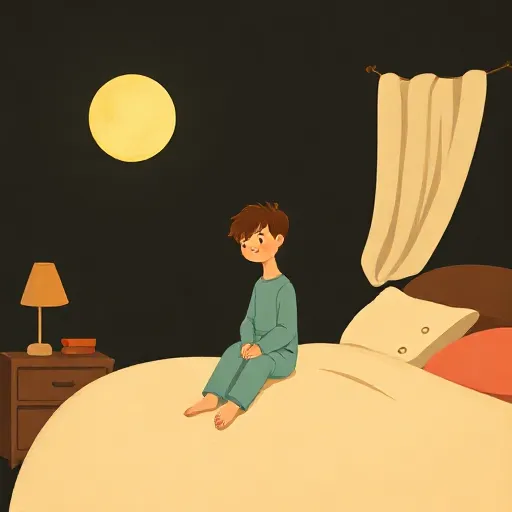
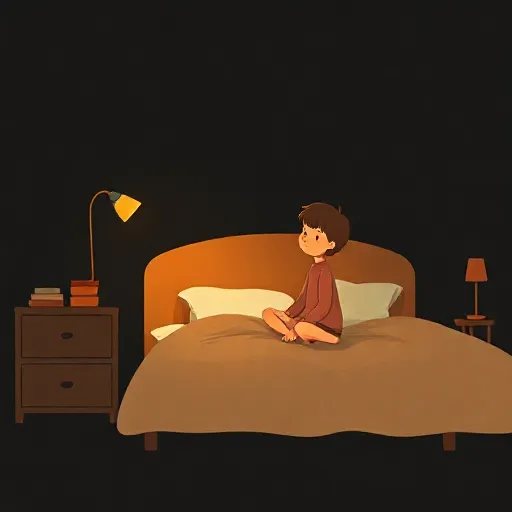
You open your eyes. The morning light is bright. You feel the sheets, hear the birds. You’re definitely awake. Or are you? Haven’t you had dreams that felt completely real, until the moment you actually woke up? How do you know you’re not still in one right now?
That question was the starting point for René Descartes (1596–1650), a French philosopher and mathematician. He wasn’t trying to scare himself. He wanted to find a belief so solid that perfect knowledge could be built on it — the kind of knowledge, he called it scientia, that could never be shaken by any stronger reason. He wanted indubitability: a belief you simply cannot doubt.
Today, when we ask whether your phone is really in your pocket or just a dream, we’re walking the path Descartes carved. So let’s follow him.
What If an Evil Genius Controls Everything You See?
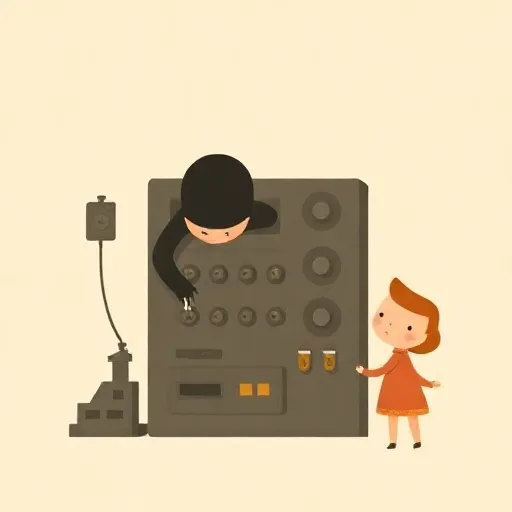
Descartes decided to test every belief by trying to doubt it — hard. This was his method of doubt. Think of it like a bulldozer clearing ground to find bedrock. He didn’t want to prove that everything is false; he wanted to see if anything survived the wrecking ball.
First, he tackled the senses. You trust your eyes and ears, but dreams can mimic reality perfectly. There’s no sure sign, he said, that you’re awake right now. So any belief that depends on your senses — that there’s a chair in front of you, that you have hands — might be mistaken. That’s the dream doubt.
But what about things that seem true no matter what, like 2+3=5, or that a square has four sides? Even if you’re dreaming, math feels undeniable. Yet Descartes imagined a more radical possibility: what if an all-powerful evil genius has rigged your mind to go wrong every time you think about something as simple as addition? The evil genius doesn’t have to be a real demon; it’s the idea that your thinking itself might be defective.
With that, nothing seemed safe. Even your certainty that you exist might be a trick. Descartes had pushed doubt to its hyper-extreme — the Evil Genius Doubt — and stood at the edge of total uncertainty.
The One Thought You Can’t Shake: “I Think, Therefore I Am”

But in that dark place, a light flickered. Descartes realized that every time he tried to doubt his own existence, he was thinking. And if he was thinking, he must exist. The famous line — “I think, therefore I am” (in Latin, cogito ergo sum) — became his first step out of the swamp.
The cogito is special. You can’t doubt it without proving it: to even think “I don’t exist” is to do the thinking that shows you do. Descartes called this kind of perception clear and distinct: an idea so bright and sharp that your mind can’t help but see it as true. It felt, he wrote, like “a great light in the intellect.”
But here’s the catch. While you’re looking directly at the cogito, it’s undeniable. But later, when your attention wanders, you might wonder: Could an evil genius have made me feel that certainty even though I don’t really exist? Descartes saw that the evil genius doubt could strike from a sneaky angle — not by directly denying the clear thought, but by making you suspect your whole mind is broken. This is indirect doubt.
How Can You Trust Your Own Mind If It Might Be Flawed?
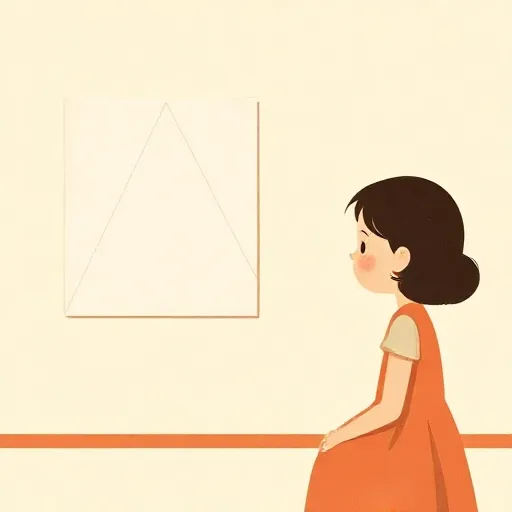
Think of a calculator. If you know the calculator has a glitch, you start doubting every answer it gives, even the ones that seem obviously correct. That’s what the evil genius idea does: it makes you question the reliability of your own thinking.
So Descartes realized he needed to fix that. He had to prove that his mind was made by a perfect creator — a God who is not a deceiver — not by some trickster. Only then could he trust his clear and distinct perceptions as true, not just as unshakable while he was focusing. He set out to build a bridge from “I think” to “God exists and guarantees my clear ideas.”
Here’s where things get tricky. His argument seemed to loop. He used clear reasoning to prove God’s existence. Then he used God to prove that clear reasoning is trustworthy. That looks suspiciously circular — the famous Cartesian Circle.
Did Descartes’ Argument Go in a Circle?
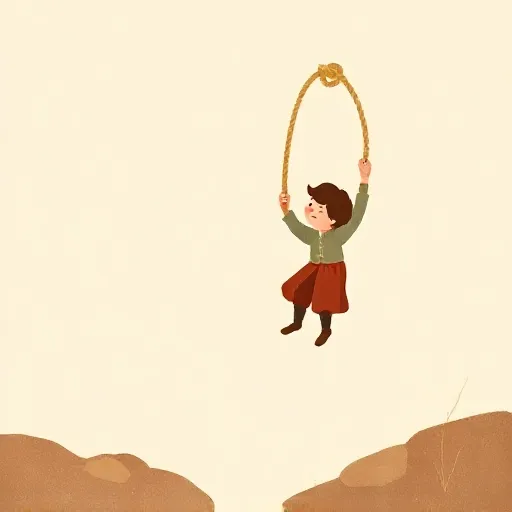
Imagine you want to trust a ladder, so you climb it to check. But to climb it, you have to trust it a little. Descartes’ critics say he did the same: he used the C&D Rule — “whatever I perceive clearly and distinctly is true” — as part of his proof that God exists, and then turned around and used God to prove the rule. That would be cheating.
But many scholars today think Descartes had a way out. One popular idea is that he distinguished between direct and indirect doubt. When you’re actively seeing a truth clearly, like that 2+3=5, you cannot doubt it. You’re mentally compelled to agree. The evil genius doubt only works when you’re not looking directly at the truth — when you step back and worry your whole brain is glitchy. So Descartes could build his argument step by step, always keeping his attention glued to each clear link. At the end, he claimed to have a self-evident grasp of God — so bright that the evil genius scenario became unthinkable. Once he achieved that, he could trust all his earlier clear insights retroactively. No circle, just a mental journey that ends with a certainty so strong it couldn’t be undone.
Others think some truths — like the cogito — were immune to doubt even without God, so the circle never formed. The debate is still alive, and Descartes’ project remains one of philosophy’s great puzzles.
Can We Ever Really Know We’re Awake?

Once Descartes had satisfied himself that God exists and doesn’t deceive, he turned back to the dream problem. He argued that because God is not a trickster, our strong natural tendency to believe we’re awake — combined with careful checking against memory and our different senses — must be reliable. In other words, if we line up our experiences coherently and don’t catch conflicts, we can know we’re awake.
But many philosophers find this less than rock-solid. Could you dream the whole checking process? Descartes admitted that in practice, we can still make mistakes; the certainty is more theoretical than practical, and we shouldn’t apply such radical doubt to everyday life decisions (you still need to eat, even if you’re not 100% sure the food is poison-free).
Today, his dream argument lives on. TV shows and movies like The Matrix ask: what if all your experiences are fed into your brain by a computer? That’s the evil genius updated. Scientists studying virtual reality and brain simulations echo Descartes’ question, even if they don’t accept his God-based solution. The core problem remains: how do you know you’re not a brain in a vat?
Why Doubt Everything?
Descartes’ wild experiment wasn’t just a mental game. It reshaped how we think about knowledge itself. He showed that even our most obvious beliefs rest on assumptions we rarely examine. Every time you doubt whether a photo on social media is real, or wonder if a memory is accurate, you’re channeling the spirit of the First Meditation.
His search for an unshakable foundation — for bedrock beneath the sand — reminds us that true certainty is rare. But maybe that’s okay. As Descartes himself said, in daily life we must act even without perfect knowledge. So the next time you wake up convinced it’s morning, take a second: could you prove you’re not dreaming? If not, welcome to philosophy.
Think about it
- If a supercomputer could make you believe you’re living a perfect life that’s completely fake, would you want to know the truth? Why or why not?
- Suppose you smell smoke in your house. Descartes might say you should check with other senses before believing there’s a fire. Do you think that’s a good strategy, or could you be overthinking it?
- Have you ever been completely certain about something that turned out to be wrong? How did that experience change the way you trust your own beliefs?