Can a True Sentence Stay True Even If the World Is Empty?
What if every human suddenly disappeared?
It is 1304, and Simon of Faversham (1260–1306) — a scholar, church official, and one‑time chancellor of the University of Oxford — is writing at his desk. He is puzzling over a strange question. Suppose, somehow, every human being were wiped from existence. Would the sentence ‘humans are animals’ still be true?
The question sounds like a trick. If nothing in the world matches the words, how could the sentence be anything but false? Yet Simon gives a firm, unexpected answer: yes, it remains true. To understand why, you need to see how Simon thought words, ideas, and reality fit together — and how he himself changed his mind about one of the deepest ideas in philosophy.
Simon grew up in the seaport town of Faversham in Kent, England. He became a master of arts at Oxford, then taught at the University of Paris in the 1280s. Almost all his writing took the form of commentaries on the works of the ancient Greek philosopher Aristotle (384–322 BCE). In those commentaries Simon wrestled with questions about logic — the rules of good reasoning — and about the mind, the soul, and what it means for something to exist.
Do words point to things, or just to ideas?
Before deciding whether an empty‑world sentence can be true, you have to know what words are doing in the first place. When you say ‘stone,’ does that word point to an actual object in the world, like the hard grey thing on the ground? Or does it point to a concept — the idea of a stone that lives in your mind?
Most thinkers in Simon’s day followed the ancient scholar Boethius (c. 477–524), who held that words signify concepts directly. But Simon disagreed. He divided words into two groups. Words of second intention are labels for logical ideas, like ‘species’ or ‘genus,’ which exist only when a mind thinks them. Those words do point to concepts. Words of first intention, however, are the names we give to ordinary things: ‘human,’ ‘stone,’ ‘dog.’ Simon argued that these words signify the real essences — the ‘what‑it‑is‑to‑be‑that‑thing’ — not our mental pictures of them.
His argument was practical. Suppose ‘human’ signified only the concept of a human. Then a sentence like ‘a human runs’ would be saying something about a concept — but concepts don’t have legs! The act of running cannot belong to an idea; it belongs to a flesh‑and‑blood person. So, Simon concluded, a word of first intention must point to the essence itself, not the concept. And that essence stays the same whether the thing exists in the real world, in your mind, or not at all.
The empty‑world thought experiment
Now Simon can ask his question again: if all humans vanish, is ‘humans are animals’ still true? He notices that not all true sentences are true in the same way. When you say ‘Socrates is pale,’ you are making an accidental claim — being pale is something Socrates happens to be, not part of what makes him human. For such a claim to be true, a real, pale Socrates must exist in the world at that moment.
But ‘humans are animals’ is different. It is an essential claim: being an animal is built into the definition of what it is to be human. It is not an accident that can come and go. For this kind of sentence, Simon says, you do not need real, flesh‑and‑blood humans standing around to make it true. All you need is for the essences — the human essence and the animal essence — to be conceptualized and signified by the words in the sentence. Those essences do not depend on actual existence; they can be grasped by a mind even when their instances are destroyed. So the sentence holds, regardless of whether any human is alive to hear it.
This idea was a bold break from the view of some other masters of his time, who insisted that if no human existed, ‘the human is an animal’ would be false. For Simon, essence is more fundamental than existence. A truth about what something is does not require that something to be there, just that its definition keeps working.
When a philosopher changes his mind
Here is where the story gets especially interesting — because Simon himself later rethought one of his key ideas. If essence is so independent, what about existence itself? Is existence a real ingredient added to an essence, like icing added to a cake? Or is it something else entirely?
At first, in his commentary on Aristotle’s Categories, Simon seemed to hold a real distinction between essence and existence. He wrote that all created substances are a composition of essence and existence, and that existence is given to things from outside — ultimately from God. The cake (essence) truly gets icing (existence) that it didn’t have before.
But in a later work, his second commentary on Posterior Analytics, Simon changed his mind. He asked: if added existence is something real and actual, what kind of actuality is it? A first actuality would be the same as the essence itself — being a human just is a first actuality. A second actuality would be an operation, like thinking or running, which already presupposes that the thing exists. So added existence cannot be either, and inventing a third would lead to an endless chain of further existences. The real‑distinction view, Simon concluded, doesn’t hold up.
So he adopted a notional distinction instead. Existence is not a real extra component. Rather, it is a notion — a way of thinking about a thing in relation to its cause. We can think of a human simply according to its essential definition (being a rational animal), and we can also think of it as something that exists in a world of causes and effects. Those are two different ways of considering the same thing, not two separate parts glued together.
Can dreams predict the future?
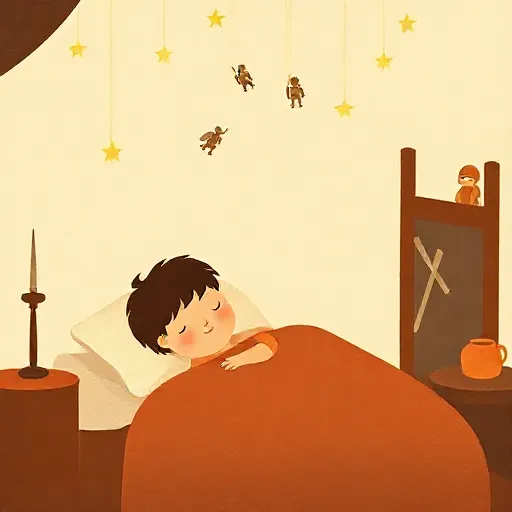
Simon did not spend all his time on dry logic. In his commentary on the short work On Sleep and Waking, he explored a question that still fascinates people today: can a dream give you genuine information about what has not yet happened?
He believed that dreams could indeed be premonitory — but only if they came from a special source. Some dreams rise from your own body, like when a choleric humor makes you dream of fire. Some rise from your soul, like a sad memory of a distant friend. But dreams that predict the future, Simon thought, come from an influence of the celestial bodies — the stars and planets. The human body receives an influx from those heavenly bodies, and the phantasia, an inner sense that forms images, produces pictures in agreement with that influx. Those pictures are then sent to the common sense during sleep, giving you a dream‑likeness of a coming war, a good harvest, or some other event.
Simon was careful: a premonitory dream is not a perfect photograph of the future. You need an interpreter — someone who understands both how dreams work and how the stars work — to decipher the message. And if a stronger unexpected event intervenes, the predicted outcome may be blocked. But when interpreted correctly, such a dream is, Simon says, “infallibly true” that the effect will follow by necessity, unless something stronger stops it.
It is an unusual mix of science, astrology, and philosophy. For Simon, the universe is an ordered system in which stars can touch human minds and hint at events to come.
Why Simon’s ideas still echo
You might think a debate about words, essences, and empty worlds belongs to the dusty past. But the puzzles Simon faced are still alive. Philosophers today argue about truthmakers — the things in reality that make a sentence true. If you say ‘unicorns have one horn’ but no unicorns exist, what exactly makes that sentence true? Many contemporary answers echo Simon’s: you need an essence or a definition, not a living creature.
And his twist on existence — that it might not be a real ingredient but a way of thinking — bears a family resemblance to debates in modern metaphysics about whether existence is a property at all. Some philosophers, like Immanuel Kant (1724–1804), later argued that existence is not a predicate that adds something to a thing’s nature; it is merely the condition of the thing being present in the world. Simon got there first, even if he changed his mind along the way.
Even his dream theory scratches at a question we still ask: can we know the future, and if so, what does that mean for free choice? Simon’s answers may not be yours, but noticing how a careful thinker reasoned about them gives you a tool for your own thinking. Good philosophy rarely ends with a settled answer; it sharpens the questions.
Think about it
- If you define a “snoof” as a four‑legged creature that purrs and barks at the same time, but no snoof has ever existed, is the sentence “snoofs have four legs” true or false? Why?
- Simon thought some dreams could carry real warnings from the stars. If a dream tonight showed you a future event, would that mean the event was already fixed, or could you still change it?
- Could a whole sentence be true even when nothing in the universe matches it? If so, how could we ever know which sentences are true and which are just made‑up stories?