

What Makes “We Did It” Different from “I Did It, and So Did You”?
The Park in the Rain

Imagine a park on a summer afternoon. People are scattered about, reading, tossing a frisbee, eating lunch. Suddenly, the sky darkens and a downpour begins. Everyone leaps up and sprints toward the only shelter, a big wooden bandstand. There’s no plan, no shared goal beyond getting dry. It’s just a crowd of people each doing the same thing at the same time. Now imagine a second scene in exactly the same park: the same people, the same speed, the same paths — but this time they’re members of a dance troupe. Their run is part of a performance, choreographed down to the last step. The two scenes look identical from the outside, yet something feels completely different. One is a heap of individual actions; the other is something the dancers do together.
Philosophers of action use cases like this to ask a deceptively simple question: what turns a collection of “I did it” moments into a genuine “we did it”? That question is the core of what they call shared agency or joint action. It’s not about whether teamwork feels warm or fuzzy; it’s about what has to be true in the world for an activity to count as shared, rather than a coincidence of solo acts. The answer, it turns out, is fiercely debated — and it leads straight into puzzles about intention, commitment, and whether groups can have minds of their own.
The Inner Difference: Searle’s “We-Intention”

John Searle (born 1932) argued that the difference between the panicked crowd and the dance troupe must be something “internal.” The runners’ bodies are doing the same thing, so the outside facts can’t settle the matter. Searle’s answer is that in the dance case, every participant has a special kind of mental attitude: a we-intention. Instead of thinking only “I am running to the shelter,” the dancer thinks something like “We are running to the shelter” — or “We are performing the part of the piece where….” The “I” intention is wrapped inside, and gets its force from, the “we” intention.
Searle insists that this we-intention is primitive. It isn’t a regular intention with a “we” glued on; it’s a fundamentally different type of intention, one that can’t be broken down into plain individual intentions plus extra beliefs. He also rejects the idea that the “we” refers to some spooky supra‑individual entity — a kind of group mind that floats above the members. That would be weird, Searle thinks, and it would multiply mysterious subjects every time people act together. Instead, the we-intention lives inside each individual, but it is its own basic capacity. Even if you are alone and only imagining a partner, you could form the thought “we are pushing the car,” and that intention would be a collective one in Searle’s sense — albeit one that fails to become shared because the other person isn’t actually on board.
But if shared activity requires only that each person has such a primitive we-intention, we still need to ask: how must those several we-intentions fit together so that they really count as shared? Searle says surprisingly little about that. For a more detailed picture, we have to look at philosophers who try to build a shared intention out of ordinary intentions.
Building a Shared Intention from Ordinary Parts

Michael Bratman (born 1945) takes a different path. He doesn’t think we need a mysterious primitive we-intention. Instead, a shared intention is a kind of interpersonal structure of perfectly ordinary individual intentions. Each person has what Bratman calls an intention of the form “I intend that we J” — for example, the intention that we paint the house. You might think that’s already enough, but Bratman adds a crucial condition: the two people’s sub-plans must mesh.
An intention, on his view, doesn’t just sit there; it naturally generates plans — steps, means, timing. If I intend that we paint the house, I’ll start planning how to do it. If my plan is to paint it green all over and yours is to paint it purple all over, our sub-plans clash. We aren’t cooperating; we’re competing. So Bratman requires that each participant intends that the group’s various sub-plans can all fit together — that they are mutually satisfiable. Moreover, he requires that each person intends to adjust her plans if they stop fitting, so the mesh isn’t just a lucky accident. This gives shared activity a kind of rational discipline: your plans become a reason for me to shape my own, and vice versa.
But here a deep puzzle shows up. Normally, I can only intend what I take to be up to me to settle. I can’t intend that it will be sunny tomorrow, because I’m not in charge of the weather. David Velleman (born 1952) noticed that if I intend for us to dine together, I seem to be trying to settle something that isn’t mine alone to settle — it depends on what you do. Shared agency seems to demand an intention that, by the rules of ordinary intending, I shouldn’t be able to have. Bratman’s response is that I can intend the whole joint action, even though I don’t control you, as long as I can reasonably predict that you will do your part — just as I can intend to tan at the beach if I reasonably predict sunshine. Whether a prediction about a partner’s free choices is compatible with treating them as a genuine partner is itself a live debate.
The Invisible Promise: What We Owe Each Other

Margaret Gilbert (born 1942) approaches shared action from a different angle: obligations. Consider walking together. If you and I are simply walking beside each other on the same path by coincidence, neither of us can complain if the other suddenly speeds up or wanders away. But if we’ve agreed to walk together, something changes. If I bolt ahead so you can’t keep up, you feel entitled to say “Hey, what are you doing?” Gilbert thinks that shared activity essentially involves a mutual obligation — each participant owes it to the others to do their part.
Gilbert calls the source of this obligation joint commitment. A personal commitment, like a private decision, can be created and cancelled by me alone. Joint commitment, by contrast, can only be formed when everyone expresses a readiness to be bound together, and it can only be rescinded when everyone concurs. That’s a strong claim: you can’t just quit walking together unilaterally without the other person having a legitimate grievance. Critics argue this is too strict — surely sometimes shared action allows a polite exit. Gilbert’s reply is that the obligations are a special “directed” kind, not ordinary moral duties. They exist even in dodgy joint projects, like two pirates plundering a town; each pirate owes the other a certain loyal cooperation that an outsider simply isn’t owed.
These contralateral commitments — owed to a specific partner — give shared activity a distinctive texture. It’s not just that my plans fit with yours; I am answerable to you if they don’t. The question remains whether this directed obligation is part of the very definition of shared action, or whether it’s a frequent side effect that can be explained by other moral principles. Philosophers continue to argue.
When the Group Seems to Have Its Own Mind
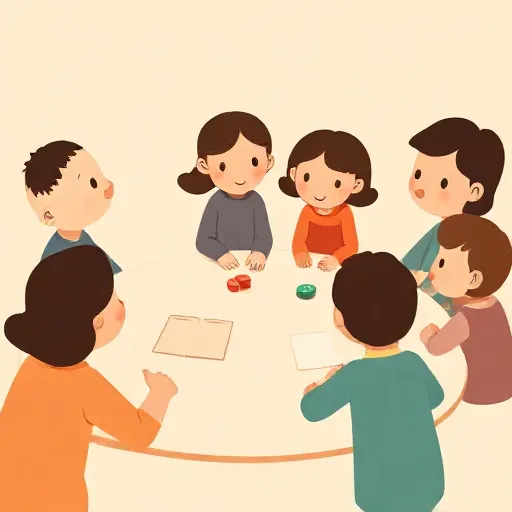
The accounts so far assume that shared activity is built out of the attitudes of individual people. But is it ever right to treat a group itself as a whole thinking subject? Philip Pettit (born 1945) argues that some groups genuinely have minds of their own. His reasoning draws on a startling phenomenon called the discursive dilemma.
Imagine three friends deciding whether to take a train from the airport to a conference. They care about three things: safety, speed, and scenery. They agree that the train is worth taking only if all three are satisfied. They vote on each premise separately:
- A says: safe (yes), quick (no), scenic (yes) — so A’s personal conclusion is “no.”
- B says: safe (no), quick (yes), scenic (yes) — personal conclusion, “no.”
- C says: safe (yes), quick (yes), scenic (no) — personal conclusion, “no.”
If they just voted on the final question, they’d all say “don’t take the train.” But suppose they instead follow a premise‑driven procedure: they first decide the group’s position on each premise by majority vote. The group then says: safe (yes, 2–1), quick (yes, 2–1), scenic (yes, 2–1). Following the logic they all accept, the group must conclude “yes, take the train.” The group has reached a conclusion that not a single member holds individually.
Pettit thinks this shows that the group’s rational behavior can’t be explained simply as a summary of members’ personal attitudes. The group displays a kind of consistent reasoning that makes it apt to treat it as an intentional subject in its own right — a genuine “we” with commitments that float free of any member’s mind. Critics reply that the group’s rationality is really an artifact: it’s maintained only because each member separately intends to keep the group rational. The debate remains open, but it pushes us to wonder: when your team decides something that nobody individually wanted, who really decided?
Why It Matters — and What You Bring to It
Shared agency isn’t just a puzzle for philosophers sitting in armchairs. It matters every time you collaborate on a group project, join a pick-up game, or take part in a family decision. If shared activity requires meshing sub-plans, then you owe it to your group not just to do your job but to make sure your plans are compatible with everyone else’s. If Gilbert is right, you actually acquire obligations to your teammates that you can’t just shrug off. And if Pettit is on to something, the “we” that emerges from a well-organized committee or a marching band might be more than the sum of its parts — and that raises serious questions about who is responsible when a group does something harmful or heroic.
The next time you find yourself running toward a shelter — or playing in a band, or painting a mural with friends — notice the moment when a collection of “I”s becomes a “we.” The shift probably feels invisible, but the conditions that make it possible are anything but simple. Philosophers are still chasing exactly what that secret ingredient is.
Think about it
- Imagine you and a classmate are assigned to write a story together. Is it enough that you each write half and staple the pages? What else has to happen for the story to be truly co‑authored?
- If a student council votes in a way that accidentally produces a decision no one personally wanted, is the council still responsible for it? Should the members feel bound by it?
- Can you think of a time you felt you had a special obligation to a partner in a group activity — an obligation you wouldn’t have to a stranger doing the same task? What created that sense of “I owe you this”?