Why Can You Say ‘She Did It’ and the Other Person Just Gets It?
The Game of “She Did It”

Imagine you’re at a sleepover. Your friend leans over and whispers, “She did it!” Without missing a beat, everyone looks at the girl who knocked over the popcorn. How did you know who “she” was? You never discussed it. Yet somehow you and your friend already shared enough background to make that tiny word do its job.
That invisible background is common ground—the pile of information that you and another person both accept as true, and you both know that you both accept it, and so on. The idea goes back to philosopher Paul Grice (1913–1988), who first used the term in a lecture in 1967. Common ground is what lets pronouns, inside jokes, and even a nod mean so much. But what exactly is it? Philosophers have spent decades arguing over three big questions. What is common ground made of? How does talking change it? And how does it shape what we say? The first question has turned out to be the trickiest—and the most fun.
A Glass Box of Shared Facts?

One early idea is to picture common ground as a giant, see‑through box filled with all the things both people take to be true. Philosopher Robert Stalnaker (born 1940) called this a set of possible worlds. If you and I agree it won’t rain today, our box contains only those worlds where the sun is shining. If you then tell me “The cat is on the mat,” all the worlds where the cat is elsewhere evaporate. The box shrinks.
This container view is simple and clean: talking updates a shared database. But the box has a critical flaw. It cannot tell the difference between common ground and information that two people just happen to share.
Suppose you and I both know it will be dry, but neither of us knows the other knows. Our glass box still contains all those sunny worlds. Yet we don’t have real common ground—I can’t count on your weather knowledge to plan a picnic. The container treats the contents as the same, so it misses the special we-know-we-know quality. For that reason, most philosophers look deeper.
What Goes On in Our Heads? The Mutual Belief Idea
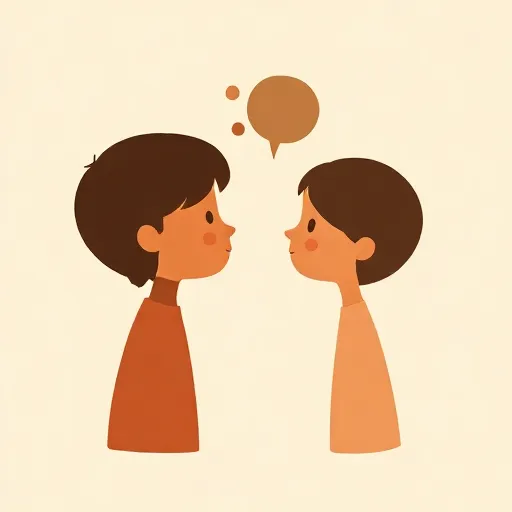
If common ground isn’t just a set of facts, maybe it’s a pattern of thoughts in people’s heads. This mentalist view says common ground is mutual belief—a shared mental state. Philosophers Kent Bach and Robert Harnish (1979) put it like this. Suppose you believe the cat is on the mat, and your friend believes it too. That’s not enough. For mutual belief, you must also believe she believes it, and she must believe you believe it, and each of you must believe the other believes that belief—usually up to about three levels. This is bounded mutual belief; the chain stops after a few steps.
Real life shows why that matters. When Wilma says “Fred snores,” Betty trusts her and comes to believe it. Wilma then believes Betty now believes it, and Betty believes Wilma believes that, and so on. That layered belief‑chain makes the claim part of their common ground. And if Betty suspects Wilma is lying, the higher‑order beliefs snap, and common ground never solidifies.
But here’s a deeper puzzle: should the chain ever stop? Some philosophers say common ground requires unbounded mutual belief—an endless “I believe that you believe that I believe…” forever. Stalnaker’s logical models work this way. If a group has common ground about something, each person believes it, each believes the others believe it, and so on without limit. That’s where things get dizzying.
The Infinite Crowd of “I Know You Know”
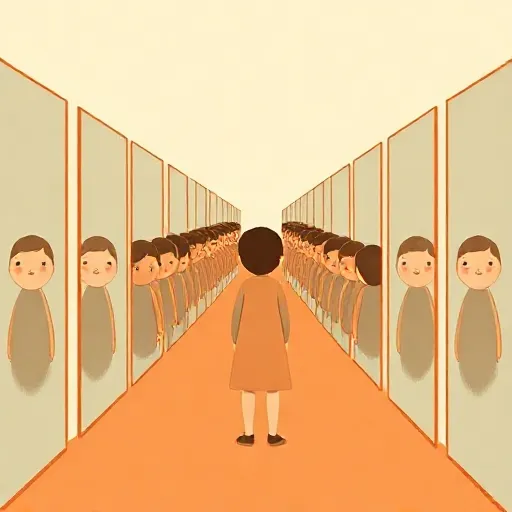
Imagine you know Napoleon was French. Do you also know that you know that you know… for a thousand layers? A real human brain never forms such thoughts. Yet formal logic often assumes that beliefs are closed under entailment: if you believe one thing, you automatically believe everything that logically follows. With that rule, believing anything would force you to hold infinitely many beliefs. That sounds impossible.
The same problem hits unbounded mutual belief. If common ground is an infinite stack of “We believe we believe…,” then every conversation would demand that each person possess an infinite number of distinct thoughts. Can a finite mind do that? Many philosophers say no—it’s psychologically unrealistic. Some argue we could still represent the rule “for every level n, we all believe that we all believe…” without actually forming each thought. But most doubt that’s what real minds do.
Because of these doubts, many theorists keep common ground bounded. Then David Lewis (1941–2001) stepped in with a different kind of idea. He said common ground isn’t made of beliefs at all, but of reasons to believe. A reason to believe is a normative thing—it tells you what you’re entitled to think, not what you actually think. Lewis showed that you can have an infinite tower of shared reasons to believe without exploding anyone’s head, because reasons don’t crowd your brain like beliefs do.
Beyond Beliefs: The Power of Promises

Another bold move is to build common ground from commitments—social promises about what we accept as true. When you tell me “I saw a squirrel on the roof,” you don’t just pour a belief into my ear. You commit yourself to that claim, and I normally accept that commitment. Philosopher Margaret Gilbert (born 1942) and others say common ground lives in these public relationships, not inside private heads.
In this normative view, if you commit to p toward me, and I accept your commitment, then we share a mutual commitment. And here’s the twist: committing to p automatically creates common ground about the commitment itself. You can’t commit to me without us both accepting that commitment. So commitments and common ground are tied together very tightly.
Consider a driver who hints at a bribe without saying it outright. Both people might believe a bribe is on offer, but neither will openly accept a commitment to that claim. The commitment theorist would say this is a case of mutual belief without common ground—because the item never enters the public record. That shows commitments can capture something beliefs miss.
Furthermore, commitments obey logical rules more naturally than beliefs do. If you commit to p, you also commit to what follows from p, and you commit to the fact that you committed. These principles can generate infinite layers of mutual commitment without ever demanding infinite beliefs. So the commitment view dodges the psychological overload that haunts unbounded mutual belief.
When Common Ground Fades: Texts, Tweets, and Dead Authors

All these theories were originally built for face‑to‑face talk—the kind our ancestors did for millions of years. But what happens when you text a friend, read a book, or shout into a stadium? Common ground seems to get thinner. In a text, you can’t see your friend’s nod or frown, so you’re less sure what they accept. If you read a pamphlet by someone you’ll never meet, can you really share the layer‑cake of mutual belief with a stranger? Probably not, because neither of you knows enough about the other to form those higher‑order thoughts.
Even commitments get wobbly. Can you truly share a commitment with an author who died a hundred years ago? It’s hard to see how. So as we move from a live, face‑to‑face chat to delayed, anonymous, or massive communication, the rich mutuality of common ground erodes. Sometimes we manage to understand each other without any real common ground at all, relying on just language and context.
Why This Puzzle Matters to You
Next time you say “I’ll feed the cat” and your sister just nods, you’re relying on common ground. But what makes that possible remains a live debate. Is it a stack of mutual beliefs, a web of commitments, or a stream of reasons to believe? Each answer changes how we think about lying, trusting, promising, and even how we fight.
This isn’t only for philosophers. When you misunderstand a friend’s text, you’re feeling the fragility of common ground. When a politician says something vague, they’re exploiting the gap between what’s mutually believed and what’s mutually committed. Spotting those differences makes you a clearer thinker and a better friend—because common ground is the hidden engine of every conversation you’ll ever have.
Think about it
- If you and a friend both know a secret but never talk about it, do you have common ground? How could you test whether you really share it?
- Imagine you promise to do something, but the other person doesn’t believe you will. Has any common ground been created? What’s the difference between a promise and a fact you both just happen to believe?
- In a group chat with ten people you’ve never met in person, how much common ground do you think you share? What would it take to increase it?