

What Makes a 'We'? The Strange Logic of Doing Things Together
The Taj Mahal Test

Imagine you plan to visit the Taj Mahal tomorrow. Your friend has the exact same plan. You both know about each other’s plan. But does this mean you intend to visit the Taj Mahal together? Most philosophers say no. My intention and your intention might be purely individual, even if we talk about it publicly. Something more is needed for a genuine collective intention — an intention shared by a group as a group.
This puzzle lies at the heart of a philosophical debate about collective intentionality. It’s the question of how our minds can form a “we” that is stronger than a simple sum of “I”s. For something to be a group plan, it can’t just be a bunch of individual plans stacked next to each other. Philosophers say that collective intentions are irreducible — they cannot be boiled down to nothing but individual intentions plus common knowledge. But here’s the catch: every intention still exists inside individual brains. So how can a group have an intention without there being a group brain?
The Father of We-Intentions: Wilfrid Sellars
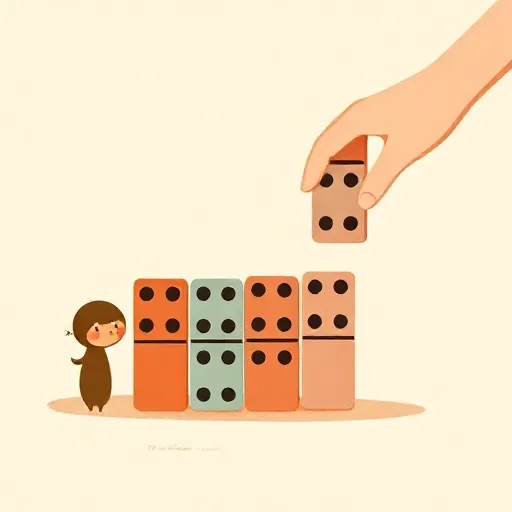
The modern puzzle starts with the American philosopher Wilfrid Sellars (1912–1989). Sellars wanted to understand moral reasoning and how we judge each other’s actions from a shared point of view. He introduced the idea of a we-intention. A we-intention is not a mysterious group mind floating above our heads. It’s an intention held by an individual, but with a special form. Instead of “I intend to do X,” it’s “I intend that we do X.”
Sellars realized this creates a deep problem. Normally, you can only intend to do things that are up to you — within your control. I can intend to lift my arm, because that’s up to me. But when I have a we-intention, I intend that we do something, and that includes your actions. Your actions are not up to me. So how can I even form such an intention?
Sellars first thought I might intend to influence you to do your part, just like I influence a stick or a stone. But that still keeps things from my egocentric perspective — I’m treating you as a tool, not as a partner. Later, he suggested a fix: the intention isn’t “I intend that you do X,” but rather “I do my part if it is up to me, assuming you’ll do your part if it is up to you.” Each person’s intention has the same content, but they remain separate intentions. Two intendings, but one shared content.
Sellars never entirely solved the puzzle, but he left two powerful ideas. First, many of our everyday intentions are we-derivative — my intention to move a pawn comes from our intention to play chess. Second, he acknowledged that you can have lots of individual dissent inside a group and still count as “one of us,” though the less you share, the harder it gets.
Three Ways to Build a “We”
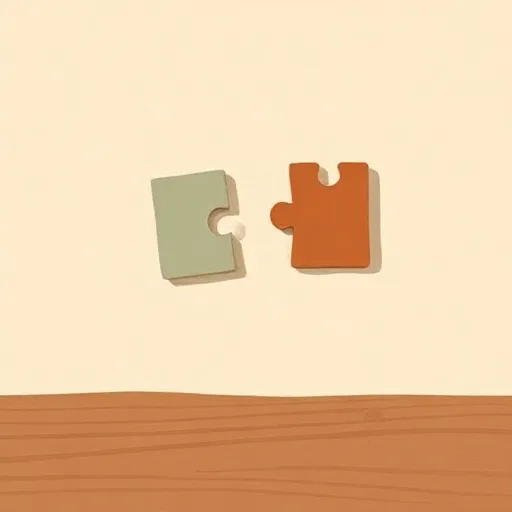
Philosophers in the last few decades have asked: where exactly does the “togetherness” live in a collective intention? There are three main answers, each placing the collectivity in a different part of an intention.
1. In the Content. Michael Bratman (born 1945) argues that the specialness of a shared intention is in what each person intends — the content. For us to go for a walk together, I must intend “that we walk together,” and you must intend the same. Our individual intentions refer to the same joint activity. Bratman adds that we also need our subplans to mesh (like my bringing the map and your bringing the snacks) and for all this to be common knowledge between us. Critics say this approach is circular: how can I intend “that we walk together” before the “we” actually exists? Bratman replies that we form our intentions simultaneously under a presumption of mutual responsiveness — each of us is ready to adjust.
2. In the Mode. John Searle (born 1932) and Raimo Tuomela (20th century) insist that it’s not just about what you intend, but how you intend it — the mode. Searle says that when we act together, each of us has in our head the primitive thought “we are doing X,” not just “I am doing my part.” Tuomela develops a full we-mode theory: in the we-mode, you intend “as a group member,” committed to the group’s plan, rather than “as a private person.” This sounds promising, but Searle’s version risks becoming too solitary: he famously said that collective intentionality could be had by a brain in a vat, an idea many find hard to square with the way real cooperation works.
3. In the Subject. Margaret Gilbert (20th century) takes the boldest step. She says a collective intention is had by a plural subject — a new kind of subject formed by a joint commitment. When we jointly commit to do something as a body, we create a single “we” that bears the intention. This isn’t a group mind; it’s a structured relationship where each of us owes the others certain actions. If one person suddenly quits, they violate an obligation, even if nothing was signed. Gilbert’s view has been criticized for a potential infinite regress: don’t we need a prior joint commitment to make a joint commitment? But it powerfully captures how groups can have intentions their members don’t personally share.
The Stubborn Problem of Control
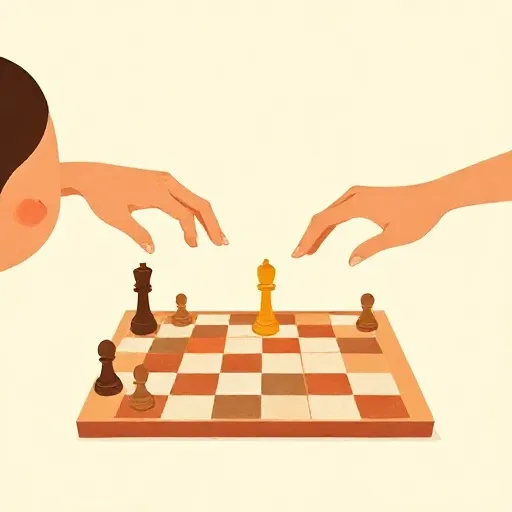
Underneath all these debates is the problem Sellars first spotted: the ‘up to the agent’ness of intention. I can only settle what’s in my power. In a joint plan, the total action is not up to me alone — it depends on you.
Bratman’s answer is that I don’t intend your action; I intend the joint outcome, and I form my intention only when I reliably predict you’ll form yours. Tuomela says a we-intention is an “aim intention” directed at the joint result, not a direct control of your body. Gilbert avoids the problem by saying the plural subject, not me alone, bears the intention — and the plural subject, through its members, does have the power to settle the matter.
Yet none of these solutions completely quiets the worry. The more we demand rational control over our own intentions, the harder it is to see how a proper “we” ever gets started without already being there. This is sometimes called the circularity problem. It’s like trying to start a car by asking the car to push itself.
Why It Matters: Teams, Money, and Being Human

This isn’t just about abstract puzzles. Collective intentionality touches everything from playground games to nations.
First, take money. A five-dollar bill is physically just a scrap of paper. Why can I trade it for a snack? Because we collectively accept it as money. The philosopher John Searle calls this a social fact — a fact that exists only because we think it does, together. Without shared intentions and collective acceptance, there’s no money, no laws, no presidents, no Taj Mahal as a “wonder of the world.”
Second, think about responsibility. Can a corporation be guilty of a crime, or just the people inside it? If a group can be a subject of intentions, it might also be a subject of responsibility. Philosophers debate this fiercely, using the tools of collective intentionality to ask whether groups can have a “mind” in any meaningful sense.
Finally, some scientists argue that shared intentionality is what makes us uniquely human. The psychologist Michael Tomasello has found that even young children, before they fully understand other minds, can enter into joint attention and cooperate in ways no ape can. This basic “we-mode” might be the seed of language, morality, and culture. If so, then figuring out the logic of “we” is really figuring out ourselves.
Think about it
- If a group of friends plans a surprise party, but one person secretly thinks it’s a bad idea and wouldn’t do it alone, are they still part of the shared intention? Why or why not?
- Can a machine or a computer program ever form a “we-intention” with a human, or does something about shared plans require a living mind?
- Think of a time you felt truly part of a team. What specifically made that feeling different from just doing an activity next to someone else?