Are You Already Free? Śaṅkara and the World as Dream
The Tenth Child: A Puzzle About Who You Are
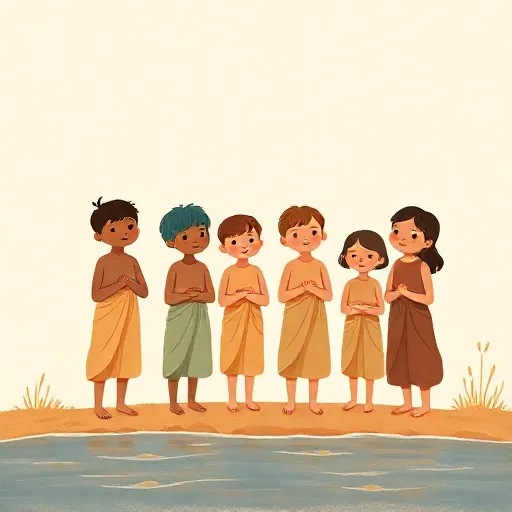
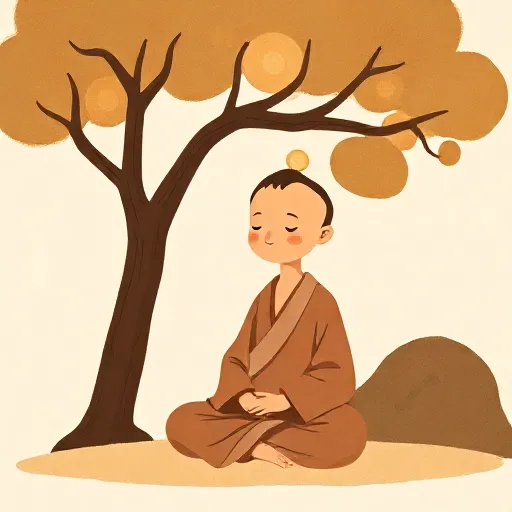
Ten children cross a river. When they reach the other side, they huddle together and count. Each child counts only nine heads. “One of us has drowned!” they cry, overcome with grief. Then a passerby sees what is happening. “You are the tenth,” the stranger says. Every child had forgotten to count themselves.
This story comes from a commentary by Śaṅkara, a philosopher‑monk who lived in India roughly 1,300 years ago. Scholars still debate his exact dates — some place him around 700 CE, others a little later — but his ideas have echoed down the centuries. Śaṅkara called his teaching Advaita Vedānta, which means “the non‑dual end of the Vedas.” He believed that, at the deepest level, you are already whole, unlimited, and complete — you simply do not realise it.
The single reality Śaṅkara pointed to is called brahman. Brahman is not a god among others or a far‑off power. It is pure existence itself, the invisible ground from which everything borrows its being. And that ground, he argued, is exactly what you are. The real “you” is not your name, your body, or your thoughts. You are consciousness — a seamless, undivided awareness that never begins or ends.
So why do we feel small, separate, and afraid? Śaṅkara’s answer: ignorance, or avidyā. We mistake our ever‑changing forms — body, mind, personality — for our true self, just as the children mistook the missing tenth for a drowned friend. Liberation, or mokṣa, is not about going somewhere else or becoming something new. It is recognising what you have always been.
The Clay Pot and the Secret of What Is Real
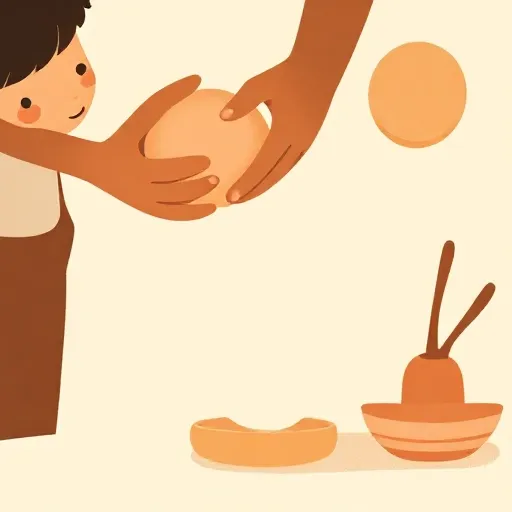
Śaṅkara had a favourite way to show how reality works: look at a lump of clay. You can shape that clay into a pot, and later squash the pot and make a plate. The pot‑form perishes, the plate‑form arrives, yet the clay never stops being clay. The clay persists; the shapes are temporary.
He used this to argue that what is real persists, while what is unreal changes or vanishes. The pot depends entirely on the clay for its existence, but the clay does not depend on the pot. In the same way, he said, the whole universe depends on brahman. Mountains, oceans, your own body — they are all “names and forms” that come and go. Brahman alone is the enduring foundation.
This sets up two levels of reality. From the empirical perspective (vyāvahārika), the world is real enough — you bump into chairs, eat apples, and feel the sun. But from the ultimate perspective (pāramārthika), only brahman is fully real, just as, from the clay’s point of view, only clay is real and the pot is a passing shape.
The world is not a complete illusion, like a horn on a rabbit. It is a less‑real appearance, something Śaṅkara called māyā — often translated as “cosmic illusion” but better thought of as an inexplicable display. You cannot say the world is absolutely real, because it changes and depends on brahman. You cannot say it is absolutely non‑existent, because you experience it. It is indeterminable (anirvacanīya) — a puzzle that pushes you to look deeper.
Waking Up in a Dream: Is the World a Cosmic Sleep?
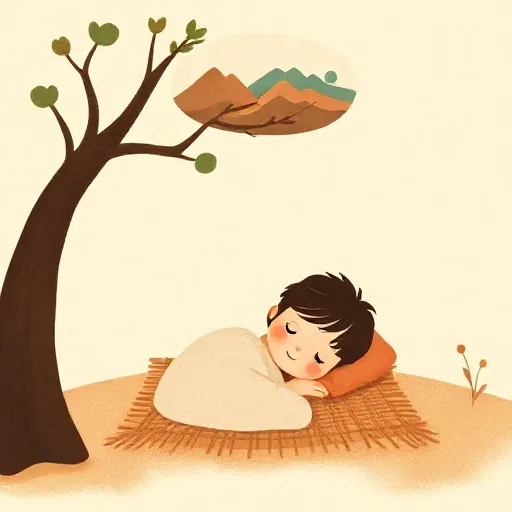
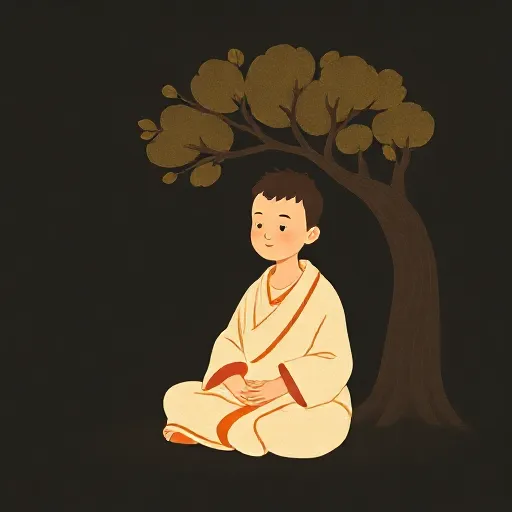
If the world is less‑than‑real, how does it appear in the first place? Śaṅkara turned to a familiar experience: dreaming. When you dream, your mind projects mountains, people, and adventures. Inside the dream, everything feels solid. You might be chased, fall in love, or feel the wind. But when you wake up, you realise the dream world was made of nothing but your own consciousness.
Śaṅkara saw our everyday waking life as a kind of cosmic dream. From the ultimate view, the whole universe is projected by Īśvara — a term often translated as “God” or “Lord.” Īśvara is brahman seen with qualities, the intelligent and material cause of the universe. Just as a dreamer spins a whole world out of memory, Īśvara effortlessly emanates the cosmos, sustains it, and eventually dissolves it back into brahman.
The dream analogy also explains why you cannot prove the world’s reality by looking at it harder. A dream character who examines every atom of a dream pot will never find the dreamer. The dream’s ground lies outside the dream. Similarly, Śaṅkara said, you cannot grasp brahman as an object inside the world. But once you recognise brahman, the world’s solid appearance collapses — like waking up dispels a dream.
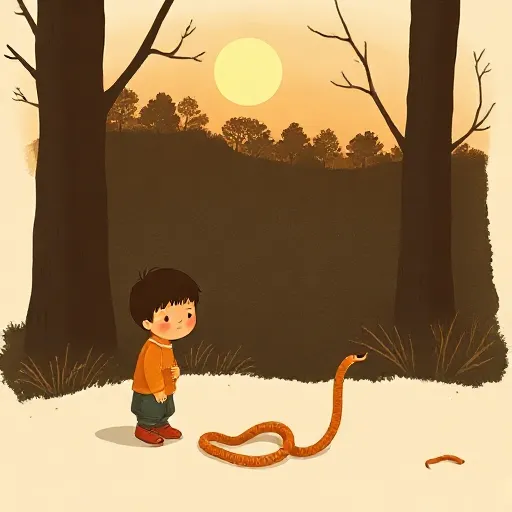
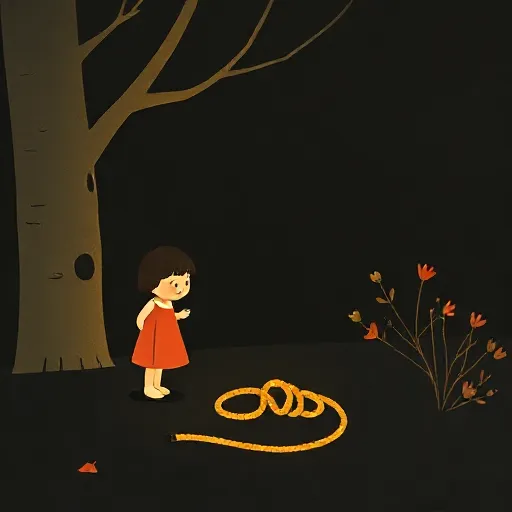
He added a famous image: at dusk, you see a rope and mistake it for a snake. Your heart races, your body tenses. The snake never existed; it was superimposed (adhyāsa) on the rope. In exactly the same way, we superimpose a world of separate things, along with our fragile egos, onto the rope of brahman. This mistake is what keeps us trapped in fear and desire.
The Witness That Never Changes: Consciousness Inside You
If you strip away body, senses, and thoughts, what is left? Śaṅkara’s answer: consciousness — a steady, self‑shining awareness that he called the witness (sākṣin). It is the background that illuminates every experience: seeing a sunset, feeling hungry, remembering a friend. Without it, no perception could be known.
This witness is not an object. You can never pin it down like a thought or a table. Yet you know it intimately. Even in deep dreamless sleep, when the mind shuts down and there are no objects at all, Śaṅkara argued that consciousness remains. If it vanished, you would not remember “I slept peacefully.” The absence of objects is not the absence of awareness.
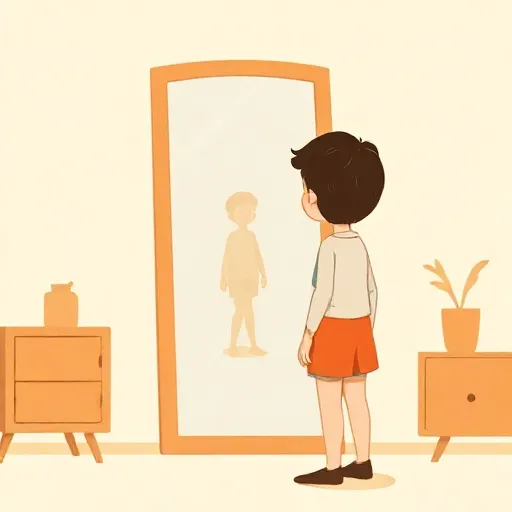
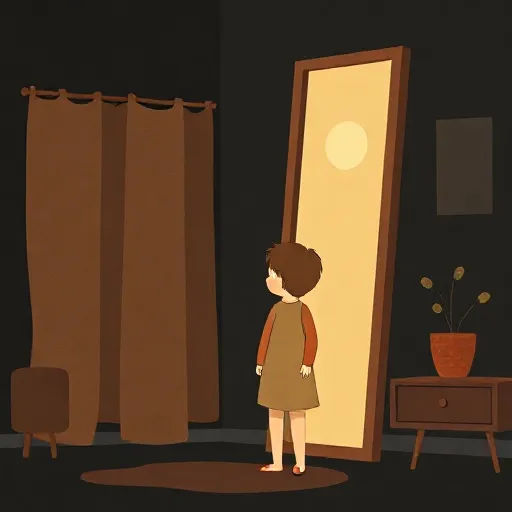
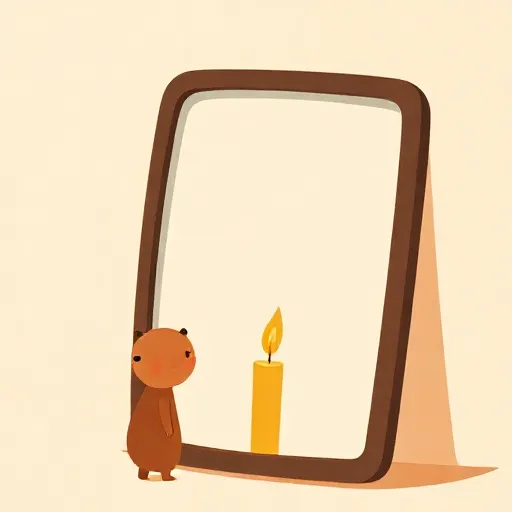
How does a boundless, non‑dual awareness seem to become a small “me” stuck in a body? Śaṅkara used the example of a reflection. Just as a face does not literally enter a mirror, consciousness does not enter the mind. Instead, the mind — being especially clear and luminous — reflects consciousness, like a clean mirror reflects light. This reflection creates the I‑notion (ahaṃkāra), the sense of being a separate knower and doer. It makes awareness appear limited, coloured by the mind’s moods, as a clear crystal can look red when placed near a red flower. But the crystal itself stays colourless; consciousness itself never changes.
Deep down, the witness and brahman are one. Your most intimate sense of existing is not a tiny spark inside your head. It is the same seamless consciousness that lights up the whole cosmos.
Cutting Through the Illusion: How to Wake Up
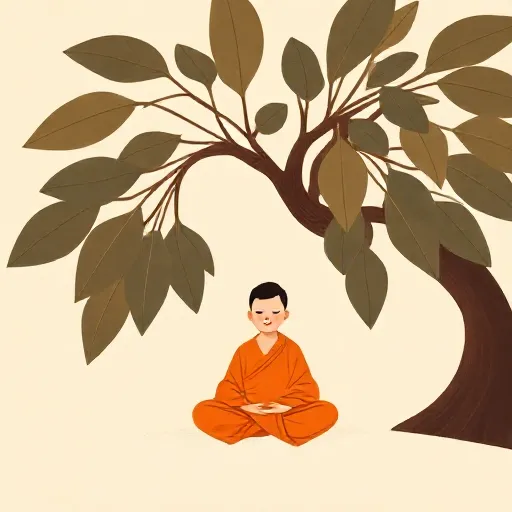
If you are already brahman, why do you need to do anything? Śaṅkara compared this to the tenth child: you do not need to become the tenth, only to know that you are already counted. Liberation is a shift in knowledge, not a result you can earn by muscle or willpower.
To spark that shift, Śaṅkara turned to the great identity statements of the Upaniṣads, such as “tat tvam asi” — “You are that.” He read them through a three‑part method.
First, discriminative reasoning (anvaya‑vyatireka): you observe what is always present and what comes and goes. Consciousness persists through waking, dreaming, and deep sleep, while thoughts and body sensations flicker. Therefore, you are consciousness, not those passing states.
Second, secondary implication (lakṣaṇā): when a sentence like “You are that” sounds absurd because “you” means a tiny person and “that” means the whole universe, you drop the superficial meanings. What remains is pure consciousness — the “you” that is no different from the “that” of existence itself.
Third, negative language (neti neti, “not this, not this”): you mentally peel away every label — not the body, not the emotions, not the intellect — until nothing objectifiable is left. This is not a denial that anything exists, but a way of pointing to the unpindownable reality that words cannot capture.
Śaṅkara did not dismiss preparation. He valued a calm, ethical life. Practising compassion, controlling anger, meditating, and acting for the good of the world help clear the mind so that the teaching can land. But ultimately, he said, no action fabricates brahman. The moment you really see who you are, ignorance evaporates. From then on, you live liberated while alive (jīvanmukti). You still eat, walk, and talk, but free from the illusion of a fragile, separate self — much like a lucid dreamer who knows the monsters cannot hurt them.
Why It Still Matters: Are You Still Asleep?
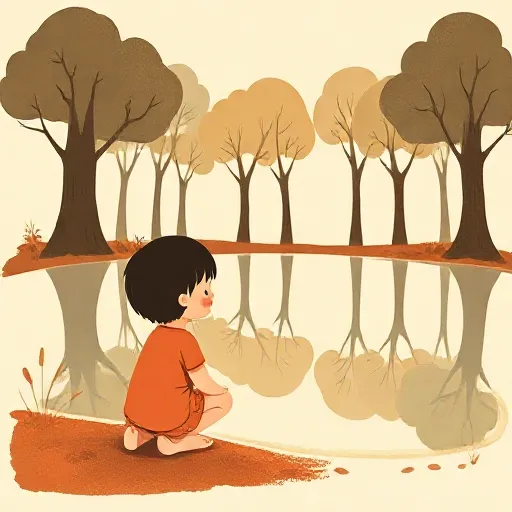
Śaṅkara’s questions have not gone away. Every day you feel like a single self, riding around in a body, trying to get happy and avoid pain. But what if that feeling of separateness is, at bottom, a mistake? What if the real “you” cannot be hurt, cannot be lost, and is already full?
These are not just ancient riddles. Today, scientists debate whether consciousness is produced by the brain or is something more fundamental. Philosophers ask whether a unified field of awareness might underlie the universe. And in your own life, you know moments — looking at a starry sky, holding a friend’s hand — when the boundary between you and the world seems to dissolve. Śaṅkara would say that fleeting glimpse is a hint of the truth.
The idea that you are not a small, limited thing but pure awareness, one with everything, can feel both liberating and dizzying. It challenges what most of us take for granted about fear, desire, and identity. You do not have to accept Śaṅkara’s vision. But walking alongside his arguments, even for a little while, might change how you see yourself — and the world that appears around you.
Think about it
- If you found out that your whole life was a dream, how would that change what matters to you?
- Imagine you are playing a video game and your character is afraid of dying. You know you are the player, not the character. Could you live your real life with that same knowing?
- Can you remember a moment when you felt completely at one with everything — no separation between you and the world? What was that like?