Are You a Person or a Cloud of Particles? Sellars' Two-Image Puzzle
A Kid and Two Clashing Pictures

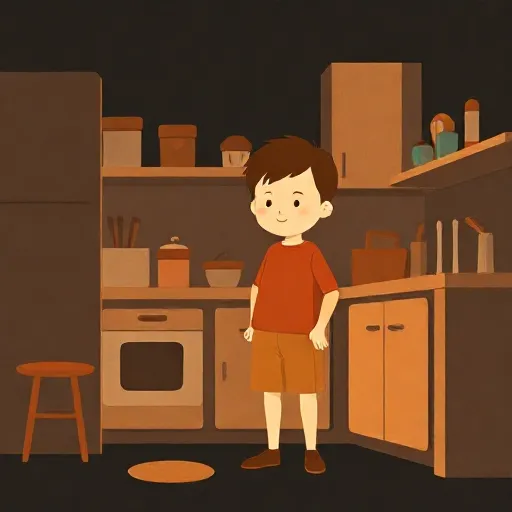
It’s a lazy Saturday morning. You’re standing in the kitchen, trying to decide between the frosted flakes and the oat loops. It feels like you weigh the taste, remember that the flakes get soggy, and choose the loops. You’re a person, acting for reasons. Then your science teacher’s voice pops into your head: “Your brain is just neurons firing. All your thoughts are caused by chemicals and electricity. The decision was determined by physics before you even felt it.” So, which story is right?
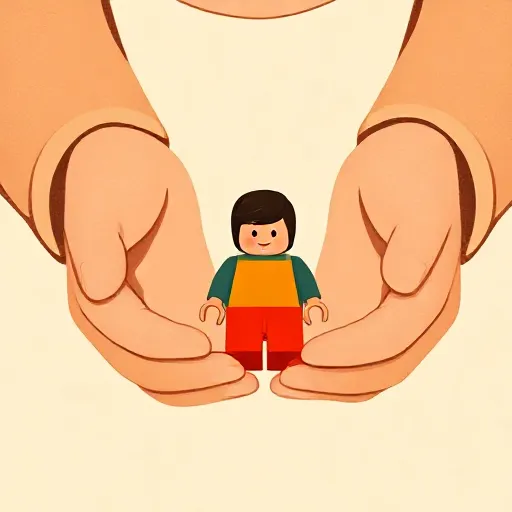
The American philosopher Wilfrid Sellars (1912–1989) spent his career wrestling with this. He thought we all live with two different ways of seeing ourselves, what he called the manifest image and the scientific image. These aren’t just opinions; they’re whole frameworks for understanding the world. And they seem to clash head-on.
The Person’s World: Reasons and Rules

The manifest image is the picture you use every day. In this framework, the world is full of people and things, but people are special. They think. They have beliefs, desires, hopes, and regrets. Most importantly, they act for reasons. If you ask your friend why she lent you a pencil, she might say, “Because you needed one.” That’s a reason. She didn’t just reflexively hand it over like a robot; she understood your situation and did something that made sense.
Sellars emphasized that in the manifest image, we are always judging and being judged. When someone gives a reason, it can be a good reason or a bad one. When they do something, we can call it right or wrong. This world of reasons is shot through with norms — rules and standards about what we ought to think, say, or do. The manifest image isn’t anti-scientific; it includes a lot of everyday knowledge and careful observation. But it treats persons as the center, and it sees human life as guided by choices and values. It’s the world where you’re responsible for what you do because you could have done otherwise.
The Subatomic World: Science’s Rival Picture
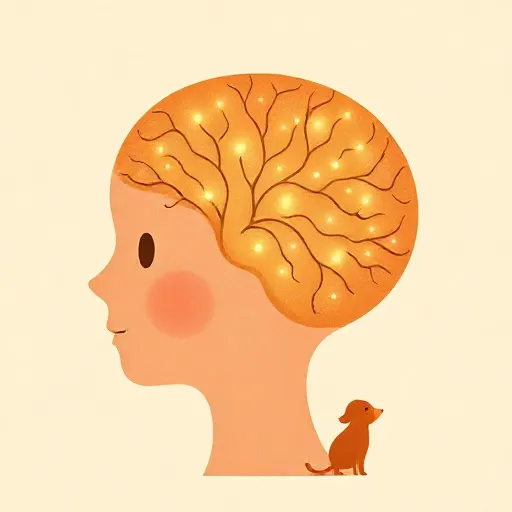
The scientific image is different. It doesn’t start with people; it starts by postulating tiny, invisible things — atoms, quarks, fields — that we can’t see but that explain everything we do see. Science builds a description of the world piece by piece, using experiments and mathematics. In this picture, you are a marvelously complicated system of particles. Your “decision” about breakfast is just a cascade of electrochemical events in your brain. There’s no “reason” in the scientific image, only causes.
Sellars thought the scientific image is not just a useful tool — it’s a rival to the manifest image. It claims to give the real story, the way things are independently of how we experience them. He made a bold claim: “in the dimension of describing and explaining the world, science is the measure of all things, of what is that it is, and of what is not that it is not.” That means when we ask what really exists (not what’s right or wrong), science is the final judge. The manifest image of free choices and reasons might be a useful illusion we evolved to live by, but the truth is particles and forces.
But if that’s so, where do we, as persons, fit? Does that make your choice of cereal meaningless? Sellars didn’t think so. He argued that describing and explaining aren’t the only important things we do. We also prescribe rules, make commitments, and hold each other responsible. Science can’t replace the language of “ought” and “reason” — it can only describe what is.
The Myth of the Given and How We Build Our Minds

Behind the clash of images lies a deep problem about how we know anything at all. For centuries, philosophers thought knowledge must rest on a firm foundation — something that is just given to us, directly and certainly. Maybe it’s raw sensations: you see a red patch and know with absolute certainty “that is red.” This is called the given.
Sellars launched a famous attack on this idea, calling it the myth of the given. He argued that nothing could do that job. For a bit of experience to support your other knowledge, it has to have a form that can serve as a reason — it has to be something you could say, like “This apple looks red.” But as soon as you put something into words, you’re already using concepts, and you need background knowledge: you need to know what an apple is, what “red” means, and what it means to “look” a certain way. So, your seemingly basic observation already depends on a lot of other knowledge. There is no pure, knowledge-free starting point.
This doesn’t mean we don’t know anything; Sellars thought knowledge is more like a self-correcting web. We can question any part of it, but not all at once. To explain how we get our concepts of the mind itself, he told a thought experiment — the Rylean myth. Imagine a community of early humans who have no words for thoughts or sensations. They can talk about objects and describe each other’s behavior. Then, like scientists inventing the idea of atoms to explain smoke, they invent inner “thoughts” to explain why people sometimes sit quietly and then suddenly act; and inner “sense impressions” to explain why someone might hallucinate a pink elephant. Over time, they learn to apply these inner-state concepts to themselves. Sellars’s point is that we don’t have mysterious direct access to our minds; we learn to understand our own thoughts partly by applying the same concepts we invented to make sense of others. Mental life is not a private theater — it’s something we learn to talk about in a public language. And because we can talk about it, we can also give reasons. We enter what Sellars called “the logical space of reasons, of justifying and being able to justify what one says.”
Oughts, We‑Intentions, and the Rules of Being Human
If the scientific image captures what is real, how can rules and moral obligations be real? Sellars gave a sophisticated answer. He thought that when we talk about what we “ought” to do, we aren’t describing a fact like “the cat is on the mat.” Instead, we are expressing an intention — a special kind of thought that motivates us to act.
Consider a simple rule: “Dogs ought to come when called.” That’s an ought-to-be, a rule of criticism. It doesn’t command a dog, because a dog can’t understand the rule. But if you are the dog’s owner, you reason: It ought to be that my dog comes when called. So, I ought to train my dog. Then you act. This shows how rules work: they live only because there are people who can recognize them, turn them into plans, and act on them.
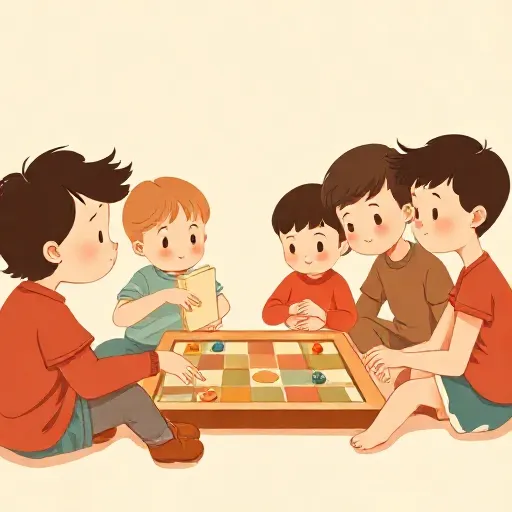
Sellars took this further. For moral rules — the kind that say something is right or wrong for everyone — we need more than just my individual intention. We need a we‑intention. That’s an intention I have as a member of a group: “It shall be the case that our welfare is promoted,” intended not just by me, but by us. This we‑intention makes a community real. It also ties together the two images: the scientific image tells us what is; the manifest image, with its rules and we‑intentions, creates the space for what ought to be. Because we treat each other as persons subject to norms, we actually become persons. Sellars wrote: “When God created Adam, he whispered in his ear, ‘In all contexts of action you will recognize rules, if only the rule to grope for rules to recognize. When you cease to recognize rules, you will walk on four feet.’” We are rational animals not because we have a special ghostly stuff, but because we live inside rules that we make and enforce together.
Seeing with Both Eyes: Why It Still Matters

So, which picture is right — the manifest or the scientific? Sellars didn’t tell us to pick one and toss the other. He called for a synoptic vision, a way of seeing with both eyes at once. Science tells the ultimate truth about what kinds of stuff exist, but the language of intentions, rules, and community is indispensable for living a human life. Without it, we would stop being persons and become just complex clumps of matter, incapable of holding each other responsible or even doing science — because science itself is a rule‑governed activity that depends on norms of good reasoning.
Every time you explain why you did something — “I shared my snack because it was fair” — you’re speaking the language of the manifest image. Every time a doctor scans your brain and says, “Your prefrontal cortex is active,” you’re in the scientific image. The challenge Sellars left us is to keep these two ways of talking in balance, to refuse to deny either your freedom or your physics. He thought the very idea of being human hangs on holding these two pictures together, even though they seem to contradict. You’re not just a person, and you’re not just a collection of cells. You’re a creature that must learn to live in both worlds at once.
Think about it
- If a scientist could scan your brain and predict every choice you will ever make with 100% accuracy, would it still make sense to say you chose freely? Why or why not?
- Can you imagine a world where everyone spoke only in the language of science — no words like “should,” “fair,” or “blame”? Would that world be missing something important, or would it be just as good?
- Think of a time you did something just because it was “the right thing to do.” Was your reason a real feature of the world, or just something you made up? How could you tell?