Can a Human Become God? The Monk Who Dared to Say Yes
A Courtier Called “Irish Porridge” Fights for Freedom

In the year 851, a Saxon monk named Gottschalk (806–868) was locked in a French abbey. He had been condemned for preaching “twin predestination”—the idea that God decides before you are born whether you will end up in heaven or hell, and nothing you do can change it. Two powerful bishops, Hincmar of Rheims and Pardulus of Laon, worried that Gottschalk’s harsh view was gaining followers. They turned to a sharp-minded Irishman at the court of King Charles the Bald. His name was Johannes, but he signed himself Eriugena (“Irish-born”), a word he invented to remind everyone where he came from.
Eriugena (c. 790–c. 877) wrote a fiery reply, On Divine Predestination. He argued that God is perfectly good and does not force anyone to be evil. Since God is outside time, talk of “fore-knowing” or “pre-destining” makes no sense—God doesn’t look down a timeline and pick winners and losers. Human nature, he insisted, was created free. “God did not create in man a captive will but a free one,” he wrote, “and that freedom remained after sin.” If people are damned, it is because they have damned themselves through their own choices, not because God wills it.
His opponents were furious. They mocked his “Irish porridge” (pultes scottorum) and his reliance on dialectic—the careful method of reasoning through arguments and counter-arguments. Bishops condemned his treatise at two church councils (Valence in 855 and Langres in 859). Yet the king’s protection kept Eriugena safe, and his belief that reason could settle theological disputes only grew stronger.
What If Reason Itself Leads to God?
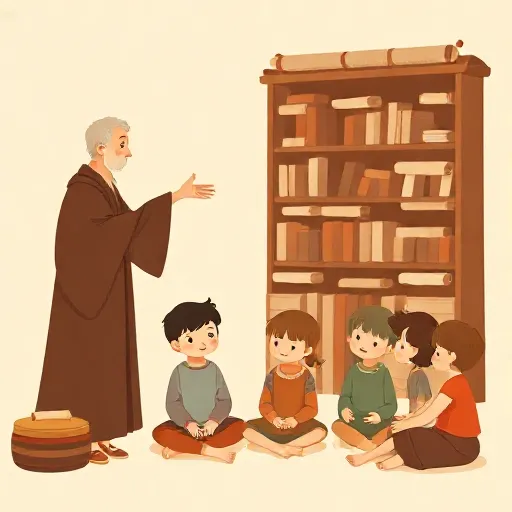
Eriugena didn’t just defend free will; he had a radical vision of how we can know anything at all. He believed that dialectic—the art of questioning, defining, dividing, and proving—was not just a classroom skill. It mirrored the very structure of the universe. For him, true philosophy and true religion were the same thing. In a commentary on an ancient textbook, he even wrote that “no one enters heaven except through philosophy.”
That sounded shocking to theologians who thought faith should simply accept church teaching. Eriugena’s critic, Bishop Prudentius of Troyes, complained that Eriugena was tangled in a labyrinth of logic instead of sticking to the Gospel. But Eriugena pushed back. He had been the royal master of the liberal arts, teaching grammar, logic, and astronomy. He saw these subjects as training the mind to see the unity of all knowledge. The arts were not just tools; they were steps toward wisdom. He trusted reason deeply, believing that even the highest mysteries of God could be approached by thinking clearly and following arguments wherever they led.
This trust in reason produced his masterpiece, a long dialogue between a Teacher and a Student. He called it Periphyseon, or On the Division of Nature.
Nature’s Fourfold Puzzle: God, Ideas, Things, and Nothing
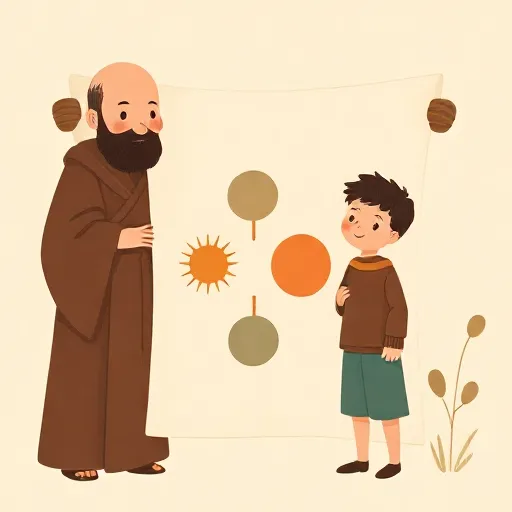
At the start of the Periphyseon, Eriugena makes a breathtaking claim: the whole of nature—including God—can be divided into four species.
- Nature that creates and is not created. This is God, the source of everything.
- Nature that creates and is created. These are the Primordial Causes—the eternal ideas or patterns in God’s mind, like blueprints for every possible thing.
- Nature that is created and does not create. This is the world of temporal effects—the physical, changing universe we see around us.
- Nature that is neither created nor creates. This is non-being, which also points back to God, because God transcends all ordinary being.
This wasn’t just a list. Eriugena thought that being and non-being were always in motion, depending on your point of view. He explained this with five modes of being and non-being. The most striking mode says that God, because God is infinite and beyond anything we can grasp, is “nothingness through excellence.” In other words, God is so real that our usual categories—substance, time, place—simply don’t apply. At the opposite end, unformed matter is also called “nothing,” but only “nothing through privation,” almost a shadow of reality.
To a twelve-year-old, it might sound like a riddle: God is nothing, yet God is the most real thing. Eriugena loved this kind of puzzle. It forced his readers to use their reason and to accept that truth often comes in contradictions.
The Universe as a Mirror: God’s Self-Portrait in Creation
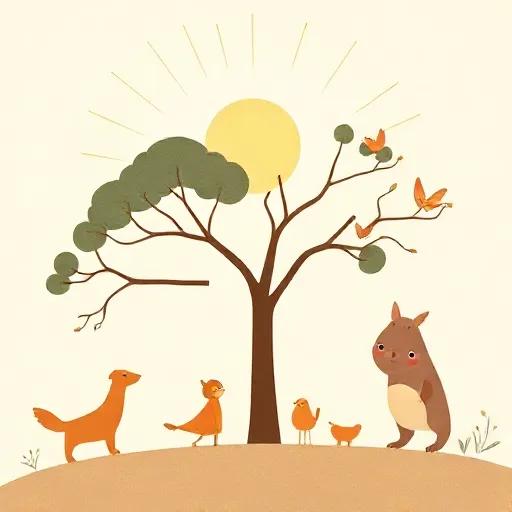
If nothing exists outside God, how does creation happen? Eriugena answered: creation is God’s self-manifestation. The hidden, unknowable God “creates himself” by pouring out divine appearances he called theophanies. Everything that exists is a kind of light shining from God, and everything remains inside God. He could say, boldly, that God is the “essence of all things” and the “form of all things.”
But Eriugena didn’t think the world was just God in disguise. He insisted that God is not like a giant container with creatures as parts. A better analogy is a mind thinking thoughts: the thoughts are in the mind, yet the mind is not exactly the same as any single thought. God is both utterly beyond everything and deeply present within it. Creatures, however, don’t yet realize they live in God. The whole cosmos is an act of divine self-knowing, and the return journey is built into the structure.
Because cause and effect are two sides of one coin—a cause isn’t really a cause without its effect—Eriugena argued that everything must eventually flow back to its source. This grand cycle, drawn from Greek Christian thinkers like Maximus Confessor, meant that all things would one day be reunited with God.
You Are an Image of the Infinite: The Scandal of Human Nature
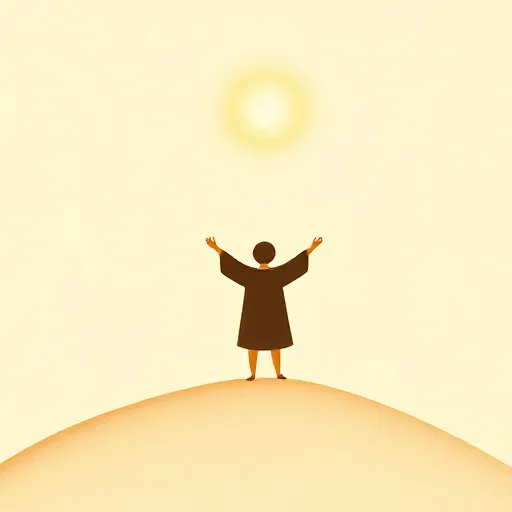
Human beings have a special role in this cosmic story. Eriugena called humanity the “workshop of all things” (officina omnium), because we contain both a physical, animal nature and a spiritual, intellect nature. More importantly, we are made in the image and likeness of God. And if God is infinite and uncircumscribable, so is the deepest core of every human being.
Eriugena took this to a startling conclusion. Just as God does not know what God is—because God is not a “what” that can be defined—so humans cannot fully define their own essence. We can know that we exist, but not what we are. This is apophatic anthropology: the idea that true human nature escapes every description, because it mirrors the infinite.
He also believed that the division into male and female was a result of the Fall, not part of the original, unfallen human nature. “Man is better than sex,” he wrote, pointing to scripture: “in Christ there is neither male nor female.” Real human nature, united in Christ, is whole and undivided.
That led to his most daring claim: deification. The early Christian slogan “God became human so that humans might become God” was well known, but Eriugena pushed it further. Through intellectual contemplation and grace, the elect will merge with God like a drop of water blending into a stream, like individual lights blending into one light. Yet he was careful: a difference in “subject” or “number” remains—we don’t stop being who we are, but we become fully what we were always meant to be, shining with the divine nature itself.
Why His Ideas Were Condemned—and Why They Keep Returning
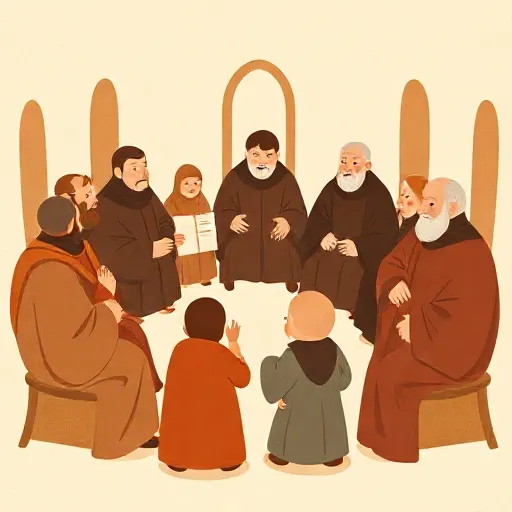
Eriugena’s emphasis on the unity of God and creation aroused suspicion. In the thirteenth century, church authorities linked his Periphyseon to two condemned teachers at the University of Paris, and in 1210 and 1225 his book was officially censured. It was later placed on the Index of Prohibited Books, where it remained listed for centuries.
But the ideas did not die. They quietly fed the mysticism of Meister Eckhart (c. 1260–c. 1328) and the philosophy of Nicholas of Cusa (1401–1464), who owned a copy of the Periphyseon. In the 1800s, German philosophers like Hegel admired him as a forerunner of their own grand systems. Today, scholars still study his works, fascinated by his blend of rigorous logic and mystical daring.
Eriugena forces us to ask: how far can reason take us? Is there something dizzying—and maybe dangerous—about believing that you are an image of the infinite? His life shows that thinking boldly can get you in trouble, but it can also open doors that stay open for a thousand years. The next time you feel like your mind can’t be boxed in, you might be touching the same limitlessness Eriugena saw in every person.
Think about it
- Eriugena thought that God does not know what God is, because God is not a “what.” If you can love or admire something without being able to define it completely, does that make the feeling weaker or stronger?
- He believed that in the end, everything—even things that seem evil or broken—will return to God. Is it fair if everyone, no matter what they did, ends up united with the divine?
- If you were told that your true self is infinite and beyond all labels, would that feel freeing or frightening? Why?