Prove God Exists? The Monk Who Said Yes, and That God Chooses Morality
The Friar Who Dared to Use Logic on God
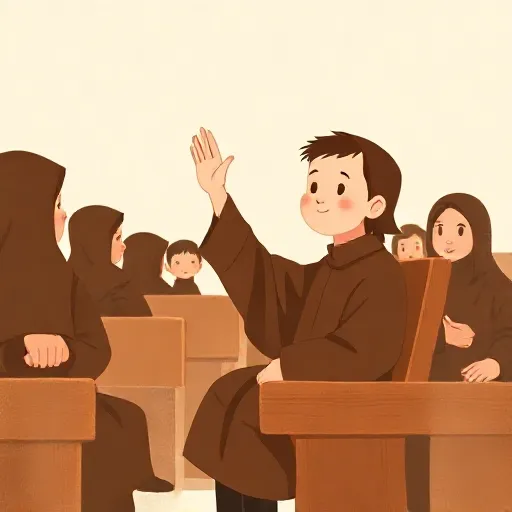
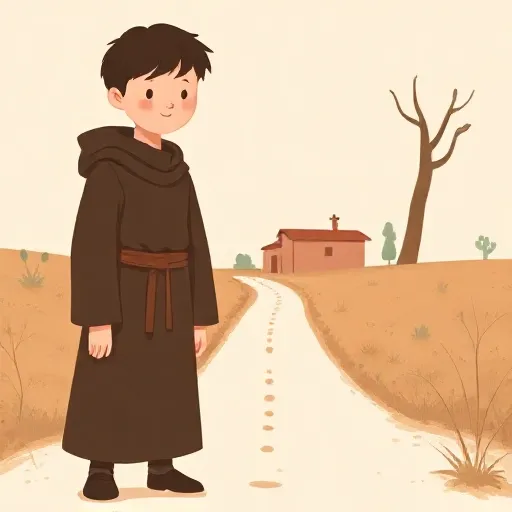
It’s a chilly morning in Oxford in the 1290s. In a stone lecture hall, a young Franciscan friar in a brown wool robe raises his hand. The master has just said that the most important truths about God are known only through the Bible. But John Duns — called Scotus because he comes from Scotland — isn’t satisfied.
John Duns Scotus (c. 1266–1308) was a priest, a philosopher, and a ferociously sharp thinker. His writings are so subtle that later scholars called him the “Subtle Doctor.” He taught at Oxford, then at Paris, and died young in Cologne. But in that short life, he built a system of thought that still makes people argue.
Scotus was practicing natural theology: the attempt to prove God’s existence and nature using reason alone, without leaning on scripture or mystical experiences. Like Aristotle, he believed all our knowledge starts from what we can see, hear, and touch. Yet he was sure that even from those humble beginnings, a careful mind could climb all the way to an infinite being. That climb begins with a deceptively simple question: does the world need a first cause?
Can You Prove God Exists? The Chain That Cannot Go Back Forever
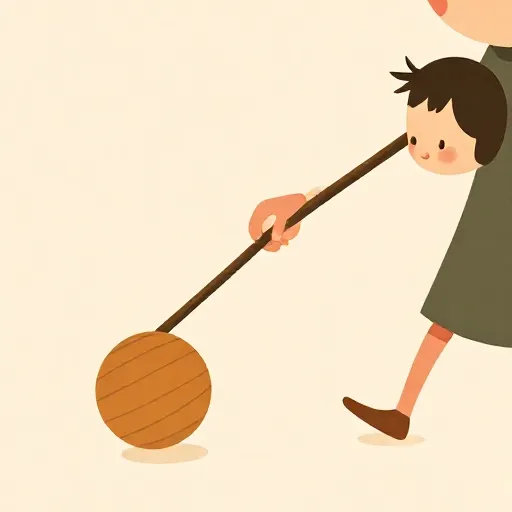
Scotus asks you to picture two kinds of cause-and-effect chains. In an accidentally ordered series, each link creates the next, but the later link doesn’t depend on the earlier one for its own power to act. Imagine dominoes: Domino A falls and knocks over Domino B, which knocks over C. B can topple C even if A has already flopped and disappeared; B’s own fall doesn’t rely on A still falling.
Now picture an essentially ordered series. Your shoulder moves your upper arm, which moves your forearm, which swings a golf club. The forearm can move the club only because the upper arm is moving it right now. If the shoulder stopped, the whole chain would freeze. Each member depends on the earlier member at the very same moment.
Using that distinction, Scotus built one of the most admired proofs in the history of philosophy. He began with three statements he thought nobody could deny:
- Nothing can produce itself.
- An effect cannot come from absolutely nothing.
- A perfect circle of causes is impossible — A can’t be caused by B if B is caused by A in the same respect.
From these, he concluded that every effect must be produced by something else. Now, if we trace essentially ordered causes backward, could the chain go on forever? Scotus said no. A series where every member depends on a prior member for its causal power right now would be a chain of permanent dependence — a kind of built-in imperfection. If it were possible for something to exist without that dependence, then a being that doesn’t depend on anything prior in the series must be possible. And if it’s possible, Scotus argues, it is actual: because if no first agent existed, nothing could bring about the possibility of one. So there must be a first agent — a cause that isn’t dependent on any earlier cause in an essentially ordered series.
He then shows that this first agent must also be the ultimate goal toward which all things aim, and must be the most excellent being imaginable. He calls these three roles the “triple primacy.” Then he proves they belong to one and the same being — and that this being must be infinite and unique.
Same Words for a Bird and for God? The Shocking Idea of Univocity
So God is infinite. But how can we talk about an infinite being with words that come from our finite world? Many of Scotus’s contemporaries, including Thomas Aquinas (1225–1274), insisted that words like “good” or “wise” mean something different when applied to God. This is called analogical predication: the meaning is related but not identical. You might say a meal is “good” and God is “good,” but the word doesn’t point to the same thing.
Scotus rejected that. He believed we must use univocal predication — the exact same meaning — for God and creatures, at least for some concepts. His first argument is brutally simple: if all our concepts come from creatures (and they do), then the only concepts we can ever have are exactly the concepts we get from creatures. So if we can’t use those same concepts for God, we can’t use any concepts at all. We would be utterly mute about God, which is plainly false.
He sharpens the point with a test borrowed from Anselm of Canterbury. Think of a quality for which it is always, in every respect, better to have it than not to have it — and which doesn’t imply any limitation. Scotus calls such qualities pure perfections. Wisdom is a pure perfection; so is goodness. Now, how do we discover that wisdom is a pure perfection? We look at creatures and notice: a wise person is better off than an unwise one, and wisdom doesn’t make the person limited. So we form the concept wisdom. Then we reason: if this concept is of something it is always better to be than not to be, and it implies no limit, then we must apply that very same concept to God. If we didn’t, we would be saying either that the pure perfection we found in creatures doesn’t belong to God (which would dent the idea that God is the greatest being), or that the concept we apply to God is different — but then we could never figure out what God is like in the first place.
Because the pure perfections apply univocally, we can say God is good, wise, and so on — not in a weak, analogical way, but truly. The difference is only one of degree: God possesses those perfections infinitely, while creatures have them in a limited way. And this gives us the best simple concept of God we can have in this life: infinite being. Infinity isn’t a separate add-on; it’s the intrinsic way God exists, a limitless ocean of perfection. Scotus thinks this concept is far cleaner than Aquinas’s idea of divine simplicity, which he felt tangled our language instead of freeing it.
Did God Have to Make the Rules? Why Scotus Said No
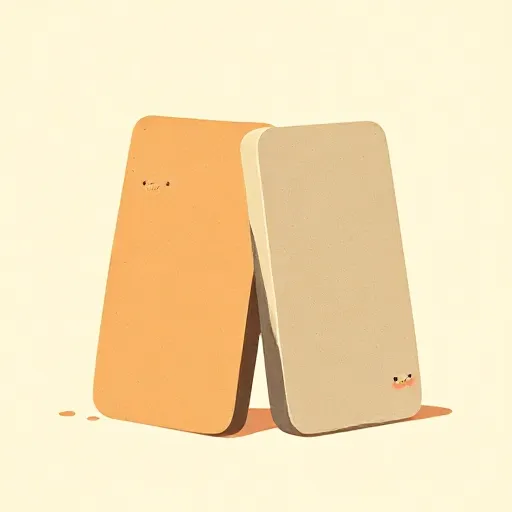
If God is infinitely free, can God decide what is right and wrong? Scotus’s answer is startling. He looks at the Ten Commandments and divides them into two groups. The first tablet contains duties toward God: have no other gods, don’t misuse God’s name, keep the Sabbath holy. Scotus insists that the deepest core of these rules is necessary — not even God could make them false. Given what “God” means, a being supremely worthy of love and reverence, it follows that God must not be hated, no other gods should be worshipped, and no irreverence should be done to him. Those truths are self-evident and analytic; they belong to the natural law in the strict sense.
But the second tablet is different. Commands like “honor your father and mother,” “do not kill,” “do not steal” are not self-evident. They are not necessary truths. Scotus says they are “highly consonant” with the first tablet, but they are still contingent — they could have been otherwise, and they depend entirely on God’s free choice. God could have commanded that we honor our cousins instead of our parents, or that stealing in certain circumstances is permitted. There is no adequate reason why God willed one set of rules rather than another, beyond the sheer fact of his will. If there were a total explanation, those rules would be necessary, and they aren’t.
This is where Scotus’s picture of human freedom comes in. He thinks the will has two fundamental inclinations, which he calls affections. The affection for the advantageous (affectio commodi) is your natural pull toward whatever makes you happy and fulfilled. It’s what you share with other animals: you seek what feels good. The affection for justice (affectio iustitiae) is different. It is a drive to do what is right simply because it is right, even when it costs you happiness. For Scotus, morality is not about serving your own flourishing; it’s about obeying God’s will out of a love of justice. That means you can freely choose against your own advantage — and that is exactly what makes you a moral being.
You can see the difference in a simple test. Suppose you find a wallet full of cash and nobody is watching. Your affection for the advantageous might whisper “keep it; it would make you happy.” Your affection for justice urges “return it, because it’s right.” Scotus says you can go either way. Real freedom isn’t just picking between chocolate and vanilla; it’s the ability to defy your own happiness for the sake of a higher demand.
Why It Still Matters: Reason, Faith, and the Freedom to Choose Right

Scotus walks a tightrope between two worlds. On one side, he insists that reason can carry you a long way — all the way to an infinite first being. On the other, he says that many of the moral rules we take for granted could have been different, because God’s will isn’t answerable to our ideas of fairness or happiness. That combination makes people uncomfortable even today.
If God could have commanded different rules, is morality just whatever God happens to want? That’s the famous “Euthyphro dilemma”: is something right because God commands it, or does God command it because it is right? Scotus’s answer is nuanced. Some moral truths are fixed by the very idea of God and cannot be otherwise; others are true only because God freely chose them. This split still fuels arguments among philosophers of religion about whether morality can have a stable foundation in a divine will.
But Scotus’s most personal challenge is the affection for justice. You’ve felt it. The moment you decided not to copy a friend’s homework even though you were stressed, or you told the truth when a lie would have gotten you out of trouble — those choices didn’t make you happier in the short run. Yet something in you insisted. Scotus would say that was your affection for justice, the part of you that can rise above self-interest. It’s a reminder that you are more than a happiness-seeking machine.
And if a friar in a brown robe could use nothing but his mind to reason all the way to an infinite being, then the questions you ask — about God, about right and wrong, about why you sometimes choose the harder path — are not childish. They are the same questions that echoed through medieval lecture halls, and they still ring.
Think about it
- If God could have commanded different moral rules, would it be okay for God to command something most people today see as terribly wrong? Why or why not?
- Think of a time you did the right thing even though it made you unhappy in the moment. Did it feel like a free choice, or like something pulling you from outside?
- If you could prove God exists using logic alone, would you still need faith? What would be left for faith to do?