Why Schopenhauer Thought Music Could Unlock the Universe
The Headphone Moment: When Wanting Fades Away
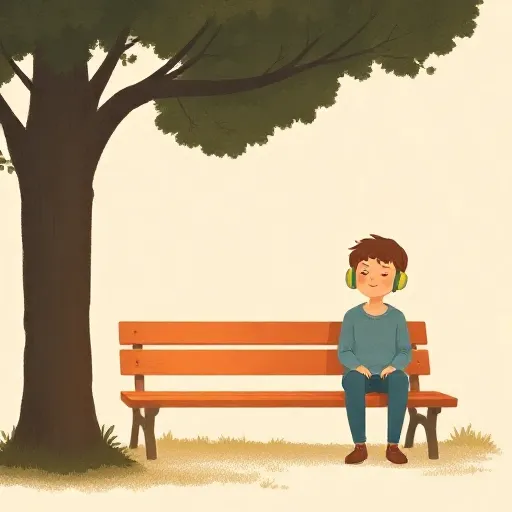
You slip on your headphones, close your eyes, and let the music wash over you. For a few minutes, your own worries about homework or arguments with friends seem to evaporate. You are not thinking about what you want or what you need to do next. You are just… there. It feels like the music understands something about life that you can’t put into words. The German philosopher Arthur Schopenhauer (1788–1860) would have nodded knowingly. He thought moments like this were not just pleasant distractions. They were a rare escape from the deepest prison inside us all.
Schopenhauer believed the world has two faces, like two sides of a coin. On one side is the world as we normally experience it — full of separate objects in space and time, all connected by cause and effect. He called this face Representation. On the other side lies the hidden, raw energy behind everything. He called this face the Will. The Will is a blind, purposeless urge that never stops striving. It shows up in the pull of gravity, in the growth of plants, and most clearly in your own cravings, fears, and ambitions. In everyday life, your mind works as a loyal servant of your personal Will. You constantly size up everything around you in terms of “What can this do for me?” — a sandwich feeds you, a rival threatens you, a chair offers rest.
Schopenhauer’s big idea was that art could flip the coin. A genuine aesthetic experience, he argued, could silence that restless servant for a while and let you see things without the hunger of your own Will getting in the way.
The Hungry Engine Inside You (and Why It Hurts)
The Will inside you is what Schopenhauer called the will to life. It pushes every living creature to compete, survive, and chase satisfaction. The problem is that satisfaction never lasts. Getting exactly what you want brings a flash of joy, but that flash quickly fades into boredom. And boredom is just another form of wanting — a restless emptiness that demands a new desire to fill it.
This cycle leads to Schopenhauer’s pessimism. He believed that for most creatures, life is an unending rollercoaster of striving, brief relief, and fresh suffering — all without any final purpose. It is a grim picture, but he did not think all hope was lost. He pointed to three paths that could loosen the Will’s grip: losing yourself in art, feeling genuine compassion for others, and, for a very few, a life of total self-denial. The path he explored most deeply was the aesthetic one, because he thought nearly everyone could step onto it at least occasionally.
When the Wheel Stops: Art as a Vacation from Yourself

A genuine aesthetic experience, for Schopenhauer, happens when two things occur at the same time. First, your mind stops being a servant of the Will. You no longer ask “Where, when, and why?” or “What’s in it for me?” You simply ask “What is this thing, in itself?” He called this state becoming a pure subject of cognition — a knower who has temporarily escaped ego.
Second, because your own wants are quiet, the object in front of you reveals its essential pattern. Borrowing from the ancient Greek philosopher Plato, Schopenhauer called these patterns the Platonic Ideas. They are not concepts you learn from a textbook. They are timeless shapes that you directly perceive — the archetype of a tree, a horse, or a human being — when your ordinary hungry mind has stepped aside.
This experience comes in two main flavors. The beautiful happens when the object easily invites calm contemplation, like a flower or a graceful vase. The sublime happens when the object is frightening or overwhelmingly vast — a storm at sea, a desert stretching to the horizon, a starry night sky. In the sublime, you first recognize the threat to your little human will, and then you consciously tear your attention away from it. That effort brings a double shot of self-consciousness: you feel yourself breaking free, and you feel a surge of exaltation at having done so.
Schopenhauer was strict about what could not be art. He banned the stimulating — objects that stir bodily appetite or disgust, like a painting of a lavish meal that makes you hungry, or a nude treated in a way that arouses lust. Those things yank you straight back into wanting, making true contemplation impossible.
The Ladder of the Arts: From Stones to Star-Crossed Lovers

Schopenhauer did not think all art forms were equal. He ranked them like rungs on a ladder, based on how complex and complete the Ideas they revealed were.
At the bottom sat architecture and artistic fountains. They capture the simplest objectifications of the Will: mass, gravity, rigidity, and fluidity. A column shows you the blind striving of stone to hold its shape against the earth. Next came landscape gardening, which coaxes the essential patterns of plant life into view. Then painting and sculpture, which can reveal the Idea of humanity — not just a person’s outer shape, but the universal human drama written in a face or a gesture. Schopenhauer loved that an ordinary tavern scene could unfold the Idea of humanity just as powerfully as a portrait of a king.
Higher still was poetry. Using the abstract tool of words, a poet can distill precise images and feelings in the reader’s mind. The summit of poetry, for Schopenhauer, was tragedy. A great tragedy shows us the terrible side of existence — the triumph of chance, the suffering of the innocent, the quiet destruction that flows from perfectly ordinary choices. The most valuable tragedies are those where no one is a monster. The disaster grows naturally out of everyone’s character, making it feel terribly close to us. This kind of art shakes our stubborn optimism and, he believed, delivers a painful but precious dose of truth.
And then there was music. Music was not on the ladder at all.
Music: The Universe’s Inner Voice Bypasses the Ladder
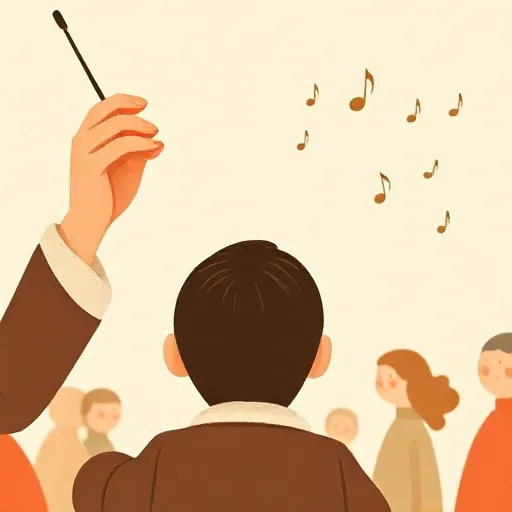
All the other arts, Schopenhauer argued, copy the Platonic Ideas — the essential patterns of the visible world. Music does something far stranger. It copies the Will directly, skipping the Ideas completely. This means music stands on the same level as the Ideas themselves. It reveals the hidden thing-in-itself in a way that bypasses the world of objects.
To make this case, he started from a very personal kind of knowledge. When you decide to raise your arm, you do not need to observe yourself as if you were a scientist. You feel the act of willing immediately, from the inside. That inner feeling is not filtered through space or causality — only through time. Schopenhauer believed the experience of absolute music (music without words, story, or imitation) works the same way. It flows in time but escapes all the other mental filters that shape our ordinary picture of the world.
He drew endless analogies between music and the world of the Will. Deep bass notes are like the heavy, unconscious striving of inorganic nature. Melody is like the hidden story of human emotions — joy, sorrow, terror — stripped of any particular situation. Lively dance rhythms mirror easy, everyday happiness, while a grand, slow march mirrors a noble striving toward distant goals. Music never says, “this specific person is sad about this specific thing.” It says sadness itself.
Schopenhauer knew this was a breathtaking claim, and he was honest about its limits. He admitted he could not prove it. All he could do was invite the reader to listen to great music while keeping his philosophy in mind, and see if the theory felt true. If it still did not, he said, there was nothing more he could add. Yet his invitation worked on many people. Composers like Johannes Brahms, Richard Wagner, and Gustav Mahler took his ideas to heart, and for over a century his vision of music has echoed through debates about what sound can really teach us.
From Art to Compassion: Why This Still Matters
Schopenhauer saw a deep link between aesthetic experience and ethics. When you gaze at a painting or lose yourself in a symphony, you taste what it is like to see the world without the filter of “me first.” That taste, he believed, is the first step toward genuine compassion. If you can perceive another person not as a tool or an obstacle but as a fellow sufferer driven by the same blind Will, cruelty becomes much harder.
The sublime carries an extra ethical payload. When you watch a tragedy and feel horror at the suffering on stage, you also feel something else: a sense of your own power to detach from selfish panic. You realize that you are not just the hungry little ego you normally feel like. You have a deeper, freer self that can step back and choose a different attitude. Schopenhauer called this a moment of transcendental freedom — a mysterious ability, rooted in the hidden side of reality, to say “no” to the Will’s demands.
He believed that after enough such insights, a person faces the only truly free choice there is: to affirm the will to life, knowing full well the suffering it brings, or to begin denying it. Although he leaned toward denial, he left the choice open. It was a problem that his later reader Friedrich Nietzsche would wrestle with for his whole career.
That choice may sound remote. But think about what happens when a song makes you feel linked to everyone who has ever felt heartbreak, or when a film makes you root fiercely for a character unlike anyone in your own life. In those moments, the walls of “me” and “mine” grow thin. Schopenhauer would call that a crack in the armor of ego — and the beginning of a life less hungry, less alone, and maybe a little more kind.
Think about it
- If you could push a button and stop wanting anything at all — no more cravings, no more boredom — would you press it? What might you lose along with the pain?
- Think of a sad movie or song that you love. What makes that sadness feel different from a sad event in your real life?
- Schopenhauer thought beauty could make you a more compassionate person. Has a book, film, or piece of art ever genuinely changed how you treated someone?