The Philosopher Who Said You Are Condemned to Be Free
A Cocktail and a Revolution

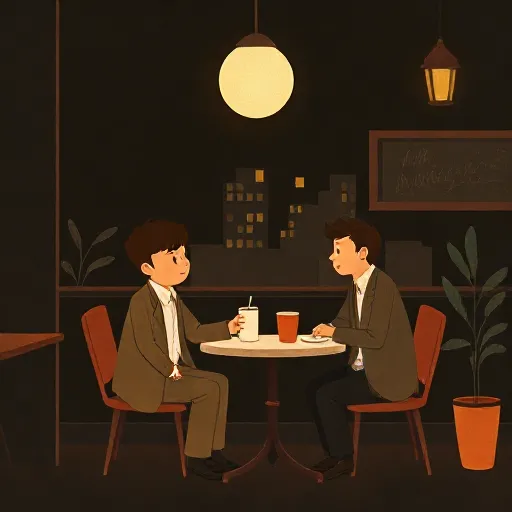
In 1933 a young French philosopher named Jean-Paul Sartre (1905–1980) sat in a Parisian bar with his friend Raymond Aron. Aron pointed at his apricot cocktail and said that you could do philosophy with this. Sartre turned pale. He had just discovered a new way of thinking called phenomenology — the idea that you can describe the world exactly as it appears to you, not as some hidden reality behind it.
That moment changed everything for Sartre. He became convinced that consciousness is not a thing inside your head. It is always intentional — it is always consciousness of something. When you see a tree, your mind is not locked in a dark room looking at a picture of a tree; it is the tree, out there in the world. For Sartre this meant human beings are not objects with fixed properties. They are openings, empty spaces directed toward the world. And that emptiness, he would argue, is the very source of radical freedom.
Existence Before Essence: You Are What You Do
You have probably been told that you have a “nature” — that you are shy, clever, or impatient. Sartre disagreed. He famously turned an old idea upside down: existence precedes essence. A paper-knife has an essence before it exists; someone invented its purpose, then made it. But you exist first, and only later do you define who you are through your choices. There is no hidden blueprint, no inner “true self” waiting to be found.
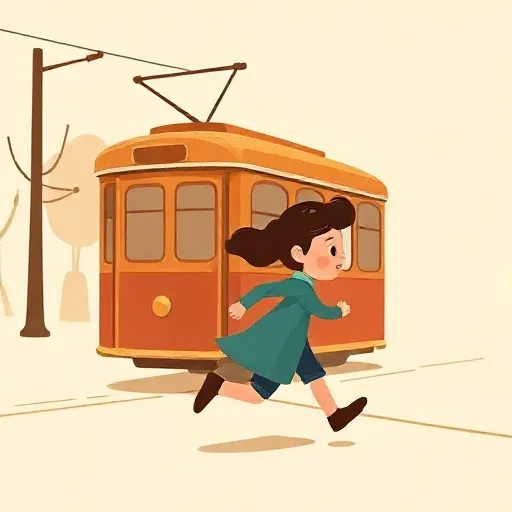
Sartre illustrated this with a streetcar. He wrote: “When I run after a streetcar, when I look at the time, when I am absorbed in contemplating a portrait, there is no I. … In fact I am plunged in the world of objects; … but me, I have disappeared; I have annihilated myself.” In that moment of pure action, you are not a “self” observing your own thoughts; you are simply the movement toward the streetcar. Your identity is woven from your acts, not from some secret inner substance.
This means you are not the sum of your past or your personality traits. You are your project — the future you are constantly choosing. And because nothing forces you to choose one project over another, you are, Sartre insisted, radically free.
The Terror of Freedom: Anguish and Bad Faith

If you are completely free, then you alone are responsible for the meaning of your life. There is no instruction manual, nature, or deity that decides for you. In Sartre’s words, you are condemned to be free. This realization often brings anguish — a dizzying awareness that every action could have been different and that you can blame no one.
Most people try to flee this anguish through bad faith (mauvaise foi). Bad faith is lying to yourself about your own freedom. Sartre’s famous example is the café waiter. The man moves too quickly, balances his tray too carefully, plays the role of “waiter” as if he were a robot. He tries to convince himself that he is a waiter in the same way a stone is a stone — a being with a fixed essence. But he is not; he is a free person who has chosen to adopt that role, and he could always choose differently.
Even your feelings do not force you. Sartre gave the case of a hiker collapsing from exhaustion. Most people would say that fatigue made the hiker stop. But Sartre claimed the hiker made a choice — perhaps without thinking — to let fatigue become the center of attention. Before that moment, the tiredness was just a background murmur; then the hiker decided to treat it as an unbearable weight. The act of collapsing was a free decision to give in, not a mechanical reflex.
The psychologist Sigmund Freud (1856–1939) tried to explain such hidden choices with an unconscious mind that pushes us without our awareness. Sartre objected: to speak of an unconscious part of you that decides things secretly is still to imagine a little inner “decider.” That just pushes the problem back, he thought. Bad faith is a better description: you know the truth on some level but you refuse to admit it.
The Look: How Others Turn You Into an Object

Freedom becomes complicated the moment another person looks at you. Sartre asked you to imagine peeping through a keyhole, completely absorbed in the scene on the other side. Your consciousness is nothing but the scene. Then you hear footsteps behind you. Suddenly you are jolted into a new state: you realize you are being seen. You become an object in someone else’s world.
This experience, Sartre said, is the origin of shame. It is not a judgment about your action yet — it is a pre-moral shudder of being caught. The other person’s look fixes you, turns you into something with a label: nosy, naughty, weird. In that moment you are no longer pure freedom; you are a “transcendence transcended.”
For Sartre, this struggle between seeing and being seen is the basic texture of all human relationships. We constantly try either to reduce the other to an object (so we can be in control) or to welcome the other’s look (so we can feel recognized). But these strategies often fail. True equality, where two free subjects acknowledge each other without trying to dominate, is rare. Sartre’s early view was starkly conflictual: “It is useless for human reality to seek to escape this dilemma: one must either transcend the Other or allow oneself to be transcended by him.”
Bad Faith and Injustice
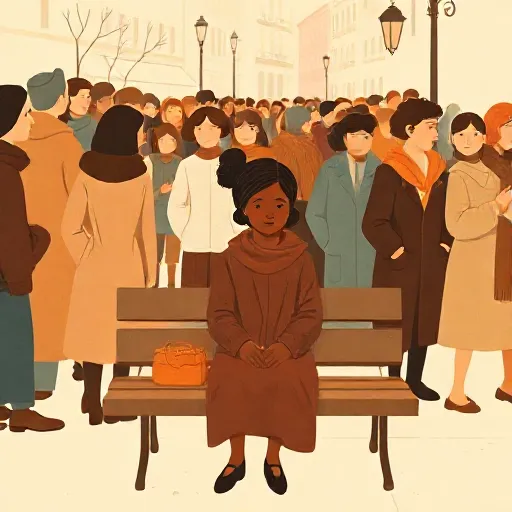
Sartre did not keep his ideas locked inside academic books. During and after World War II he applied them directly to social injustice, especially anti-Semitism and colonialism. In Anti-semite and Jew (1946) he argued that racism is a form of bad faith. The anti-semite invents a fixed “essence” of the Jew — greedy, untrustworthy, dangerous — and then treats living, changing human beings as if they were nothing more than that invented label. This is a refusal to see the other person’s freedom.
But bad faith is not only the problem of overt bigots. Sartre insisted that whole societies can live in bad faith through passive complicity. If you profit from an unjust system, even without meaning to, you are sustaining it through your daily choices and your willingness not to look too closely. For Sartre, freedom is never just individual: you are always choosing alongside others, and your choices build the world you share.
Why Radical Freedom Still Matters

Sartre’s ideas can feel extreme. Can you really choose whether to be exhausted? Aren’t you shaped by your upbringing, your genes, your luck? Sartre would reply that none of those things dictate the meaning you give them. A painful childhood does not force you to become bitter — it only takes on its meaning in light of the future you choose. The “facts” of your situation are real, but they exist only as a backdrop for your free response.
This is a demanding vision. It says there is no ultimate excuse: you are the author of your life. But that is also deeply hopeful. If you are not your past, you can always change. If the world is unjust, you are not a helpless victim — you can join with others to transform it. Sartre’s late work explored how groups of people can break out of serial, anonymous habits and become a “group in fusion” that acts together freely, even if briefly.
So the next time you feel stuck — by a habit, a label, a disappointment — remember the apricot cocktail. Your consciousness is always an opening onto something new. You are not a finished thing. You are a freedom.
Think about it
- Think of a moment when you felt that you had no choice — maybe a class you hate or a chore. What would Sartre say about whether you really had no choice?
- If a stranger’s look can make you feel like an object, are there ways to meet another person’s eyes and still both feel free?
- Sartre thought that pretending to have a fixed identity is bad faith. Is there a social role you play (student, sibling, friend) where you sometimes forget you’re a person behind the role? How would you know?