The Fear of Death Holds the Secret to Understanding Everything
One night in July 1913, everything fell apart

Franz Rosenzweig (1886–1929) sat by himself in a rented room in Leipzig. On the table lay a pistol. He had just finished an all‑night argument with a friend, Eugen Rosenstock, who had challenged everything Rosenzweig believed about how a person could ever belong to the world. The dispute tore open a problem Rosenzweig had been chasing since his university days: how can a free, unique human being ever feel at home in a huge, cold universe?
After the conversation, Rosenzweig felt he was staring straight at nothingness. He later said he was “face to face with the Nothing.” For a young philosopher who had spent years studying the grandest systems of thought, that terrifying moment changed everything. It led him to abandon the idea of looking down on the world from a god‑like height. Instead, he would build a philosophy that begins exactly where a real person lives: in the middle of time, in relationships, and with the knowledge that we will one day die.
Rosenzweig grew up in a lively, educated Jewish family in Kassel. As a student, he burned with a dream shared by many thinkers of his generation: to revive the sort of sweeping, all‑inclusive knowledge that the big‑system builders like Georg Wilhelm Friedrich Hegel (1770–1831) had pursued. He even helped launch a short‑lived discussion group in Baden‑Baden, meant to pull together specialists from different fields into one shared “spirit of the age.” It failed miserably. The historians balked at the huge, story‑like vision Rosenzweig wanted to weave. From that collapse, Rosenzweig drew a startling conclusion: the unity he craved could not be found in the present. Maybe it could only be a future hope — something the world was still growing toward.
That hunch grew while he wrote his doctoral thesis on Hegel’s early political ideas. In Hegel’s old manuscripts, Rosenzweig saw a young thinker who had once been just as stuck as he was: how do you fit the wildly free “I” inside a world that seems to follow its own impersonal rules? Hegel’s answer — that the self slowly realizes itself in time, through history — became a clue. But Rosenzweig still felt that the grand systems of German Idealism betrayed the real, solitary human being who actually asks the question. That human being is mortal. That human being dreads death.
The pistol‑on‑the‑table night pushed everything to an extreme. Rosenstock convinced Rosenzweig that only a life grounded in divine revelation could heal the split between self and world, and that Christianity was the path. Rosenzweig spent hours alone afterward, shaken to his core, determined to convert. Then, just months later, he reversed course. He discovered a vision of Judaism that, he now believed, played its own essential role in the world’s redemption. He never converted. Instead he began to craft a new kind of thinking that would require both philosophy and theology, time and speech, and a starting point no previous system had dared to take seriously: the fear of death.
Why the old way of thinking got stuck
Rosenzweig called the tradition he inherited the old thinking. Its goal was noble: to find the single, ultimate truth that explains everything. But he argued that it kept making three fatal mistakes.
First, the old thinking abstracted from time. Philosophers would ask “What is a person?” or “What is the world?” as if they could pull these things out of the stream of days, years, and relationships and hold them still, like pinned insects. But real life never stops. A person is always learning, remembering, hoping. Strip away the past and the future, Rosenzweig said, and you aren’t left with a pure “human essence” — you are left with a ghost.
Second, it always tried to reduce everything to one kind of thing. Ancient thinkers often melted gods and humans into the cosmos. Medieval thinkers melted the cosmos and the self into God. Modern thinkers, especially after René Descartes, tried to build all knowledge from the lone, thinking “I.” But our ordinary experience shows us three deeply different realities, Rosenzweig insisted: God, world, and self. Each stubbornly refuses to be just a shadow of the others.
Third, the old systems, at their grandest, imagined the philosopher could jump to an absolute standpoint — a view from nowhere that sees the whole of reality, the “All,” in a single glance. That sounds impressive, but there is a catch: a view from nowhere erases the one who is doing the looking. It flattens individual people into tiny, replaceable cogs. Søren Kierkegaard (1813–1855) and Friedrich Nietzsche (1844–1900) had already protested that the living, breathing “I” matters, but philosophy mostly ignored them. Rosenzweig decided the time had come to treat their protests as the foundation.
The new thinking: time, speech, and the I‑you

Rosenzweig’s alternative he proudly named the new thinking. Instead of trying to escape the river of time, it jumps right in. Our experience is stamped by three tenses: past, present, and future. You find yourself in a world that was already there before you woke up to it — that is the past. You feel your own selfhood as a sharp, immediate “here I am” — that is the present. And you stretch toward goals and hopes you share with others — that is the future.
These three tenses aren’t just feelings. Rosenzweig argued that they map onto three great relations that theology describes with the words creation (the world as always already given), revelation (the call that wakes you up to who you are), and redemption (the shared future toward which everything moves). He didn’t mean you need to recite a creed. He meant that these theological ideas help us see that we don’t ever stand alone: we are wrapped up in a web of relationships from the very beginning.
If time is the river we swim in, speech is how we navigate it. Old thinkers trusted pure reason, but reason left on its own often boils everything down to one thin soup. Speech, however, links directly to the rhythms of real life. We use tenses to tell stories. We name particular things and pets and people. Most importantly, we speak to someone. The moment you address another person as “You,” you are in a relationship that can’t be reduced to a label. For Rosenzweig, the I‑you relation is where the self actually comes alive. You don’t become a full “I” by thinking hard in a corner; you become an “I” by being called — by a friend, by a question, even by a cry for help — and by answering. That is the heart of his speech‑thinking.
Drawing a map of everything: The Star of Redemption
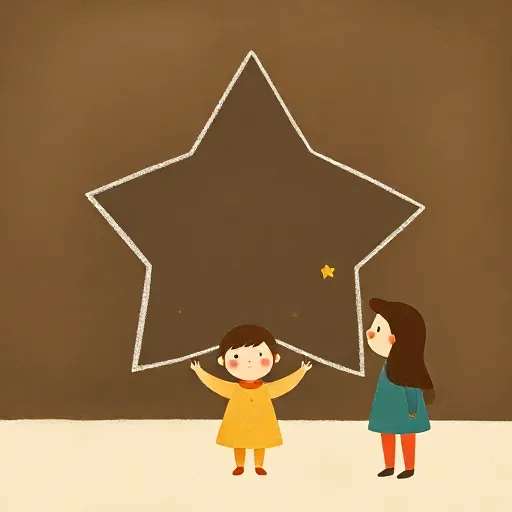
While recovering from illness on the Balkan front during the First World War, Rosenzweig scribbled his masterwork on military postcards and mailed them home. The result was The Star of Redemption (completed in 1919), a book that tries to do what the old systems did — map the All of reality — but from the middle of a human life.
He begins with the fear of death. That fear, he says, cracks the illusion that everything is already a neat, finished whole. It shows you that your own “I” could become an “it” — a body that once was alive. Once you feel that crack, you can no longer pretend that God, the world, and the self are just three names for the same cosmic jelly. Each is genuinely distinct, and each emerges from its own “particular nothing,” like separate flames lit from different matches.
Now comes the twist that gives the book its six‑pointed shape. Left alone, God, world, and self are like actors waiting in the wings. They need to enter into actual relationships to become what they are. The divine turns toward the world — that is creation. The divine turns toward the individual self, calling it awake — that is revelation. And the self, now awake, turns back toward the world in love and care — that is redemption. Each step is a fact, a real happening, not just a concept. And we experience them through the very past‑present‑future rhythm we live every day. Creation feels like the world “already there.” Revelation feels like a call that is utterly present. Redemption feels like a future we help build.
The geometric image of this, Rosenzweig says, is not a circle — the old symbol of thought that loops back to itself — but a six‑pointed star: three points for God, world, and self, and three more points for the relations among them. A star of redemption.
Why he stayed Jewish (and what Christianity has to do with it)
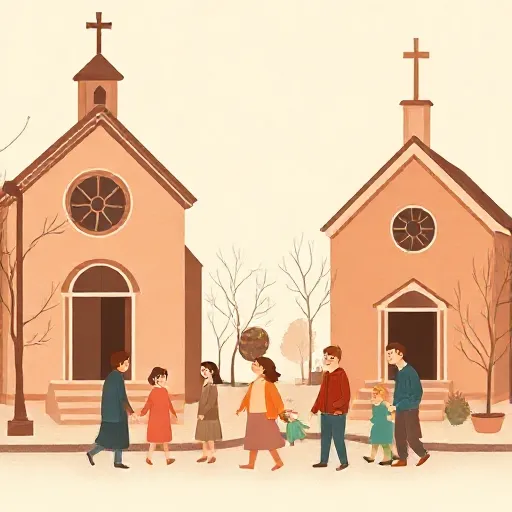
After the Star, Rosenzweig spelled out what this meant for actual communities. Judaism, he believed, lives largely apart from the rush of world history. In its festivals and family life, it anticipates the ultimate redemption — tasting now what the whole world is still moving toward. Christianity, by contrast, carries the message of redemption into history, spreading it across the globe. The two, he insisted, are not rivals. They are partners. The Christian mission, always pressing forward, could lose its direction without the Jewish witness that reminds it what the finish line looks like. And the Jewish home, focused on eternity in the midst of time, needs the Christian labor that wrestles with the world as it is.
This was not a dry theory. It was why Rosenzweig, after his near‑conversion, returned to the Judaism of his birth. He spent his later years, even as he was dying of ALS, directing the “New Jewish Lehrhaus” — an adult study center in Frankfurt — and translating Scripture so that a new generation might hear the call of revelation in their own language. He saw translation itself as a tiny act of redemption: two languages meeting, a self and a foreign other recognizing each other, the future unity of all speech glimpsed in a single sentence.
You are already in the middle of the story

Why does any of this matter for someone who can pick up a phone and call a friend, or who lies awake worrying about the future? Because Rosenzweig’s question is still yours: how do you stay yourself and belong to a world larger than you?
The old‑thinking habit is still tempting. We imagine that if we could only see everything from above — all the causes, all the outcomes — life would finally make sense. But that view, real or not, would miss the one thing you have that no absolute standpoint can contain: the first‑person “I” that says, “This is my life, happening now.” Rosenzweig’s whole philosophy is a training in staying inside that life without pretending it’s small. The past hands you a world you didn’t build. The present rings with calls you can answer or ignore. The future is a joint project — one your friendships, your words, and even your mistakes help to shape.
He never promised a tidy answer. He wrote The Star on scraps from the war, taught while his body was failing, and communicated his last ideas by twitching a lever to point at letters. Through it all, he insisted that truth unfolds in time. It isn’t a trophy you win once and lock in a cabinet. It is something you verify by living it — in conversation, in care, in the stumble and surprise of each new day.
Think about it
- If you could step outside your life and see everything from a “God’s‑eye” view, would you understand your own choices better, or would something essential be lost?
- Rosenzweig believed that becoming a full “I” requires someone else to call you “You.” Can you think of a moment when a friend’s question or a stranger’s need awakened something in you that solitary thinking never could?
- He claimed that truth is not a finished fact you learn and then possess — it is something you help bring about. Do you agree? Give an example from your own life where what you did changed what was true for you or for someone else.