

The Philosopher Who Thought Your Name Could Change the World
A Philosopher Who Broke All the Rules

It is a noisy afternoon at a crowded festival. Someone shouts your name. Without thinking, you spin around, your heart beating a little faster. That one word—your name—did not just describe you. It reached out, grabbed you, and pulled you into a moment with another person. For the German-born thinker Eugen Rosenstock-Huessy (1888–1973), this everyday experience held a huge secret that most of philosophy had been ignoring for centuries.
Rosenstock-Huessy did not fit neatly into any box. He studied law, history, and ancient languages (he taught himself Egyptian hieroglyphics as a teenager). He fought as a captain in the German army during World War I. At seventeen, he shocked his non-religious Jewish family by joining the Protestant church. But he never became a standard theologian or a professional philosopher. He called himself a social philosopher or even just a “speech thinker.” He believed that the biggest mistake in philosophy was treating language as a mere tool for reporting facts, instead of seeing it as the powerful force that actually builds our shared world.
He thought that philosophy, from ancient Greece to the modern lecture hall, had become obsessed with timeless logic and frozen mental spaces—and in doing so had lost touch with the very stuff that makes us human: time, history, and the living act of calling one another by name.
The Power of a Name: Why “You!” Changes Everything

Rosenstock-Huessy argued that philosophers spent far too much time with bloodless pronouns like “I,” “it,” and “this,” and not nearly enough time with concrete names. For him, a name is not just a sound. It is an event. When someone calls you by your name, they are not merely pointing at you; they are summoning you into a real, living relationship. “Mother” and “father,” “teacher” and “student,” “friend” and even “enemy”—all these names position us in a social world. They give us a place to stand and a role to play.
He traced the trouble back to Greek philosophy. Thinkers like Plato, he said, became so eager to find stable, eternal definitions that they replaced living names with abstract categories. The real vocative case—the grammatical form used to address someone—gets sidelined. The concrete person “Socrates” becomes merely an example of the abstract idea “human being.” For Rosenstock-Huessy, this was backwards. The call always comes first. You do not begin life as an “I” standing alone; you begin as a “you” who has been spoken to, named, and loved into a community.
This emphasis on names shows up in his most famous counter-slogan. Descartes had declared, “I think, therefore I am.” Rosenstock-Huessy replied with the much older sentiment: I respond, although I will be changed (in Latin, Respondeo etsi mutabor). We are, at our core, responsive creatures. Who we become is shaped by what—and whom—we answer.
The Cross of Reality: Why Everything Happens in Four Directions

If philosophy had fixated on space, Rosenstock-Huessy set out to restore the full weight of time. He invented a figure called the cross of reality to show that every real event or experience must be understood through four dimensions at once, not just two.
Two of those dimensions are spatial and familiar: the inner world of thoughts and feelings, and the outer world of physical objects and other people. But Rosenstock-Huessy insisted there are also two temporal dimensions that philosophers almost entirely overlook. He called the forward pull of the future the prejective—the commands, hopes, and promises that call us ahead. The backward push of the past he called the trajective—the traditions, memories, and historical forces that have carried us to this moment.
Imagine a young athlete about to run a race. Her training and all the old records in the history book are the trajective; the finish line and her own whispered “I can win” are the prejective. The inner butterflies in her stomach and the outer roar of the crowd complete the cross. Rosenstock-Huessy believed that ignoring the prejective and trajective was the original sin of philosophy. It tried to freeze life into a timeless “now,” but life only ever happens at the crossing point of past and future.
Why Philosophers Keep Getting Stuck in Space
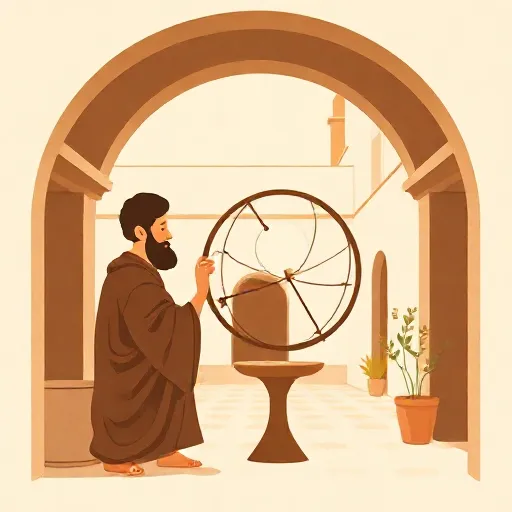
According to Rosenstock-Huessy, the problem starts in the bones of our grammar—specifically with the grammar table taught in schools since ancient Alexandria. That old table trains us to treat the declarative sentence (“The cat is on the mat”) as the most important form of speech. The mood of such sentences is the indicative—the language of settled facts.
But real life, he argued, is first spoken in other moods. The imperative rouses us from the future: “Wake up!” The subjunctive opens up possibilities that do not yet exist: “If only we could find a cure.” The preterite or perfect tense hands down what has already been accomplished. Only after all these do we calm down enough to write a cool, indicative report about what happened. Philosophy, he said, tries to start at the end—with the logical, dead, indicative space—rather than with the urgent, time‑bending acts of speech that actually make history.
That is why he had little patience for philosophies that built everything around “being” or “existence.” He saw such words as empty pronoun‑verbs, the smoke of something that once was alive. To say “being” without first experiencing all the specific verbs that fill a life—loving, fighting, creating, suffering—struck him as hollow. Real thinking, he insisted, means paying attention to the names and commands that have actually shaped a community over time.
Learning Through Suffering and the Power to Begin Again
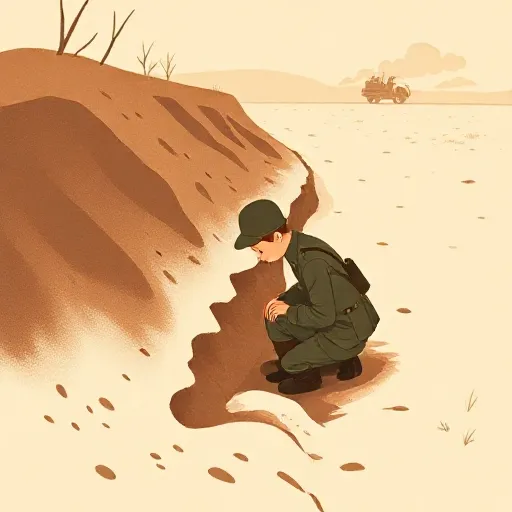
Rosenstock-Huessy’s own life was marked by catastrophe. World War I shattered his early nationalism and convinced him that profound truth is rarely discovered by candlelight. He often said that suffering is the only source of real wisdom. Great philosophical systems, he pointed out, do not arise from polite classroom debates; they burst out of historical fires. Descartes wrote in the shadow of the Thirty Years’ War. Kant’s thought followed the Seven Years’ War. Nietzsche paced through the wreckage of the Franco‑Prussian War. Philosophy, Rosenstock-Huessy argued, is always a response to social crisis—but it often pretends to be a purely logical exercise.
He channeled this insight into a view of history as a great pantheon of names, each one a testimony to love, terror, sacrifice, or hope. Names like “the French Revolution” or “the Civil Rights Movement” are not just labels; they are emotional triggers that activate the passions of later generations. When a name no longer stirs anyone, that part of history is dead. When a new name is born, a new kind of action becomes possible. In Rosenstock-Huessy’s world, real freedom means the power to found a new time—to name a future that breaks free from a suffocating present—while still drawing strength from the old names that made us who we are.
What a Forgotten Philosopher Can Still Teach You

Rosenstock-Huessy never became famous. He clashed with the academic world, was pushed out of Harvard for insisting that God is a living presence in history, and spent his later years teaching undergraduates at Dartmouth. But his challenge to philosophy has not vanished. Every time you feel the weight of a promise you made last year, or when someone’s tone of voice changes your whole mood—you are living the cross of reality. Every time you hear your name called and feel summoned to become something more, you are standing where old space‑based philosophy cannot see.
The question he left behind is wonderfully practical: What are the names that shape your life—friend, sister, teammate, student—and how are you answering them? Your words, he would say, do not just describe the world. They build it. And they will go on building long after today’s clock has ticked into yesterday.
Think about it
- Think of a time when hearing your name spoken in a certain way made you feel like you had to act or change. Did the word itself have any power, or was it just a sound?
- If a philosopher claimed that only timeless, unchanging truths really matter, what would that leave out about your most important relationships—for instance, what it means to forgive a friend?
- Can you think of a word (like “friend,” “enemy,” or “liar”) that, once spoken, permanently transformed a relationship? What made that word so powerful?