
How Do Your Words Reach Out and Touch the World?
Which Boris Did You Mean?

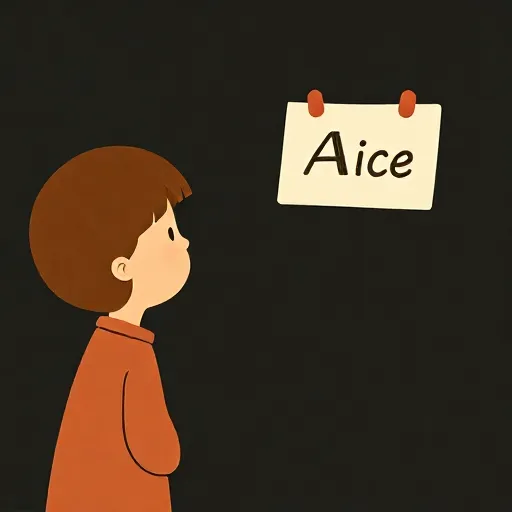
You’re at a café. Across the table, a friend says, “Boris really loves the spotlight.” You both know two people named Boris—one is the former Prime Minister of the United Kingdom who was always on the news, and the other is your quiet friend who runs the local library. Which Boris does your friend mean? Before you even ask, your mind has already done something astonishing: it hooked the word “Boris” onto a specific person out in the world. But how?
Philosophers call this invisible hook linguistic reference. A word refers when it picks out a particular object or individual—like a cat, a city, or a person named Boris. Proper names are the most obvious referring words: “Kyoto” grabs a city, “Mount Kilimanjaro” grabs a mountain, and even “Sherlock Holmes” seems to purport to refer to a famous detective, even though no such man ever existed. The puzzle is: what makes that connection work? Is there a hidden set of clues in your head, or is a name more like a sticky tag slapped directly onto the world? The debate has raged for over a century, and its answers might just change how you see every word you speak.
Is a Name Just a Secret Description?

The first big idea came from the German logician Gottlob Frege (1848–1925) and the British philosopher Bertrand Russell (1872–1970). They argued that every time you use a name like “Barack Obama,” your mind silently attaches a description that singles out a unique person. For you, “Barack Obama” might mean the 44th President of the United States; for someone else, it might mean Michelle’s husband. According to this descriptivist theory, a name refers only because you have in mind some identifying content that fits exactly one individual. That’s why, when you say “Boris,” your friend can clear up confusion by adding “the former Prime Minister.” The description you both accept pins the name to one Boris and not the other.
This view is elegant. It explains why a sentence like “Hesperus is Phosphorus” was big news to ancient astronomers. If “Hesperus” simply meant the evening star and “Phosphorus” meant the morning star, discovering both descriptions point to the same planet Venus was a genuine discovery—something you couldn’t know just by understanding the words. Names, on this view, are not empty; they carry rich packages of information.
But in the 1970s, the American philosopher Saul Kripke (1940–2022) blew a hole through descriptivism. He pointed out that names and descriptions behave totally differently when you talk about what might have been. Imagine I say, “David Cameron might not have called for a referendum on Brexit.” That’s perfectly true. But if the name “David Cameron” meant the UK Prime Minister who called for that referendum, then I would be saying something impossible: I would be claiming that the person who called for the referendum might not have called for it. That’s a contradiction. Since the sentence is clearly true, the name can’t be equivalent to the description. Names, Kripke argued, are rigid: they point to the same person in every possible situation, while descriptions are flexible—they pick out whoever happens to fit the bill.
Kripke also offered a humbler puzzle. Many of us know that Feynman was a physicist, but almost nothing else. We couldn’t distinguish him from any other physicist. Yet we still successfully refer to Richard Feynman when we use the name. If reference required a unique identifying description in our head, we would almost never manage it. Descriptivism was wounded, but not dead: some philosophers suggested we don’t need descriptions ourselves—the community’s experts might carry them for us. But then a speaker could use a name without truly knowing who they’re talking about, which strikes many as odd.
Names as Sticky Tags and the Chain of Borrowed Talk
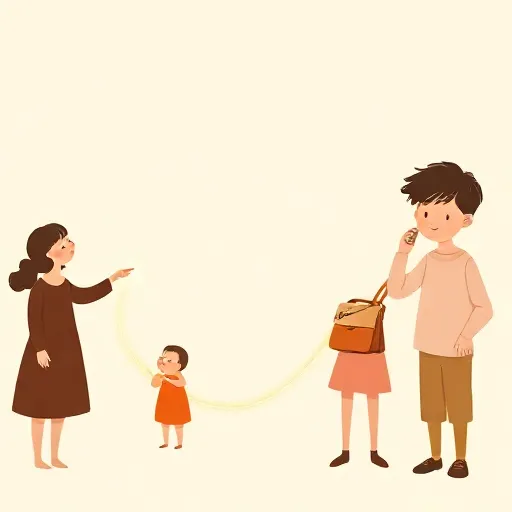
If a name isn’t a hidden description, what is it? The British thinker John Stuart Mill (1806–1873) had a startlingly simple answer: a name is just a tag. Its meaning is nothing more than the object it refers to. The philosopher Ruth Barcan Marcus (1921–2012) revived this Millianism in the twentieth century, likening proper names to labels stuck directly onto things. A name doesn’t describe; it simply hooks onto its bearer.
But how does the sticky tag get attached in the first place? Kripke, along with Keith Donnellan (1931–2015) and others, proposed the causal theory of reference. The idea is that a name is first fixed by a kind of baptism: someone points to a baby and says that they shall be called Napoleon. After that, the name spreads through a chain of communication—you learn it from a parent, who learned it from a friend, who heard it from a historian, stretching all the way back to that original dubbing. When you use the name, you “borrow” its reference from earlier speakers in the chain, even if you can’t name a single one of them.
Yet troubles appear. Kripke himself noted that we can reuse a name. I might hear about Napoleon the French general, then decide to call the hedgehog in my garden “Napoleon.” Now I’ve started a new chain of reference. What makes my new use hook onto the hedgehog instead of the general? The answer, Kripke admitted, rests partly on my intentions. I intended to start a new name, not continue the old chain. This means the causal theory cannot work purely by itself—it needs a small dose of mental direction. And names with multiple bearers, like Boris, become downright thorny: if we share a single name across millions of people, how does a particular use of “Boris” latch onto the right person? Some philosophers respond that names are secretly like indexicals—words that change their reference with the context—though no one has yet agreed on a simple rule that does the job.
Words That Point: ‘I’, ‘Here’, and the Humpty Dumpty Problem

Not all words refer like names. Consider indexicals: words like “I,” “here,” “now,” “you,” “this,” and “that.” The American philosopher David Kaplan (born 1933) showed that pure indexicals like “I” operate by a strict rule. No matter who speaks, the word “I” refers to the speaker of that very utterance. Kaplan called this rule the word’s character; the actual person it picks out—you, me, the Queen—is its content. “Here” similarly grabs the place of speaking, and “now” the time. These rules are public and automatic; you can’t make “I” refer to Barack Obama just by wanting it.
But impure indexicals—words like “this,” “that,” “he,” and “she”—are messier. When you say “that is a picture of a great philosopher,” what makes your listener understand which object you mean? Sometimes you point with a finger; often you rely on what is most salient in the conversation, or on your listener’s ability to guess your intention. If you point at a picture of Spiro Agnew while genuinely believing it’s Rudolf Carnap and say that it is a picture of one of the greatest philosophers, who does your word latch onto? Intuitions divide. The intentionalist view says a speaker’s directing intention is paramount; the word “that” refers to whatever the speaker meant to pick out—even if they were confused. But this leads to what is called the Humpty Dumpty Problem (after the egg who insisted words mean whatever he chose). If speakers could refer to anything simply by intending it, bizarre results follow: you could point at a banana and intend your “that” to refer to a hidden painting in your desk, and claim success.
To avoid that collapse, philosophers impose constraints. Some, inspired by Paul Grice (1913–1988), say referential intentions must involve a plan for the listener to recognize the object partly by recognizing that plan—a strategy that fails when you don’t expect your listener to succeed. Others, like Marga Reimer, argue that the word “that” carries a built‑in rule: when accompanied by a pointing gesture, the referent must lie roughly in the direction indicated. So pointing at one photo while intending another would simply fail to refer. The debate remains live: we use these words every day with astonishing ease, yet spelling out the rules that govern them turns out to be deeply difficult.
The Martini Drinker Who Was Drinking Water

Names and indexicals seem solid enough, but what about phrases like “the biscuit” or “the off‑license”? These are definite descriptions, and the first big fight was whether they refer at all. Bertrand Russell said no. He offered a translation: “The King of France is bald” doesn’t pick out a man; it merely says there is exactly one King of France and he is bald—which is false, because there is no King of France. That neatly explains why the sentence is meaningful yet untrue. It also explains why “The author of Middlemarch was the third child of Robert and Christiana Evans” is informative: the two descriptions pack different identifying properties, so you can’t know the sentence is true just by understanding it.
But P.F. Strawson (1919–2006) pushed back. Imagine you say “The table is covered with books” while standing in a room with just one table, though many exist in the universe. Russell’s theory says you spoke falsely because there isn’t a unique table. Strawson replied: no, you used the description to refer to the only table that mattered in context. If there is such a table, you said something true; if there isn’t, you didn’t say something false—you simply failed to refer. So descriptions can, on at least some occasions, work as referring expressions.
Keith Donnellan pushed further. You point to a man holding a glass that looks for all the world like a martini and ask, “Who is the man drinking the martini?” In fact, the glass contains plain water. According to Donnellan, you’ve still referred to that man; what matters is that you had him in mind, not that he fits the descriptive words exactly. The listener will understand whom you mean, even though the description is literally false. Kripke objected that this kind of “reference” is really just a pragmatic trick—the speaker has a target in mind, and the hearer guesses it, but the words themselves don’t rigidly lock onto the water-drinker. The debate forced philosophers to ask a deeper question: is linguistic reference something words do on their own, or is it fundamentally something we do when we use words?
Why the Threads Matter: Your Words, Your World

Stripped to its core, the story of reference leaves us with four models that aren’t neatly separated: a word might refer because of a description you hold (descriptivism), because it sits at the end of a historical chain (causal theory), because its meaning is a public rule like a spotlight (character model), or because you intentionally direct it at something (intentionalism). Often these models blend. But they split along one enormous fault line: do words carry their reference by themselves, so that we merely uncover what they point to? Or do we actively hook words onto the world, so that reference is an act, not a fact?
That fault line matters every day. When you mishear a name and still manage to talk about the right person, you are relying on a chain of communication you probably can’t trace. When you say “this one” in a crowded shop and get exactly what you want, you are trusting your listener to read your intention amid a million possible targets. And when a famous person shares your first name, the ease with which you disentangle them shows just how flexible reference really is. Yet puzzles remain: consider a cloud. What exactly does the word “that” refer to when you point at a cloud—the full collection of water droplets, or just the ones your eyes settle on, and where does the cloud even begin? The fuzziness of the world suggests that our words might never perfectly match the world, yet we communicate anyway.
The fight over reference is far from settled, but that’s precisely what makes it thrilling. It’s a window into how your mind, your words, and your world are knitted together. And the next time you say someone’s name, remember: you are throwing a thread across a gap, and somehow it lands just where you meant it to.
Think about it
- If you and a friend both call your pet hamster “Napoleon,” what makes it the same name or a different name? Could a name have two separate lives?
- Can you ever be completely certain what someone means when they say “that” without pointing, or is there always a tiny gamble?
- If a computer program reassigned every word a random new object each day, would language still be possible? What would that tell us about how we learn to refer?