Could the Evening Star Have Turned Out Not to Be the Morning Star?
The Evening Star and the Morning Star: Same or Different?
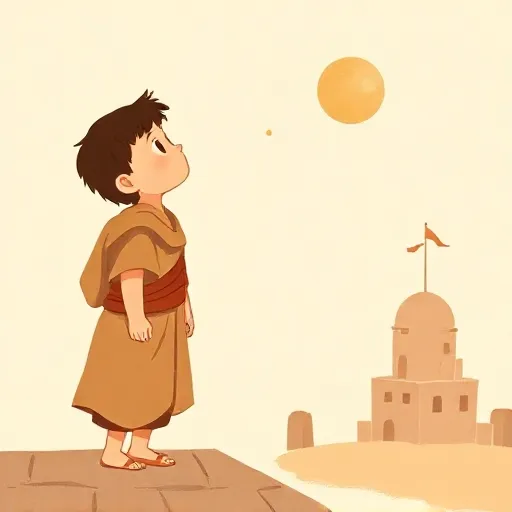
Imagine you live in ancient Babylon. Every evening, just after sunset, you spot a brilliant jewel of light in the western sky. You call it Hesperus—the evening star. Every morning, before dawn, you see another gleaming point in the east, and you name it Phosphorus—the morning star. For centuries, nobody suspects they are the same object. The two names feel as different as two distinct campfires on opposite hills.
Then astronomers make a startling discovery. Hesperus and Phosphorus are not two separate bodies at all. They are exactly the same thing: the planet Venus. The names that seemed to name two different lights actually name one shining world.
But a deep puzzle remains. Once you know that Hesperus is Phosphorus, could things have turned out differently? Could Hesperus have existed without being Phosphorus? Most of us, before the 1970s, might have said yes: after all, we discovered that they are the same, so it seems lucky—something that could have gone the other way. The American philosopher Saul Kripke (1940–2022) disagreed. He argued that if Hesperus is Phosphorus, then it had to be that way. And the reason, he said, has to do with how names work.
What Is a Rigid Designator?

To understand Kripke’s idea, think about your own name. Suppose your name is Alex. In the real world you might be the fastest runner in your grade, but you could also imagine an alternative world where you tripped at every race and never earned that title. In that imagined world, the description “the fastest runner in your grade” would pick out someone else—maybe Mariana. But your name “Alex” would still pick out you, the same person, no matter how slow you became.
Kripke called expressions that pick out the same individual in every alternative world—in every possible way things could have been—rigid designators. Ordinary definite descriptions, like “the brightest non-lunar object in the evening sky,” are not rigid. In the actual world, that description points to Venus. But in another possible world, where Venus is dimmer and Mars blazes brighter, the description would point to Mars. A name, by contrast, is rigid: “Hesperus” always designates Venus, as long as Venus exists, no matter which other planets shine.
So why does this matter for the Hesperus‑Phosphorus puzzle? Both “Hesperus” and “Phosphorus” are names, and according to Kripke both are rigid. They both rigidly designate Venus. Therefore the statement Hesperus = Phosphorus is true in every possible world where Venus exists. The identity is necessary—it could not have been false. But that seems wild, because astronomers needed telescopes and years of observation to learn that it was true. So here we have a statement that is a posteriori (known only through experience) yet necessary. For centuries, philosophers had assumed that everything necessary could be known just by thinking, a priori. Kripke showed they were wrong.
The Necessary A Posteriori: A Shocking Discovery

Before Kripke, philosophers generally thought that if a truth is necessary—if it must hold in every possible world—it must also be a priori, something you can figure out from your armchair without checking the sky. The discovery that Hesperus is Phosphorus shattered that picture. The statement “Hesperus = Phosphorus” is necessarily true, yet it took centuries of gazing at the heavens to uncover.
This is not just a quirk of astronomy. Kripke’s insight opened a whole category of necessary a posteriori truths: facts about the world that could not have been false, even though we need science to discover them. For example, if we discover that the substance we call water is made of H₂O molecules, then water necessarily is H₂O. The statement “Water = H₂O” would be necessary, even though chemists had to run experiments to learn it.
This idea sounds simple, but it overturned a picture of knowledge that had reigned since Immanuel Kant. Suddenly, necessity and how we come to know something were pulled apart.
The Meter Stick and the Flip Side

Kripke also showed the mirror image of the necessary a posteriori: the contingent a priori. A statement can be known a priori yet still be only contingently true—true, but not necessary.
Imagine a centuries‑old metal bar kept in a Paris vault. At a certain moment, scientists decreed: “Let ‘one meter’ be the length of this very bar at time t.” Because they defined “one meter” that way, they could know a priori that the length of the bar at t is one meter. But the bar is a physical object; if scientists had heated it, it would have stretched. In a different possible world, that very bar is longer or shorter. So the statement “One meter = the length of this bar at t” is true, but not necessarily true. It is contingent, even though it is known a priori.
Here the rigid designator “one meter” picks out the same length in every world, while “the length of this bar at t” is non‑rigid and picks out different lengths in different worlds. Once again, the behavior of names and descriptions explains the puzzling modal status of the sentence.
From Stars to Brains: Rigidity and the Mind
Rigid designators don’t just rewrite astronomy; they march straight into some of philosophy’s toughest questions about the mind. Many scientists suspect that every mental state—every joy, every twinge of pain—is identical to some physical brain event. Call that brain event “C‑fiber firing.” Suppose, for the sake of argument, that a particular throbbing pain you feel right now is identical to a specific burst of C‑fiber activity. We could name that pain P and that brain event C.
If the identity P = C is true, and both “P” and “C” are rigid designators (they are names for that very pain and that very brain event), then the identity must be necessary. It would be true in every possible world. But can you imagine having that exact same pain without that exact C‑fiber firing? And can you imagine that C‑fiber firing occurring without any pain at all? Many people find both imaginable. If those imaginings are genuine possibilities, then P = C is not necessary. Since a true identity with rigid names must be necessary, the identity cannot be true after all. So the mind cannot simply be the brain.
Kripke used this argument to challenge token identity theories—theories that identify each individual mental event with a physical brain event. Even if the argument is not the final word, it forces anyone who believes the mind is the brain to explain why we seem able to conceive of mind and brain coming apart. And that debate is still very much alive.
What If You Aren’t the Same You in Other Worlds?

Not everyone accepts that your name rigidly designates you across all possible worlds. The American philosopher David Lewis (1941–2001) offered a different picture. He said that possible worlds are isolated, concrete universes. You do not literally exist in any other world; instead, each world contains its own inhabitants, and the closest thing to you in another world is a counterpart—someone who is very similar to you but not identical to you.
On this view, when we say “You could have been a painter,” we are not claiming that you yourself paint sunflowers in another world. We are claiming that in some other world, a counterpart of you—similar enough in the right ways—wields a brush. So ‘you’ does not rigidly pick out one individual across worlds; rather, it picks out different counterparts depending on what possibility we are entertaining. As a result, identity statements like “You = the child who scored the winning goal” could be contingent, even if both terms seem rigid, because the counterpart‑theorist denies that the terms pick out the same individual in all worlds.
This “counterpart theory” upsets many intuitions. As one critic put it, if someone tells you “You could have been a great explorer,” it feels wrong to hear that what they really mean is “Somebody else who resembles you explores jungles in another world.” Your own hopes and possibilities seem to vanish if only a look‑alike gets the credit.
Lewis’s defenders reply that counterpart theory preserves everything we want to say about possibility without forcing us to believe in the same mysterious you hopping from world to world. They also point out that it elegantly handles tricky puzzles about statues and lumps of clay—puzzles that rigid designators struggle with. The dispute between transworld identity and counterparts remains one of the deepest fault lines in metaphysics.
Why Should You Care?

The morning star and the evening star are the same planet, and once we know that, we see that it couldn’t have been otherwise. That discovery upended centuries of thinking about knowledge and necessity. But the same idea threads through questions that touch your own life.
If your name rigidly designates you, then there is something about you—some core—that stays the same across every imagined twist of fate. Could you have been born in a different century, to different parents, and still be you? Could your mind, with all its thoughts and feelings, exist without your brain? The answers you give depend, in part, on whether you accept that names like ‘you’ and ‘pain’ are rigid. Just as ancient stargazers had to rethink the heavens when they learned Hesperus is Phosphorus, we have to rethink ourselves when we confront identities between mind and body, or between what we feel and what fires in our neurons.
Rigidity isn’t wordplay for linguistics textbooks. It’s a tool that lets us ask: what must stay the same, no matter what, for something to be the very thing it is? And that question—about stars, about water, about you—is one of the most gripping philosophy can offer.
Think about it
- Can you imagine feeling exactly the same happiness you feel right now without the exact same brain activity? If you can, does that show that happiness and brain activity can’t be the same thing?
- A scientist tells you that your memories are nothing but patterns of connections between brain cells. If that’s true, could those very memories have existed in a silicon computer chip instead of your brain? Would they still be yours?
- Suppose astronomers on a distant planet discover a liquid that looks, tastes, and behaves exactly like water, but its molecules are XYZ instead of H₂O. Should they call that stuff “water”? How does your answer depend on whether the word “water” rigidly designates the stuff here on Earth?