Why Does the Morning Star Feel Different from the Evening Star?
The Same Planet, Two Different Stories

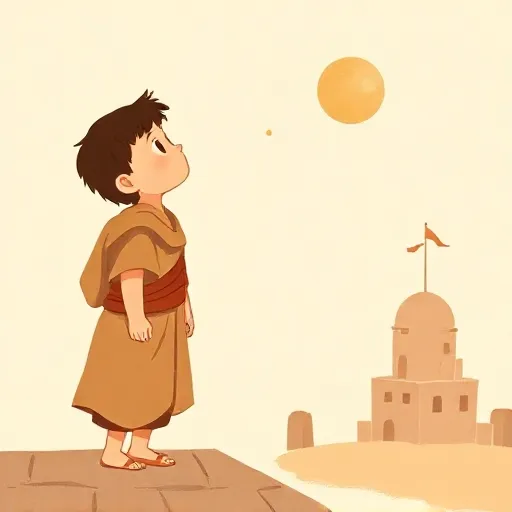
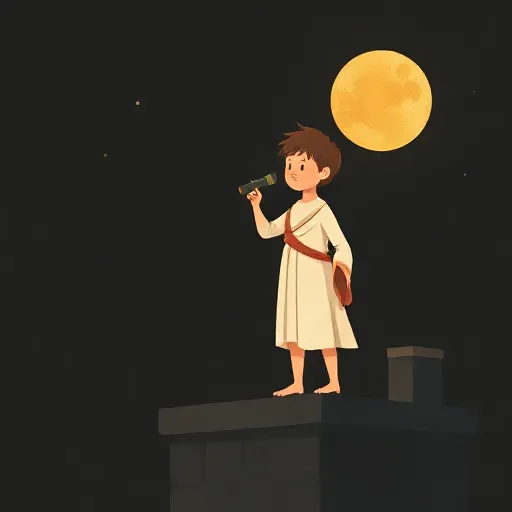
Imagine you are outside with a friend at dawn, watching the sky brighten. Your friend points to a brilliant dot near the horizon. “That’s the morning star,” she says. That evening, you are outside again. She points to another bright dot. “That’s the evening star.” Then she grins. “They are the same thing — the planet Venus.”
That sentence — “The morning star is the evening star” — just taught you something. You learned a fact you did not know before. Now compare it to this one: “The morning star is the morning star.” That sentence is boring. You learned nothing. Yet both sentences talk about exactly the same object. Venus equals Venus. What is going on?
Philosophers call the thing a word points to its extension. “Morning star” and “evening star” have the same extension — they both point to Venus. But they have different intensions — different meanings, different ways of presenting that object. One means “the bright thing you see at dawn”; the other means “the bright thing you see at dusk.” Same planet, different story.
This is the puzzle at the heart of the philosophy of language. It sounds simple, but it gets deep fast. If two words point to the same thing, why does swapping one for the other sometimes teach you nothing and sometimes teach you something? The answer forces you to ask a bigger question: what is a meaning, exactly?
Frege’s Big Distinction: Sense and Reference
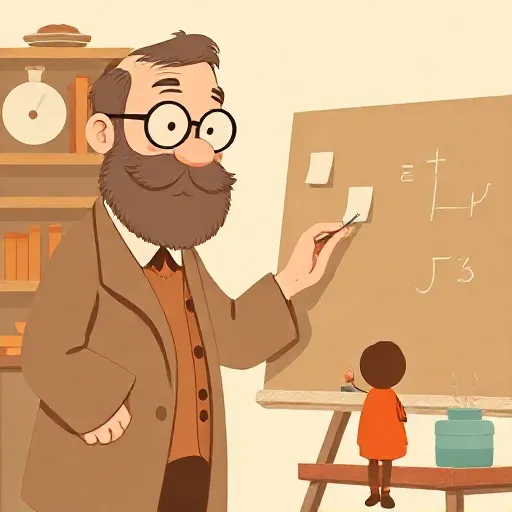
The first person to really dig into this puzzle was a German mathematician and philosopher named Gottlob Frege (1848–1925). In 1892, he wrote a paper that changed how people think about language — and the debate it started is still going.
Frege gave the two sides of a word careful names. He called the thing a word points to its reference (what we just called extension). He called the meaning — the way the word presents that thing — its sense. “Morning star” and “evening star” have the same reference (Venus) but different senses.
Here is where it gets interesting. In most ordinary sentences, reference is all that matters. If I say “The morning star is bright,” and you swap in “Venus,” you get “Venus is bright” — same truth, no problem. Philosophers call these extensional contexts — places where swapping words with the same reference works fine. Mathematics is usually extensional. When a mathematician writes “1 + 4 = 2 + 3,” nobody objects, even though the two sides mean different things.
But some sentences are different. Imagine George is a kid who knows the morning star shines at dawn, but has never heard anyone call it Venus. The sentence “George knows the morning star is bright” is true. But “George knows Venus is bright” might be false — George has no idea what Venus is. Frege called these intensional contexts — places where sense matters more than reference. Other examples pop up all the time: “I believe that…,” “It is surprising that…,” “It is necessary that…”
In an intensional context, you cannot just swap words that point to the same thing. The way the thing is presented — the sense — is what counts. This was Frege’s big insight, and it opened up a whole new way of thinking about language and the mind.
Carnap’s Bright Idea: What If the World Were Different?

Frege explained the problem beautifully. But he left a huge question hanging: what exactly is a sense? What kind of thing is a meaning, if you had to describe it mathematically?
An Austrian-born philosopher named Rudolf Carnap (1891–1970) offered an answer that still shapes how philosophers think today. His idea was to imagine possible worlds — not other planets, but alternative ways the whole universe could have been.
Think of it like this. In the actual world, the morning star and the evening star are the same object (Venus). But could they have been different? Sure. Imagine a world where Venus has a twin — one planet that is brightest at dawn, a different one at dusk. In that possible world, “the morning star” and “the evening star” point to two different things.
Carnap’s proposal: the intension of a term is like a rule — a function — that takes any possible world as input and picks out the right object in that world. Two terms have the same intension only if they pick out the same object in every single possible world, not just the actual one.
So “morning star” and “evening star” have the same extension in our world but different intensions — because there are possible worlds where they pick out different planets. The words “human” and “featherless biped” might have the same extension right now (all humans are featherless bipeds, and the other way around), but they have different intensions — because you can imagine a world where some birds lost their feathers but were not human.
This way of thinking about meaning — as a function from possible worlds to things — is simple, powerful, and mathematical. It is still the starting point for most work on this topic. But, as you are about to see, it runs into trouble in some surprising places.
When Names and Numbers Refuse to Play Along
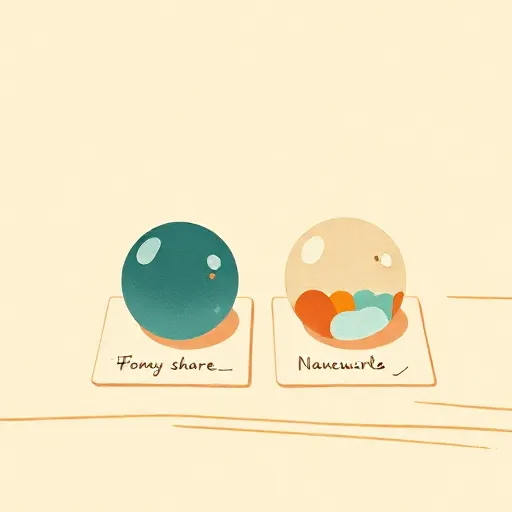
Carnap’s picture works beautifully for phrases like “the morning star” or “the King of France” — descriptions that could pick out different things in different worlds. But trouble arrives when you look at two other kinds of words: proper names and mathematical terms.
Start with names. Consider “Hesperus” and “Phosphorus” — two ancient names for Venus. Hesperus was the evening star; Phosphorus was the morning star. Now here is the thing: most philosophers today think proper names are rigid designators. A rigid designator picks out the same object in every possible world. If Hesperus is Venus in our world, it is Venus in every world. Same for Phosphorus.
But wait — if both names are rigid and both pick out Venus in every world, then by Carnap’s rule “Hesperus is Phosphorus” should have the same intension as “Hesperus is Hesperus.” Both are true in every possible world. Yet one sentence teaches you something and the other does not. How is that possible?
Mathematics has the same problem. Take “1 + 4” and “2 + 3.” Both equal 5. Both equal 5 necessarily — in every possible world. So by Carnap’s rule, they should have the same intension. But a second-grader learning addition does not know that. The two expressions feel different. They mean something different, even though they always point to the same number.
One solution philosophers have explored: maybe the sense of a mathematical expression is not just what it points to, but the computation it tells you to do. “1 + 4” says: start at 1, count up 4 more. “2 + 3” says: start at 2, count up 3 more. Different instructions, same result. The sense is the recipe, not just the dish.
For proper names, the solution may go in a different direction. When we talk about what is necessarily true, proper names seem rigid. But when we talk about what someone knows or believes, the rules might change. You might have learned “Hesperus” one way and “Phosphorus” another way — different mental files, different senses — even though both tags lead to the same planet. The philosopher Saul Kripke (born 1940) argued that in models of knowledge, proper names do not have to behave rigidly at all. There might be epistemically possible worlds where Hesperus and Phosphorus turn out to be different — not because they really could be, but because your evidence does not rule it out.
Philosophers are still arguing about which solution works best. No single approach has convinced everyone.
Why Your Brain Runs on Sense, Not Just Facts

So why should you care about a debate that started in 1892?
Here is why: every single time you learn something from a sentence, you are living inside the gap between sense and reference. When a friend says “the kid who sits in the back row is actually really good at math,” you learn something new — even if you already knew that kid by sight, even if “the kid in the back row” and “Sam” point to the exact same person. The sentence changes your mind because the sense is different, not the reference.
This is not just about planets and stars. It is about how your mind organizes information. You do not simply store a list of facts about objects. You store facts under descriptions, under ways of thinking about those objects. Your mental map of the world runs on senses, not just references. That is why a friend can surprise you with a sentence whose every word you already understood.
It matters for technology, too. Computers are great at handling references — they can look up that “the morning star” equals Venus in a database. But they are much worse at handling senses — understanding why learning that equality is interesting, or surprising, or worth telling someone. The gap between sense and reference is part of what makes human thinking different from a search engine.
Frege opened a door in 1892. Philosophers have been walking through it ever since, and they still have not reached the other side. The question — what is a meaning, exactly? — turns out to be one of the hardest and most rewarding puzzles anywhere.
Think about it
-
Imagine a friend tells you, “The quietest kid in our class is actually the funniest person I know.” You already know who the quiet kid is. Did you just learn something about that person, or about how your friend sees them? What is the difference?
-
If you had a perfect encyclopedia listing every true fact about every object in the universe, would you understand the world — or would you be missing something that only sentences can give you?
-
Think of two descriptions of the same thing that only you and one friend would understand — like an inside joke. What makes those descriptions carry different flavors, even though they point to the same thing?