Is It Fair to Make a Law Only Because Your God Says So?
When Your Reason Is “Because God Says So”

Rick lives in a small town, and a big vote is coming up: should every store be forced to close on Sundays? Rick believes Sunday is God’s holy day and working on it goes against God’s order. He can’t think of any reason for the law that doesn’t rely on that belief — no safety benefit, no solid economic argument. But many of his neighbors don’t share his faith. Should he still vote for the law?
A group of important philosophers, including John Rawls (1921–2002) and Robert Audi (b. 1941), say: no — not if you’re a citizen of a liberal democracy. A coercive law is a rule that forces people to do (or not do) something, backed by fines or punishment. The thinkers who hold what is often called the standard view argue that a coercive law must be supported by a secular reason — a reason that doesn’t depend on any religion, but can instead appeal to fairness, public health, individual freedom, or other non-religious considerations. If you believe that the only plausible justification for a law is a religious one, they claim, you should not support it.
This moral rule is the Doctrine of Religious Restraint (DRR). It doesn’t say you must be convinced by the secular reason yourself; you just have to believe that there is a decent secular case and be ready to offer it in conversation. The DRR is a moral duty, not a legal one — nobody is suggesting the police should arrest you for voting your conscience. And you are still allowed to vote for laws because of your religion, as long as you also have a non-religious justification you can hand to your fellow citizens.
The Fear of Religious War

Why would anyone defend the DRR? One argument points to history. Audi warns that when people use the power of the state purely for religious reasons, “a clash of Gods vying for social control” can erupt. In 17th‑century Europe, attempts to enforce religious orthodoxy sparked brutal wars. If citizens today felt free to coerce each other for religious goals, the argument goes, we might slide back into violence.
Liberal critics of the standard view — thinkers like Christopher Eberle, Philip Quinn, and Nicholas Wolterstorff — reply that stable democracies are different. They argue that what triggers religious conflict isn’t diversity of belief but violating people’s right to worship freely. As the philosopher John Locke pointed out long ago, it is the refusal to tolerate different opinions that causes strife, not the opinions themselves. Modern liberal democracies fully protect religious freedom, so the risk of open war is extremely low. Moreover, even when people do violate religious freedom, they often use secular-sounding excuses (like the need for social order), not purely religious ones. And many religious believers actually defend religious freedom on religious grounds — they believe God wants each person to choose freely. So critics doubt that the DRR is needed to keep the peace.
Would It Divide Us More?
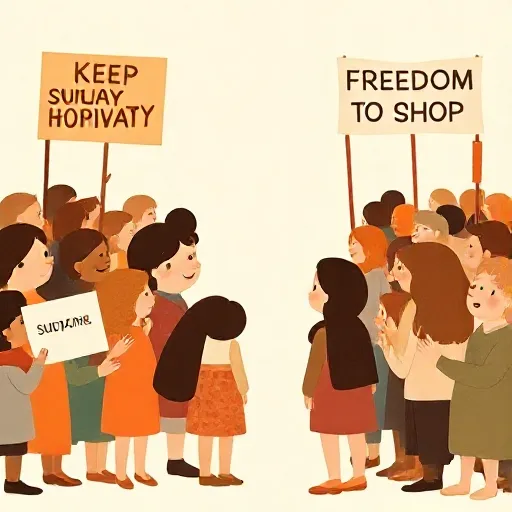
Another worry is about social harmony. Imagine a law passes that can only be justified by appealing to a particular faith. Those who don’t share that faith may feel frustrated and shut out — the law seems to have a “religious character” that leaves them with no access to the reasons behind it. That anger can tear at the trust citizens need to make decisions together. The DRR, its supporters say, lowers that danger by requiring each law to have a reason everyone can at least take seriously.
Critics push back. They point out that the DRR itself can create anger. Many deeply religious people believe they are commanded by God to support certain laws; telling them they must hold back unless they find a secular reason feels like demanding they be less loyal to their Creator. Some secular citizens, too, find the DRR troubling — they think everyone has a right to vote their conscience, period. Which side generates more frustration is an open question, and the facts aren’t settled. The DRR, after all, doesn’t forbid people from speaking in angry or disrespectful ways, so some of the division might come from how people argue, not just which reasons they use.
The Argument from Respect: Must Everyone Be Convinced?

The deepest argument for the DRR flows from respect. Philosopher Charles Larmore (b. 1950) and others say: each citizen deserves to be treated as a person. That means there is a strong presumption against using state force, and that force must be justified to every person who is coerced. If some people cannot see any good non‑religious reason for a law, and you force them to obey anyway, you seem to be treating them disrespectfully — as if their sincere disagreement doesn’t matter. The DRR, then, is a way to honor that basic respect.
This argument has run into heavy fire. Critics ask: if every coercive law must be justifiable to each reasonable citizen, what about basic liberal rights themselves? Consider the right to religious freedom. Some devout religious thinkers — such as the 20th‑century Islamic intellectual Sayyid Qutb — argued from their sacred texts that the state should not protect a broad right to religious freedom. For them, forcing the state to uphold that right looks unjustified. If the respect argument demands justification to everyone, then even laws protecting religious freedom would seem illegitimate. That’s an awful result for defenders of the standard view, who love those freedoms.
Some supporters of the DRR reply by changing the demand: a law is justified to you not if you actually accept it, but if you would accept it were you reasonable and well‑informed. This counterfactual move tries to save both religious freedom and the DRR. But critics answer that we simply can’t know what people would believe in those improved conditions without taking sides on the truth of religious claims — and most advocates of the standard view don’t want to declare entire religious worldviews false. The puzzle remains: can the demand for justification be strong enough to rule out purely religious laws, yet weak enough not to rule out core liberal rights?
The Rival Vision: Equal Treatment of All Reasons
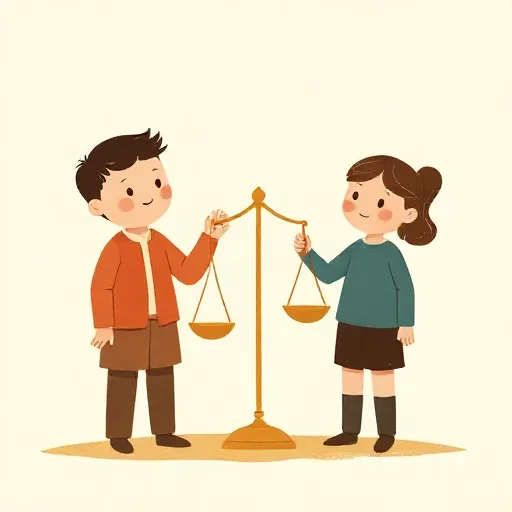
Liberal critics of the standard view—including Christopher Eberle and Nicholas Wolterstorff—propose a different picture. They insist that in a liberal democracy, religious and secular reasons should play the same role. A citizen may support a law for religious reasons, and even vote for it solely on that basis, as long as she is genuinely committed to basic rights and justice.
According to these thinkers, good citizenship requires searching carefully for reasons that others can share. A religious person should try to find secular arguments that might persuade her neighbors; a secular person should similarly try to find religious arguments that might move devout fellow citizens. But if the search fails, that doesn’t mean you must stay silent. You are still permitted to vote your conscience. Restraint, they argue, is not a requirement of respect or fairness — it can even be a betrayal of your own deepest convictions. Wolterstorff, for instance, believes that the best case for inherent human rights actually rests on religious foundations. Forcing him to rely only on secular reasons would cut him off from what he honestly thinks holds society together.
These critics also point out that many of history’s great justice movements — the abolition of slavery, the civil rights campaigns — were driven heavily by religious reasons. If the DRR were correct, those movements would have been in the wrong for supporting coercive laws (like the Civil Rights Act) without enough of a secular basis. The critics find that hard to accept.
Why This Still Matters

The debate is not just for professors. Imagine your school’s student council considering a new uniform rule. You believe your religion teaches that dressing modestly in a specific way honors God. You can’t think of a non‑religious reason — it’s not about safety or cost, just your faith. Some classmates won’t share your perspective. Should you vote to impose the rule on everyone? Is it enough that you are being true to your conscience, or do you owe your peers a reason that makes sense from their point of view?
Both sides of the disagreement start from values you probably share: fairness, respect for different ways of life, and a desire to live together peacefully. The standard view says that fairness demands you find a reason your non‑religious classmates can take seriously. Liberal critics reply that fairness means letting each person be guided by what they honestly believe, as long as core rights are protected. There’s no settled answer. Philosophers keep arguing, and someday you might, too.
Think about it
- If your group wants to make a rule that comes from your religious tradition, and you can’t think of any non‑religious reason for it, is it ever fair to ask others to follow it?
- Suppose a faithful person believes, with deep humility, that God wants them to support a certain law. If they follow the DRR and don’t support it, could they be betraying their conscience? Is that worse than imposing their belief on others?
- In a society with many different beliefs, do all shared rules need to be backed by reasons everyone can understand, or is it enough if the majority agrees — for any reason at all?