Can We Make Fair Laws When We Deeply Disagree?
A City Council and a Skateboard Ban
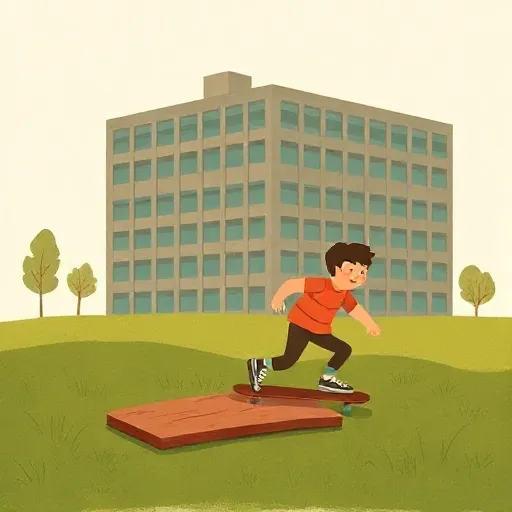
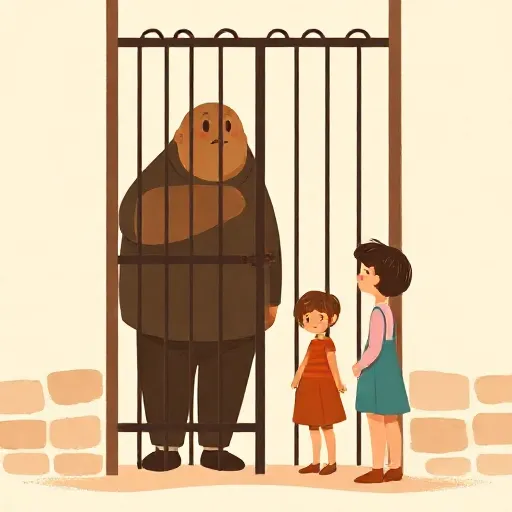
Imagine your town council debates banning skateboarding downtown. One council member stands up and says, “My religion teaches that our bodies are sacred. We shouldn’t risk injury.” Another replies, “I just think it’s unsafe and scares pedestrians.” Both want a rule that feels fair to everyone. Yet they start from very different deepest beliefs. How do they decide without forcing one person’s view of the world onto everyone else?
This exact puzzle lies at the center of a big idea in political philosophy called public reason. Public reason says that when we make rules that apply to all of us, those rules must be justifiable to everyone who has to follow them—not just to the majority, not just to the powerful, and not just to people who already agree with us. It tries to find a middle ground between two simpler but flawed approaches. One approach says: if most people consent, the law is fine. The other says: if a law is simply true or correct, we should pass it. Public reason rejects both. A law must be something that reasonable people could accept, even if they see the world very differently.
The Heart of the Idea: Rawls and Reasonable Disagreement

The most famous account of public reason comes from the American philosopher John Rawls (1921–2002). Rawls begins with a fact he calls reasonable pluralism. In any free society, he points out, people will deeply disagree about religion, philosophy, and what makes life good. This isn’t because some people are foolish or selfish. It’s a natural result of honest, thoughtful people using their reason under fair conditions. Rawls lists the burdens of judgment—the many ordinary obstacles that make moral and political truth so hard to pin down. Evidence is often complex and conflicting. Concepts are vague. Our life experiences shape how we weigh values. As a result, perfectly smart and decent people end up with very different beliefs.
Faced with this permanent, reasonable disagreement, Rawls argues, we can’t simply shout “My side is true, so I’ll make it the law.” That would be unfair to those who have different but equally sincere convictions. Instead, he proposes that the most basic rules of our shared life—especially those about basic rights and the structure of government—must be supported by reasons that all reasonable citizens could endorse. That is public reason in action.
Why Go Through All That Trouble? Respect and Justice

Why should we accept this demanding standard? Two main arguments stand out.
First, some philosophers, such as Charles Larmore (20th–21st century), root public reason in respect for persons. When the government forces you to do something, it treats you as a mere tool if it can’t give you reasons you could potentially accept. To respect someone as a free and equal person, you must justify the rules that bind them in terms that make sense from their perspective too. Public reason is how a diverse society shows that respect.
Second, Rawls himself ties public reason to justice. He pictures society as a fair system of cooperation among free and equal citizens. If the basic rules can only be justified by appealing to hotly disputed religious or philosophical ideas, then some citizens are being unfairly coerced. Justice demands that the terms of our shared life be acceptable to all reasonable citizens, not just to those who happen to share your private beliefs.
Other thinkers offer different foundations—some point to the nature of rational discussion (Jürgen Habermas, born 1929), others to civic friendship or personal autonomy. But all share a core commitment: in a deeply diverse society, political power must be justifiable to everyone it binds.
Who Gets to Be “Reasonable”? The Idealization Problem

This raises a tricky question: exactly who must find the rules acceptable? Obviously, we don’t need to justify laws against murder to people who want to kill. So most theories idealize the audience. On Rawls’s view, the relevant people are reasonable persons—those willing to propose and follow fair terms of cooperation, and who accept the burdens of judgment. They won’t insist that their personal religion or morality be written into law.
But some critics worry this idealization goes too far. If we define “reasonable” to include only those who already share our liberal values, then public reason might quietly exclude many sincere religious or traditional people. Philosopher Gerald Gaus (20th–21st century) offers a less idealized group—he calls them “Members of the Public”—who keep closer to real people’s diverse beliefs. Others, following Habermas, say all affected parties, with no special filter, should be included.
The less we idealize, the harder it is to find any rules everyone can accept. The more we idealize, the more we risk ignoring real people’s actual convictions. This tension runs through every version of public reason.
What Can We Actually Say? Content and Shared Reasons
If we accept public reason, what arguments are allowed? Rawls says the content must come from public political values—things like equal basic liberties, equality of opportunity, and fair distribution of resources. These values are drawn from the shared political culture of a democracy, not from any single religion or philosophy. He also adds guidelines of inquiry: rely on plain facts, common sense, and uncontroversial science, not on religious texts or disputed philosophical theories.
This leads to another live debate. Must everyone accept a law for the same reason? A consensus view says yes: for a law to be publicly justified, all reasonable citizens must share at least some common justification—they all see it as supported by the same public values. Rawls calls this an overlapping consensus: each person, from within their own private worldview, endorses the same political principles.
A rival view, convergence, says a law can pass the test of public reason even if different people support it for entirely different reasons, including reasons that aren’t shared at all. Gaus and others argue that what matters is that each person has a justification that works for them, not that they all use the same one. Critics reply that convergence might lose the sense of a shared project, and might even depend on controversial ideas about what reasons are. The debate remains unsettled.
The Big Objections: Is Public Reason Unfair or Impossible?
Public reason faces several sharp objections.
Incompleteness. Many worry it simply can’t solve tough moral issues—like abortion, animal rights, or justice for future generations—because those seem to require deep philosophical or religious claims that public reason must avoid. If public reason runs out, we’d be stuck.
Self-defeat. Some say the principle of public reason is self-defeating. The idea itself must be publicly justifiable. But can it be justified to people who deeply reject it? If not, then by its own standard, we shouldn’t use it.
Exclusion of religion. A frequent charge is that public reason is biased against religious citizens. Religious reasons are almost never shared by all reasonable people, so they get excluded from political debate. Defenders reply that public reason also excludes controversial secular doctrines, and that its aim is fairness, not hostility.
Dependence on truth. Rawls famously said his view “does without the concept of truth.” But critics ask: if we can’t claim our political principles are true, why should they override our deepest religious or moral convictions? And can any theory of justification really avoid claims about truth?
Proponents respond that public reason isn’t about replacing truth—it’s about adding a layer of mutual respect. You can believe your views are true, but still recognize that coercing others requires a different kind of justification.
Why This Still Matters at Your Lunch Table

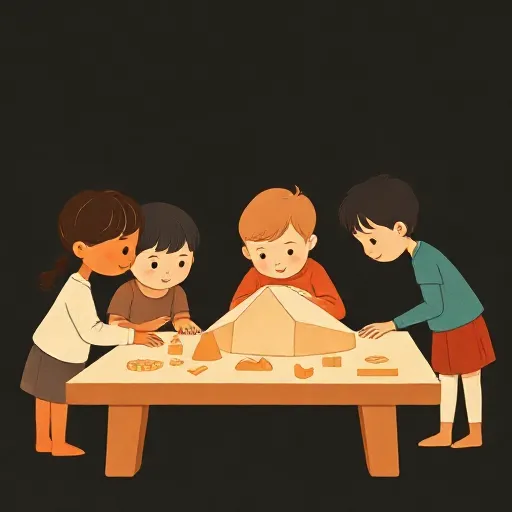
Public reason isn’t just for philosophy books or supreme courts. Think about a student council deciding how to spend school fundraiser money. One group wants to donate to an animal shelter because they believe all life is sacred. Another wants to buy new sports equipment to promote health. They’ll never agree on the deepest why. But they can look for reasons that both sides can respect—perhaps that the money should benefit the whole school community, or that it should help those in need.
That’s the heart of public reason. In a world where we will always disagree about big questions, we still have to live together, make rules, and share resources. Public reason asks us to be responsible citizens: to argue in terms that others can understand and potentially embrace, not just in terms that feel true to us. It doesn’t require giving up your beliefs. It means treating others as free and equal partners in a shared project.
When you try to convince your classmate not to ignore the recycling program, do you quote a scripture they don’t follow, or do you talk about the shared benefit of a clean environment? Public reason is the habit of building bridges from common ground—even when that ground feels narrow and fragile. It’s one of philosophy’s boldest attempts to figure out how free people can govern themselves while respecting one another’s deepest differences. That conversation never ends, and it’s happening right now in your own life.
Think about it
- If your friend argues that a school rule is unfair because it violates their religious practice, should you try to convince them using only reasons that everyone in the school could accept? What if you think they are wrong?
- Imagine a city deeply divided about whether to allow a large controversial statue in the town square. Can you design a process for deciding that respects everyone, even though they’ll never agree on the statue’s meaning?
- When have you had to justify a decision to someone who saw the world very differently? What reasons did you give, and did it feel like those reasons could work for anyone, or only for people who already shared your views?