
Can You Be Religious and Still Think for Yourself?
A Fight at the Lunch Table
“You can’t believe in science and God — that’s totally unreasonable!” your friend says, slapping down a textbook. Maybe you’ve heard something similar. But is it really that simple? Philosophers have wrestled with this for centuries. Their question is: can you be deeply committed to a religion — praying, shaping your life around something transcendent — and still listen to what reason tells you?
To get a grip on the problem, we need a clear idea of what religious commitment means. It’s not just about having beliefs in your head. It means joining in the practices of a religious tradition, letting its stories and images shape your thinking, and aiming for what it sees as the highest good, whether that’s awakening to the Buddha-nature or growing into the character of Christ. This commitment very often involves believing religious claims, but it doesn’t have to. Some people practice intensely even while full of doubt; others choose a religious life without ever becoming fully convinced. So the most interesting question isn’t “Can I believe?” but “Can I commit myself to this way of living and still be reasonable?”
The tricky part is that ordinary religion almost always points to something transcendent — something beyond the natural world that science studies, something of surpassing value that can transform human life. And that’s where the clash happens: reason, fed by science and a deeper knowledge of history, keeps asking, “Why should we think any of that is true?” In response, thinkers have carved out six main paths toward a truce. We’ll walk through the most influential ones.
The First Tool: Building Arguments
The most obvious way to make religion reasonable is to offer an argument — a chain of reasoning that supports a religious claim. For centuries, the star of the show has been the claim that God exists: an all-powerful, all-knowing, perfectly good creator.
The classical arguments are famous. The cosmological argument says the universe can’t explain its own existence, so there must be a necessary being — one that can’t not exist — that caused it all. The teleological argument (design argument) points to the universe’s intricate order as evidence of a designer. And the ontological argument, invented by Anselm (1033–1109), tries to prove God exists just by thinking about the concept of a greatest possible being. More recently, an updated version called the kalām cosmological argument has become popular: it argues that the universe had a beginning, and only a personal being with free will could cause such a beginning.
Here’s the snag. Even if these arguments worked perfectly, they wouldn’t get you all the way to the richly good God that religious people worship. The design argument, for example, might at best show there’s an intelligent supernatural cause — not that this cause is all-good or cares about you. And the cosmological argument gives you a necessary being, but maybe just a powerful mindless force. So modern theistic philosophers have tried two strategies. Some add extra steps to the classical arguments, like “only a personal agent could freely start the universe.” Others, like Richard Swinburne (born 1934), use Bayesian reasoning: they take many smaller arguments and treat them as pieces of evidence that, added together, make the God-hypothesis more probable than not — like tightening a net of clues.
Both strategies run into trouble. The extra steps often seem suspiciously convenient. And the Bayesian approach requires assigning probabilities to claims like “How likely is a complex universe if God exists?” — something no one really knows how to measure. Many philosophers think the starting probability of God’s existence (the prior probability) is either too low or impossible to judge. So the grand argumentative bridge remains unfinished, even if it’s an impressive construction site.
A completely different sort of argument appeals to miracles: astonishing events that appear to violate natural laws and invite a supernatural explanation. Think of a scientifically impossible healing. But miracles have their own problems. As David Hume (1711–1776) pointed out, miracle claims from different religions cancel each other out. And there’s a fairness worry: why would a good divine power heal one person but leave countless others suffering the same thing in the dark?
When Your Experience Whispers Something More

What if you don’t rely on arguments at all? Many religious people say their commitment grows out of a direct religious experience — a sense of God’s presence, a vision, or just a quiet background awareness that there is something more. Philosophers like William Alston (1910–2009) and Alvin Plantinga (born 1932) have argued that such experiences can rationally justify religious belief without needing any other supporting beliefs. They compare it to your senses: you don’t need an argument to believe it’s snowing outside when you look out the window. Your experience itself provides a basic, reasonable foundation. Plantinga suggests that religious belief can be properly basic, just like the belief that 2 + 3 = 5 when you’re adding things up.
But two big objections poke holes in this. First, people from different religions have deeply conflicting experiences. A Christian feels saved by God; a Buddhist meditates and experiences no eternal self at all. If there’s no shared set of rules to decide who’s right, how can either experience be trustworthy? Second, science has shown that electrical stimulation of the brain can produce feelings very much like religious experiences. So when you have one, the question becomes: how do you know this isn’t just your brain firing the way it sometimes does? The experience itself can’t answer that question.
This is where a clever twist enters. You don’t need to give up your religious life, even if you lose belief. You can shift from believing religious claims to a non-doxastic attitude — from the Greek doxa (belief) — like accepting, trusting, or assuming them for the sake of the practices. Now reason is satisfied because you’ve admitted doubt. And pragmatic considerations — the benefits of the commitment, the peace you feel, the community — can reasonably keep you on the path. So experience can still guide you, even when it can’t make you utterly certain.
Leaning on the Words of Others
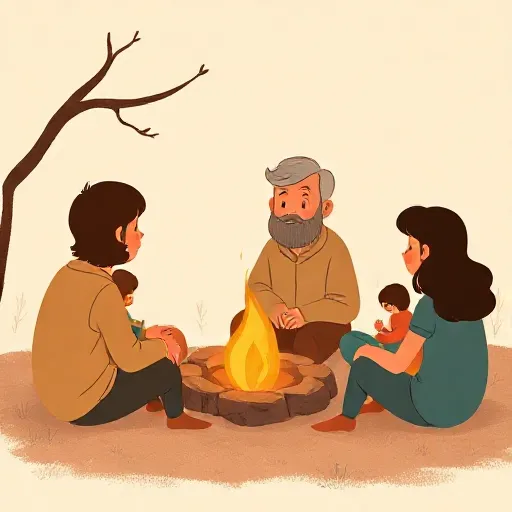
You learn most of what you know through testimony — people telling you things. Your teachers, parents, and friends pass on information; you normally trust them unless you have a strong reason not to. Could religious commitment be reasonable the same way? Imagine an elder in your community describes how a life of prayer has changed them, or someone you respect swears they’ve felt the nearness of the divine.
Social epistemologists — philosophers who study how knowledge works in groups — often say that in the absence of reasons to doubt, you’re justified in taking someone’s word for it. But religion looks like a special case. The world is full of people giving you religious testimony that flatly disagrees: “Jesus is the only way” vs. “There are many paths.” With such a cacophony, you can’t just lean back and trust — you need to investigate. The normal rules seem to break.
Even so, testimony might still help in a more modest way. Suppose you already belong to a religious community, and you start to doubt. You might decide to treat your community as an authority, judging it more likely that they will lead you to what is good and true than your own current, confused thinking. But watch out: that same move could make a white supremacist group or a destructive cult just as “reasonable” for its members, which feels like a failure of true reasoning. Another safer route: when you’ve shifted to that non-doxastic attitude we described, a friend can testify about the pragmatic benefits of staying committed — and that is ordinary, solid testimony that reason welcomes. So again, religion survives, even if the grander hope of using testimony alone to anchor firm belief gets hazy.
Quiet Words and Many Paths

Not all strategies stay on well-lit, traditional ground. Some step into the shadows, insisting that the divine is ineffable — beyond the power of language to describe. Think of the Taoist line that the Tao that can be spoken is not the eternal Tao. If God or ultimate reality is truly beyond our concepts, then rational criticism can’t get a grip. After all, what is there to object to if you can’t properly describe the thing you’re committed to? A more careful version, called limited ineffabilism, says we might know a few things — that the divine exists and is surpassingly great — but the deepest understanding of its nature will forever outrun us. Because of that, any objection could be premature: the missing facts we can’t yet grasp might change everything.
A different angle tackles the problem of religious diversity head-on. Pluralism, famously defended by John Hick (1922–2012), suggests that all the world’s major religions are responding to the same ultimate “Real,” but each culture perceives it through different lenses — just as different colored glasses see the same sun. None of the detailed beliefs are literally true; all are equally valuable paths that lead people from self-centeredness toward Reality-centeredness. However, this asks religious people to give up on their most specific claims being true, which many find too high a price. A softer version — inclusivism — says you can stay committed to your own tradition while staying genuinely open to learning from others, treating your own details as a work in progress to be revised as you seek a bigger harmony. The fifteenth-century thinker Nicholas of Cusa (1401–1464) dreamed of such a united future.
Evolution — Friend or Foe?

At first, evolution looks like bad news for religion. But that’s mostly for literal readings of a few creation stories. Some philosophers have turned evolution on its head and used it to help religion. Process thinkers like Alfred North Whitehead (1861–1947) and more recent panentheists (who say the world exists within the divine, not outside it) point to the grand story of cosmic evolution — from the Big Bang to conscious life — as a clue that the universe is being drawn toward something greater. The divine lures the cosmos forward, and science’s story matches the religious one.
Another evolutionary move is even more radical. It says we should think about religion in light of cultural evolution. Homo sapiens is only about 300,000 years old — early in the lifespan of a typical mammal species. Developmentally, too, we’re still in kindergarten: we still struggle with violence, dogmatism, and honest investigation. If we’re this young, reason tells us to be humble. Perhaps religious belief is premature, but a tentative, non-doxastic commitment to something transcendent — keeping the search alive — is perfectly reasonable. Some philosophers call this early‑stage religious relativism. It lets you remain deeply religious while admitting that confident knowledge is not yet on the table. Critics say this is too skeptical, or that naturalism (the belief that only the natural world exists) is just as reasonable a tentative position. But here, too, the door stays open.
The Wider Search

You might never sit in a philosophy seminar. But the question that started all this — “Can I be religious and reasonable?” — is alive in your own friendships, in quiet moments of doubt, and in the way you treat people whose commitments look nothing like yours. The six ways are not just museum pieces. They are real attempts, still being sharpened and debated, to show that the felt tug of something transcendent doesn’t have to mean abandoning your mind.
What these efforts reveal is that the conversation is far from over. An argument that falls short today might be repaired later. A religious experience you can’t explain now might, with more searching, find its place. Our species has an unimaginable stretch of time ahead, if we don’t ruin things. The hard work of trying to reconcile reason and religion — asking careful questions, admitting when we don’t know, testing new ideas — is part of that larger human journey. And that journey is already yours.
Think about it
- If two people both say they’ve had a direct feeling of the divine but their descriptions disagree, how do you decide who, if anyone, is right?
- Can you live a fully religious life while admitting you might be wrong about everything you hold most sacred? What would that feel like?
- If our species is still immature in its thinking, does that mean we should wait before committing to any big worldview — religious or not?