

Do All Religions Lead to the Same Mountain Top?
A German philosopher discovers a secret from ancient India

Arthur Schopenhauer (1788–1860) was a grumpy German philosopher who thought life was mostly suffering. Then, one day in his early thirties, he read a Latin translation of the Upaniṣads, ancient Indian scriptures written as conversations between teachers and students. He was stunned. Here were ideas about the self, the universe, and how to escape suffering that felt like they came from a different planet — and yet they also matched some of his own deepest thoughts.
Schopenhauer kept that book by his bed for the rest of his life. He said that it had been the consolation of his life and would be that of his death. He began mixing ideas from European thinkers like Immanuel Kant with ideas from Indian Vedānta and Buddhism. This was comparative philosophy of religion — the attempt to think seriously about one religion by putting it side by side with another.
But Schopenhauer wasn’t just comparing. He was building a new philosophy out of pieces from different worlds. He believed something daring: that beneath all the different gods, rituals, and stories, there might be a single truth. Not everyone thought that was a good idea.
What does it even mean to compare religions?

Comparing religions sounds simple: you put two beliefs side by side and see what matches. But it gets messy fast. Are you comparing the religions themselves — their gods, rituals, and rules — or are you comparing the philosophies people have built about those religions? Often you can’t cleanly separate the two.
Think of Śaṅkara (c. 8th century CE), a Hindu thinker, and Thomas Aquinas (1225–1274 CE), a Christian one. If you compare what they said about the nature of reality, are you comparing religious ideas or philosophical ones? Probably both. And that’s the first big puzzle of comparative philosophy of religion.
There’s also a split in approach. Some philosophers aim to be synthesizers. They look for a common core — a set of truths that every great tradition shares. Others are heterogenizers. They zoom in on the differences and warn that smashing traditions together can flatten what makes each one alive. The fight between these two camps has been going on for centuries.
The synthesizers: searching for a single hidden truth

Schopenhauer was an early synthesizer. He believed his own philosophy — a dark vision of reality as “will” and the goal as total renunciation — could be stitched together from Plato, Kant, the Vedas, and the Buddha. He even claimed that what the Buddhists call Nirvana and what Vedāntins call reabsorption in Brahman was really just what he called “nothingness.”
A later movement, the Perennial Philosophy, pushed this further. Aldous Huxley (1894–1963) and others argued that all religions share a core: a divine Reality behind everything, a spark of that Reality inside you, and the goal of waking up to it. Huxley grabbed quotes from Christian mystics, Daoist sages, and Hindu scriptures to show they all really said the same thing. The differences, he thought, were just surface decoration.
Then came John Hick (1922–2012), a British philosopher who became the most famous modern synthesizer. Hick looked at the world’s major religions — Hinduism, Buddhism, Christianity, Islam, Judaism — and said they’re all equally valid paths. He borrowed an idea from Kant: there is one ultimate Real (the noumenal world), but every religion experiences it through its own cultural glasses (the phenomenal appearances). A Christian might call it the Trinity, a Muslim Allāh, and a Hindu Brahman, but they’re all talking about the same ungraspable source. Hick called this religious pluralism.
Synthesizers have a powerful appeal: they make the world feel connected. But their approach has a built-in risk.
The heterogenizers: leaving differences alone
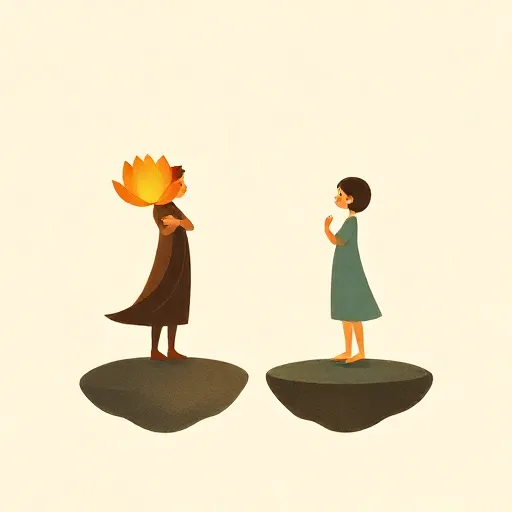
Not everyone wants to climb the same mountain. D. Z. Phillips (1934–2006), a Welsh philosopher influenced by Ludwig Wittgenstein, argued for a radical pluralism. He said comparing religions as if they were competing theories misses the point. A Buddhist practice is not a failed attempt at Christian prayer. It’s its own form of life, with its own rules. You can’t step outside all religions and judge them from a neutral platform — you can only understand each from the inside.
Victoria Harrison gave this a twist with internalist pluralism. Imagine a Hindu says “Śiva is the true god” and a Catholic says “The Trinity is the true god.” Normally you’d think they’re disagreeing. But Harrison asks: are they even using the same ruler? If their whole faith-stances — their conceptual schemes — are different, maybe they’re just talking past each other. There’s no real disagreement, only a difference of worlds.
Heterogenizers serve as careful guardians. They remind us that a religion isn’t just a set of answers to big questions. It’s a tapestry of practices, stories, and ways of feeling that can’t be reduced to bullet points.
Why comparing can be dangerous
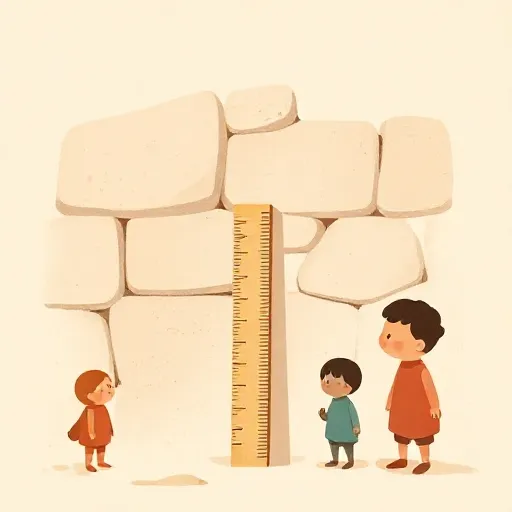
There’s another layer to this debate. Critics charge that comparative philosophy of religion has often been a European game played with European rules. Eurocentrism means using Western Christian categories — words like “God,” “sin,” or “salvation” — as the default measuring stick for every tradition. A scholar named Purushottama Bilimoria pointed out that even the list of big topics (the problem of evil, immortality, redemption) was shaped by a Western Christian imagination of what counts as important.
When you impose a foreign ruler on someone’s religion, you often misread it entirely. For example, researchers used to translate the Yorùbá word àjẹ́ simply as “witch,” assuming a European idea of evil magic. But when philosophers Barry Hallen and J. Olubi Sodipo spent over a decade talking with Yorùbá elders, they discovered àjẹ́ also meant a person using medicinal abilities for the good of the community. The simple translation had blinded outsiders.
This doesn’t mean we should stop comparing. It means the comparison has to be done with humility, listening carefully to how insiders understand their own words and practices. It also means admitting that no single person can master all the world’s traditions. As one philosopher, John Clayton, put it, the idea of being an expert in multiple religions is an ideal — and an unreachable one.
Why this still matters — right now, to you

Maybe you have a friend who goes to a mosque, another who meditates, and a third who says science is their only guide. Or maybe you’ve just wondered: how can so many people be so sure of such different things?
Comparative philosophy of religion gives you a tool to hold those differences without fear. You might find yourself drawn to the synthesizers, spotting the golden thread that seems to run through every tradition. Or you might side with the heterogenizers, convinced that trying to blend religions is like trying to smooth over a mosaic — it destroys the very thing that makes it beautiful.
Schopenhauer stayed up late with an old book and felt his world crack open. The debate that started in that candlelit room hasn’t ended. It’s alive every time you meet someone whose ultimate question is asked in a language you’ve never heard before.
Think about it
- If two people from different religions both say their prayers make a real difference in their lives, can they both be right? How would you investigate that?
- Is it more important to look for what different faiths have in common, or to protect what makes each one unique? What might get lost either way?
- Can you truly understand another person’s religion if you’ve never practiced it yourself? What would count as “understanding”?