Is Today’s Science Tomorrow’s Fairy Tale?
The Day Science Was Declared Bankrupt
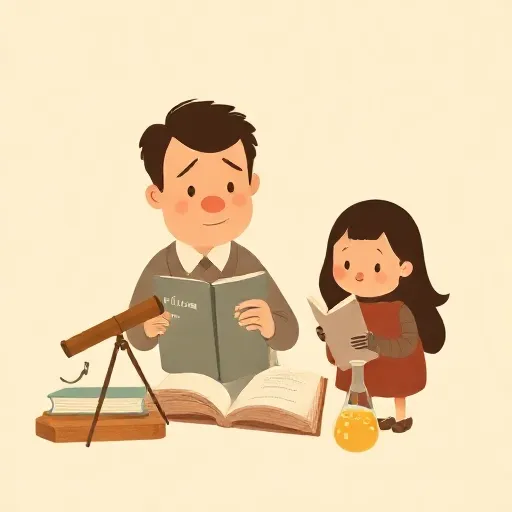
In the winter of 1895, a respected French editor named Ferdinand Brunetière (1849–1906) dropped a bombshell. Writing in a famous journal, he announced that science was bankrupt. His argument was simple: for centuries, scientific theories had risen to glory and then crumbled into rubble. If every past generation thought it had the final answers — only to be proven wrong — why should we believe this generation is any different?
He was not alone. A few years earlier the Russian novelist Leo Tolstoy (1828–1910) had pointed out, with a smirk, that each year produces dazzling discoveries that “are eventually admitted to be ridiculous mistakes even by those who promulgated them?” For Brunetière and Tolstoy, the history of science was a graveyard of dead ideas: the crystal spheres of ancient astronomy, the humoral theory of medicine, the imaginary fluid called phlogiston that chemists blamed for fire. All of them had been swallowed by time.
The attack stung scientists. A Nobel Prize–winning physiologist, Charles Richet (1850–1935), fired back. He admitted that science can never reach the deepest “why” of things — only the observable patterns. But, he insisted, science never promised to reveal the secret essence of the universe. Instead, it keeps its modest bargain: it makes predictions and changes the world. Richet listed the wonders that had already arrived: railways, the electric battery, microscopes, the composition of air. Then he turned the skeptics’ own logic against them. If history shows that yesterday’s impossible problems got solved — like isolating the colouring matter of blood once thought forever invisible — then history fuels optimism, not despair. The debate was on.
What Survives When a Theory Dies?
Not everyone fighting the charge of bankruptcy took the same side. The physicist and philosopher Pierre Duhem (1861–1916) saw that every theory has two layers. The explanatory part tries to say what unimaginably tiny things are really like — this is the layer that gets tossed out when a theory fails. The representative part, by contrast, is the net of mathematical laws that organizes what we actually measure. Over and over, Duhem noticed, that mathematical core survives even when the old story dies.
Henri Poincaré (1854–1912) sharpened the point in a speech at the 1900 International Congress of Physics in Paris. He agreed that to the casual observer the ruin of theories looked terrible: “ruins accumulated on ruins.” But those ruins are not junk. What remains, Poincaré argued, are the relations between physical quantities — the equations. For example, when Fresnel’s old theory of light, which imagined waves in a weird substance called the ether, was replaced by Maxwell’s electromagnetic theory, the equations connecting the brightness of reflected and passing beams stayed exactly the same. The words changed (motion became electric current), but the mathematical skeleton held firm. The true reality we can reach, Poincaré said, is not the hidden inner nature of things — it is the web of relations between them. This view later came to be called structural realism: the claim that science can know the structure of the world, even if it never grasps the stuff behind the structure.
The physicist Ludwig Boltzmann (1844–1906) offered a bolder reply. In his city of Vienna, many scientists had become terrified of any hypothesis about invisible entities — they called hypotheses mere “scaffolding” to be kicked away once equations were built. Boltzmann, who believed atoms were real, thought this was nonsense. The historical record, he agreed, does contain revolutions. But if you look carefully, there is also stubborn continuity — and not only in equations. Bits of explanation, even entities like atoms, sometimes make the leap from one age to the next. What you keep, he said, is simply those theoretical pieces that actually did the work.
The Graveyard Gambit
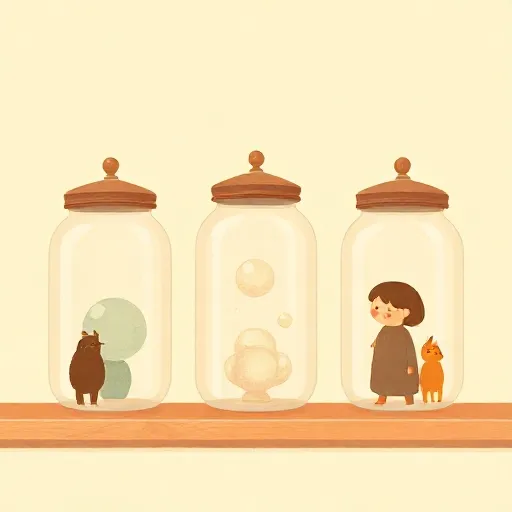
A century later the American philosopher Larry Laudan (b. 1941) revived the history-fed attack, now known as the pessimistic induction. His wager, which he called the “historical gambit,” was brutally concrete. He drew up a list of theories that had once been tremendously successful — predicting new phenomena, guiding experiments — but that we now regard as false, often wildly so. The list included the caloric theory of heat (heat as a weightless fluid), the electromagnetic ether, vital forces in biology, and catastrophic geology built around a universal flood. Laudan wagered that for every past theory we now think got something right, there were half a dozen that got it wrong.
The argument works like an induction: past successful theories turned out false, so current successful theories are probably false too. If that’s right, then the fact that a theory works is no reason at all to think it matches reality.
But this induction has a problem: it treats all theories as equal members of a single club. The humoral theory of medicine and today’s germ theory are hardly in the same league. The evidence for general relativity is astronomically stronger — and more precise — than the evidence for crystal spheres ever was. So many philosophers think the pessimistic induction commits the base-rate fallacy: it ignores how rare truth might be among old theories and how drastically our methods have improved.
Keeping the Baby, Throwing Out the Bathwater
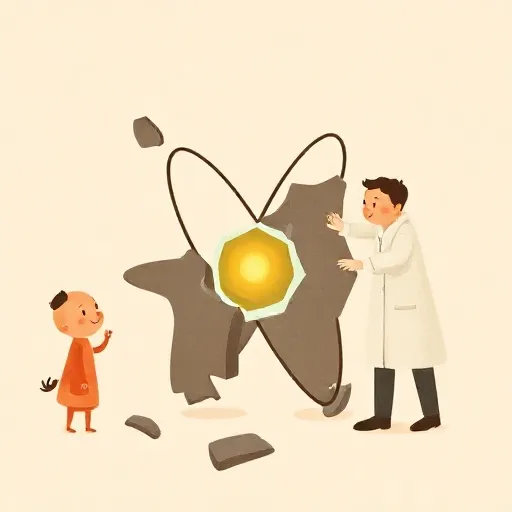
Realists fought back with a strategy called divide et impera — divide and conquer. The idea, developed by philosophers like Philip Kitcher and Stathis Psillos, is that when a theory succeeds, not all of its parts deserve equal credit. Some working posits do the heavy lifting — they are the ones that reliably pump out predictions. Others are idle passengers, tacked on because they fit the fashion of the time. When a theory is abandoned, the idle parts get buried; the working parts get carried over, often in new disguises.
Take the caloric theory of heat. It falsely pictured heat as a material fluid that flows from hot bodies to cold ones. Yet the theory’s mathematical laws — the equations describing how temperature changes — were almost identical to the laws of modern thermodynamics. The successful core was not the fluid; it was the quantitative relation between heat flow and temperature. Realists argue that the bits that genuinely powered the predictions survived the revolution, and that survival is best explained by those bits being approximately true.
A radical version of this idea is structural realism, revived in the 1980s by John Worrall (b. 1946). He examined the shift from Fresnel’s light theory to Maxwell’s and concluded that only the mathematical structure — not beliefs about what exists — had carried over. Structural realists claim we should commit only to the claim that the invisible world is isomorphic to our best mathematical equations. Opponents worry that this makes truth too easy: almost any mathematical structure can be found in a rich enough world, so the claim might become empty.
Why the Ghost of Bankrupt Science Still Haunts Us

Does any of this matter outside a dusty lecture hall? Absolutely. Every day you take actions based on scientific theories. You take medicine that was designed using models of molecules you cannot see. You accept that the climate is warming based on computer simulations that stitch together countless physical laws. If the pessimistic induction were overwhelmingly strong, this trust would be irrational — your faith would be built on a heap of past failures. Yet the realist’s reply also matters: we have reason to think that our tools for checking theories have gotten immensely sharper, and that the parts of theories that reliably make new predictions are not random guesses.
The debate forces a deep question: is science a collection of useful recipes for cooking up correct predictions, or is it a slowly tightening grip on what the universe is really like? The answer is not settled, but watching philosophers and scientists wrestle with it for over a century shows that the question itself is one of the most fruitful inheritances of the “bankruptcy of science” scare. Next time a new headline announces that a long-held idea has been overturned, remember — it might be a sign of failure, or it might just mean that the sturdy skeleton of old truths is getting a fresh coat of paint.
Think about it
- If every medical treatment from 200 years ago looks dangerous or silly to us now, should we fully trust today’s medicine? What would you need to know to decide?
- Suppose your favourite video game gets a massive update that changes the graphics and story, but the core physics engine stays the same. Would you say the new game is closer to reality than the old one, or just different?
- Imagine a scientist shows you a perfect prediction of next week’s weather from a theory he admits is probably false in its deep assumptions. Is it reasonable to rely on that prediction while calling the theory false? Why or why not?