

Do Quantum Computers Really Use Parallel Universes?
The Secret Hack That Might Break the Internet

In 1994, a mathematician named Peter Shor (born 1959) figured out something alarming: a new kind of algorithm that could crack the codes we use to protect online banking, emails, and military secrets. The problem? His algorithm required a computer that did not yet exist — a quantum computer. Today, scientists and engineers are racing to build real quantum machines. But the deeper puzzle isn’t about code-breaking. It’s about what makes a quantum computer so powerful in the first place. And one group of physicists claims the answer is mind-bending: a quantum computer works by splitting itself into many parallel universes.
From Bits to Qubits: The Weird Stuff

A regular computer runs on bits, tiny switches that are either 0 or 1. A quantum computer uses qubits (quantum bits). A qubit is not just 0 or 1; it can be in a superposition — a blend of both states at the same time. You can picture a spinning coin that hasn’t landed yet: it’s not heads and it’s not tails, but it carries both possibilities. Only when you measure a qubit does it snap into a definite 0 or 1, with some probability.
Because a qubit’s state involves two numbers (called complex amplitudes), a single qubit can hold more hidden information than a classical bit. But here’s the catch: when you measure it, you can only extract one ordinary bit of information. The real magic happens while the qubit is unmeasured. During that time, quantum gates — the computer’s building blocks — can twist and mix superpositions in ways that are radically different from any classical operation.
Algorithms That Outrun Anything Else
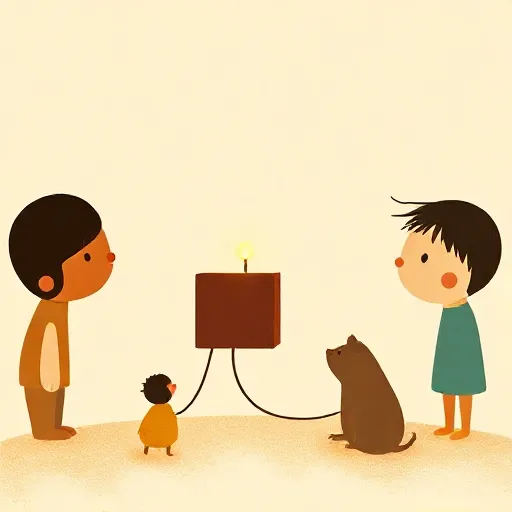
To see why this matters, meet oracles. In computer science, an oracle is an imaginary black box that answers a question in a single step. Classical computers often need many oracle calls to solve a problem; quantum computers sometimes need far fewer. The first real surprise came from David Deutsch (born 1953) in 1985. He showed a quantum algorithm that could tell whether a function was balanced or constant with just one oracle call — a job that would take a classical computer two calls. It was a tiny advantage, but a hint.
Then came Grover’s algorithm in 1996, which searches through a huge unsorted list much faster than any classical method. Even more dramatic was Shor’s algorithm for factoring large numbers. Factoring is something we all learned in school: break a number into its prime pieces. Classical computers struggle with it when numbers get huge. Shor’s algorithm solves it in a flash, threatening the security of widely used encryption. But how? What physical ingredient gives quantum computers this edge?
The Many-Worlds Explanation: Computing in Parallel

David Deutsch gave a radical answer: quantum parallelism. The equation that describes a quantum computation often looks like this: the computer processes a superposition of many inputs at once. For Deutsch, this isn’t just a mathematical trick. He believes a quantum computer actually calculates all those possibilities simultaneously — just in different, equally real parallel universes. According to the Many Worlds Interpretation of quantum mechanics, when a quantum system enters a superposition, the universe itself splits into multiple branches. Each branch contains one outcome.
Deutsch and his supporters, like David Wallace (born 1976), argue that this is the only way to explain the incredible power of quantum algorithms. If you accept that the computer really is doing many computations at once, then the parallel worlds are the workplaces where those computations happen.
Is the Speed-Up Really Coming from Other Worlds?

Not everyone buys the parallel-worlds story. Itamar Pitowsky (1950–2010) pointed out that simply having a superposition of many inputs doesn’t automatically give you a useful answer. When you measure, the superposition collapses, and you might just get a random result. The real trick, Pitowsky argued, is to create a “clever” superposition — one where the wrong answers interfere and cancel each other out, while the right answer’s probability gets boosted. That’s not doing more work; it’s doing smarter work.
Andrew Steane (born 1965) went further: quantum computers actually perform fewer computations than classical ones, because they don’t waste time checking irrelevant possibilities. They navigate the problem space in a more economical way. Armond Duwell added another objection: the phase relationships between terms in a superposition are global properties of the whole system, not a collection of independent parallel worlds. So the many-worlds view doesn’t uniquely explain the data. Even some defenders of many worlds, like Wallace, admit that not all quantum algorithms fit the simple parallelism picture.
Can a Quantum Machine Settle the Debate?
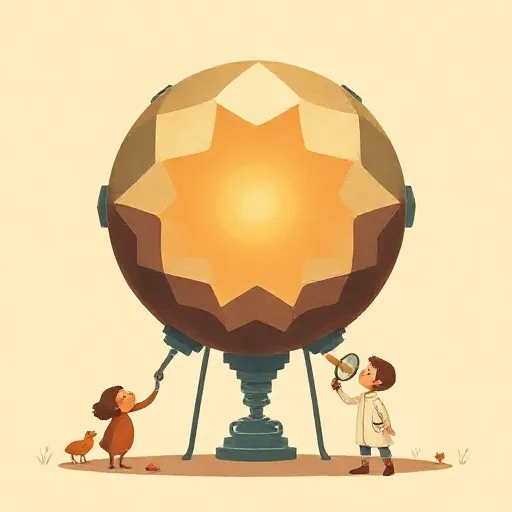
Curiously, the effort to build a big quantum computer might itself test our theories of reality. Some alternative versions of quantum mechanics — called collapse theories — predict that large superpositions will spontaneously collapse before a computation finishes. A working quantum computer that keeps a huge number of qubits in a coherent state would rule out certain collapse models. In other words, the success of quantum technology could do “experimental metaphysics”: it could provide evidence for or against some interpretations of quantum mechanics.
This doesn’t mean a single experiment will settle the many-worlds debate overnight. The computer’s design matters a lot. But it does show that philosophy and quantum engineering are tangled together in surprising ways.
Why It All Matters Beyond the Lab
So why should a twelve-year-old care whether quantum computers run on parallel universes? Because the answer could reshape what we think about the nature of reality. If the many-worlds view is right, then every choice you make — every yes or no — branches off a new universe. If it’s wrong, then the world is still deeply weird, but we don’t need infinite copies of ourselves to explain it.
The debate also touches on something closer to home: what counts as a truly powerful computer. If quantum computers change what it means to solve a problem efficiently, then our whole understanding of the mind — often compared to a computer — might need an update. For now, the question sits at the intersection of physics, computer science, and philosophy, waiting for the first truly large-scale quantum machine to whisper its secret.
Think about it
- If a quantum computer uses parallel worlds, does that mean you are also splitting into many copies every time you make a choice — and if so, does the “original” you still exist?
- Imagine someone says a quantum computer is fast because it cheats by using other universes. Can you think of a way to test whether those universes are real, or is the idea impossible to ever check?
- If we discovered that our minds work like quantum computers, would that make free will more real, or less? Why?