
Can Two People See the Same Quantum Event Differently?
Two Views of the Same Electron

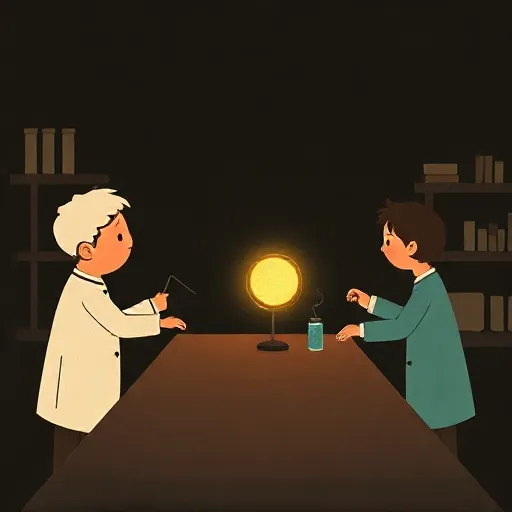
Picture this: you and your friend each build a machine to measure the spin of a single electron. You press your buttons at the same moment. Your screen says “spin up.” Your friend’s screen says “spin down.” You both measured the very same electron. Who is wrong? According to an idea called relational quantum mechanics, neither of you is wrong. You simply saw the same event from different perspectives.
Relational quantum mechanics – RQM for short – was first developed by physicist Carlo Rovelli (born 1956) in 1996. It tries to solve some of the strangest puzzles in quantum theory by flipping one big assumption: the belief that the physical world is made of objects that have their own properties, all by themselves, at every moment. In RQM, properties are not “just there.” They only appear when two systems interact, and they always belong to that interaction, not to either system alone.
Properties Don’t Belong to a Thing Alone

To understand RQM, start with something familiar: velocity. If you say a bike is moving at 25 kilometres per hour, you always mean relative to something else – the road, a tree, the air. There is no “absolute speed” of the bike on its own. Speed is a relational variable: its value depends on two things, not one. RQM says all physical variables work this way. The position of an electron, the spin of an atom, the momentum of a particle – none of these belong to the system by itself. They only have values when the system interacts with another system.
This means that a quantum event – the moment a variable takes a definite value – happens only during an interaction. Outside of interactions, the variable simply has no value at all. The question “What is the electron’s spin right now, when no one is measuring it?” is as meaningless, in RQM, as asking “What is the speed of the bike, ignoring everything else?” The electron has a spin value only relative to another system that it is affecting.
Rovelli’s famous slogan is that “different observers can give different accounts of the same set of events.” This is not about opinions or mistakes. The electron really can be spin-up relative to your detector and spin-down relative to your friend’s detector, because the value is part of two separate interactions.
The Wave Function Is Just a Notebook, Not a Thing

In many descriptions of quantum mechanics, the star of the show is the wave function (often written as ψ). Textbooks treat it like a real, wavy substance that fills space and then “collapses” when someone looks. RQM tells a very different story. Here, the wave function is nothing more than a mathematical notebook. It encodes all the information one system has about another system, based on their past interactions. It’s a convenient way to calculate probabilities, like the Hamilton-Jacobi function in classical mechanics – a clever trick that makes predictions easier, but not a physical thing.
Because the wave function is relative to an observer-system, it can jump or change suddenly when new information is gained, without any mystery. If you write down your best guess about tomorrow’s weather and then get an update, you erase the old guess and write a new one. No physical cloud in the sky has to collapse – only your information changes. In RQM, the wave function does not describe “the way the electron is” all by itself; it describes what one system can know about another.
This view owes a lot to the work of Hugh Everett III (1930–1982), who first introduced the idea of relative states. RQM uses relative states, but it does not need Everett’s “universal wave function” that branches into countless worlds. For RQM, there is no single cosmic wave function – only notebooks kept by different systems.
What about Schrödinger’s Cat?

You’ve probably heard of Schrödinger’s cat, the thought experiment where a cat inside a box is said to be both alive and dead at the same time. This image comes from the idea of superposition: if two distinct quantum states can each happen, quantum mechanics sometimes says the system is in a combination of both. But RQM insists this does not mean we ever see a zombie cat.
In RQM, being in a superposition means two very concrete things. First, if you measure whether the cat is alive, you will get either “alive” or “dead,” each with some probability. Second, there can be subtle interference effects between the two possibilities. Those interference effects are real – but for big, warm, messy objects like cats, a process called decoherence makes them so tiny that they are practically impossible to detect. That’s why we never see half-alive cats.
But what about the cat’s own point of view? Suppose the cat’s brain registers whether its heart is beating. According to textbook quantum mechanics, that registration should collapse the wave function for the cat, killing the interference. Yet quantum theory still predicts tiny interference effects for an outside observer. RQM resolves this puzzle cleanly: the way the cat interacts with an external system (say, a human opening the box) is not affected by how the cat’s heart has already affected its own brain. The cat’s state relative to the outside world does not collapse when a part of the cat interacts with another part. The cat’s internal story and the external story are simply different perspectives – and both are valid.
Why We All Agree on the World (Most of the Time)
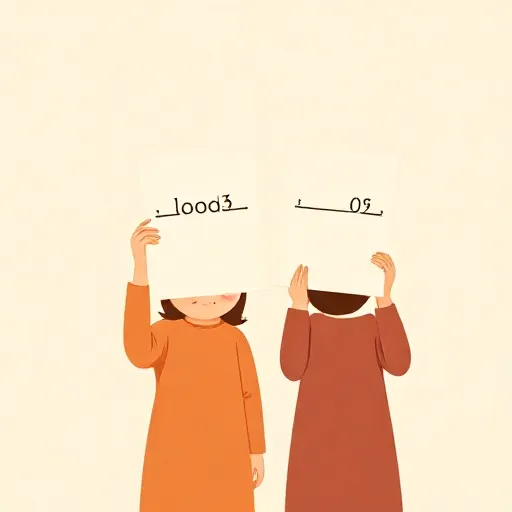
If different observers can record different facts about the same electron, you might worry that we’re all living in separate bubbles, unable to agree on anything. That worry has a name: perspectival solipsism. But RQM dodges this problem because any comparison itself is a physical interaction.
Imagine again that you measured spin-up and your friend measured spin-down. Now your friend writes her result on a piece of paper. When you later read that paper – which is a new interaction – you enter into a relationship with the paper and the original electron. Quantum mechanics predicts that the combined state will be something like: (spin-up of the electron AND the paper saying “spin-up”) plus (spin-down of the electron AND the paper saying “spin-down”). When you finally look at the paper, you’ll see only one outcome – and it will match what you would have found if you had measured the electron directly. In other words, the two perspectives become consistent as soon as they interact.
This means that for all practical purposes, we share a common world. As long as decoherence is strong enough, the values become “stable” and stop depending on which system is looking. Science can proceed. Communities of observers can pile up facts, find regularities, and test theories. RQM does not destroy objectivity; it just explains it as a network of consistent interactions rather than a collection of absolute facts floating in the void.
Rethinking Reality: It’s All About Relations

The central idea of RQM – that all physical variables are relational – follows a long tradition in physics. Galileo and Einstein taught us that velocity is relative. General relativity made acceleration and even the flow of time depend on where you stand. Electromagnetism says only potential differences between conductors have meaning, not an absolute “potential.” RQM takes the next big step: every physical property is relational.
This does not mean the world is unreal or merely in our heads. The moon is still there when no human looks at it. But its properties – its position, its momentum, its quantum state – only exist relative to something else. There is no single, God’s-eye snapshot of the universe where every fact about every particle is settled once and for all. Instead, reality is made of quantum events – discrete moments of interaction – stitched together by a web of perspectives.
This view asks us to let go of the idea that objects have a hidden, inner essence that makes them what they are. In RQM, a thing’s state is simply the sum total of its relationships with everything around it. That’s a radical shift. It means that when you try to describe an electron all by itself, you are asking a question that nature does not answer.
Different interpretations of quantum mechanics each pay a “price” for making sense of the experiments. The Many Worlds interpretation multiplies universes. Bohmian mechanics adds invisible, continuous particle paths. RQM’s price is this: you must accept that there are no absolute, observer-free facts about isolated systems. The reward is that the measurement problem dissolves and the wave function stops being a mystery. Is that trade worth it? Philosophers and physicists are still debating. But one thing is certain: if RQM is right, the deepest lesson of quantum theory is that the universe is a conversation, not a collection of things.
Think about it
- If you and a friend measured the same particle and saw opposite outcomes, would you still be living in the same world? How would you check – and would the check itself just be another interaction?
- Can you think of anything in your own life that exists completely without relationships to other things? Does the idea of such a thing even make sense?
- If all properties are relative to an observer, does that mean a history book written by an alien with different interactions would describe a genuinely different past? How could we ever know?