Can We Trust Anything We Think We Know About Pythagoras?
The Story of the Puppy and the Soul

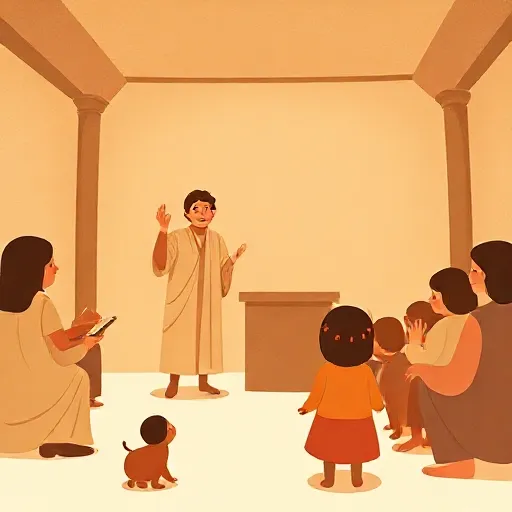
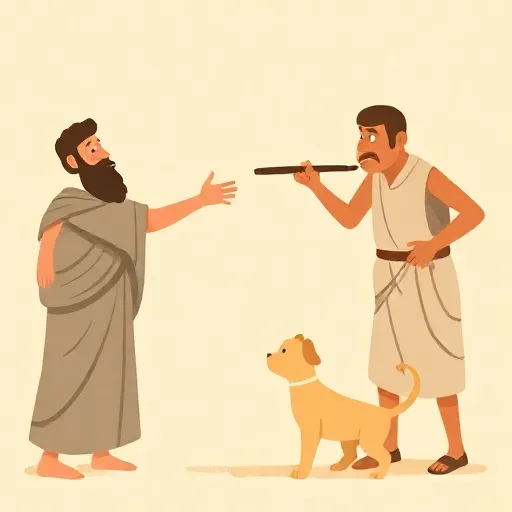
In the early 500s BCE, a Greek poet named Xenophanes heard a ridiculous story. He wrote a mocking poem about a man who once saw someone beating a puppy. The man rushed over and cried, “Stop, don’t keep hitting him, since it is the soul of a man who is dear to me, which I recognized, when I heard it yelping.” The man with the strange sixth sense was Pythagoras (ca. 570–ca. 490 BCE). The story is one of the very few bits of information about Pythagoras that come from his own lifetime. It tells us he believed in metempsychosis — that after death, a person’s soul could be reborn in another body, even an animal’s. But can we even trust that he really said it? Xenophanes was making fun of the idea. And that question opens a much bigger puzzle: what do we actually know about Pythagoras, one of the most famous names in ancient Greece?
A Mountain of Missing Clues

If you wanted to find out what Pythagoras really believed, you’d run into a wall of problems. Pythagoras himself wrote nothing. Not a single word from his own hand survives — if he ever wrote at all. There are no diaries, no letters, no books by people who knew him well. The first detailed accounts of his life were written about 150 years after his death, and those accounts disagree about big things. Worse, only fragments of those early biographies have made it to us.
By the time of the Roman Empire, a whole industry of forgeries had sprung up. Writers claiming to be ancient Pythagoreans produced fake books and gave Pythagoras credit for ideas that actually belonged to Plato (427–347 BCE) and Aristotle (384–322 BCE), who lived two centuries later. Some authors even said that Pythagoras had secretly invented all real philosophy, and that Plato and Aristotle were just copycats. Even Plato’s own students in the Academy got in on the act. Speusippus and Xenocrates — the first heads of the Academy after Plato — began telling people that Pythagoras had taught the key ideas of Plato’s later metaphysics: a supreme unity called the One and a pairing of opposites known as the Indefinite Dyad. This was completely backwards, but it seeped into widely used handbooks. For centuries almost everyone believed Pythagoras was a shadow Plato. Sorting the real Pythagoras from this mountain of make‑believe is a job for the sharpest historical detectives.
What the Oldest Reports Say: A Sage, Not a Scientist
When historians focus only on the earliest evidence — the bits that nobody could have cooked up under the later legend‑making — a very different Pythagoras comes into focus. He was not the master mathematician you might expect. Instead, he was known as an expert on the fate of the soul and a founder of a peculiar way of life.
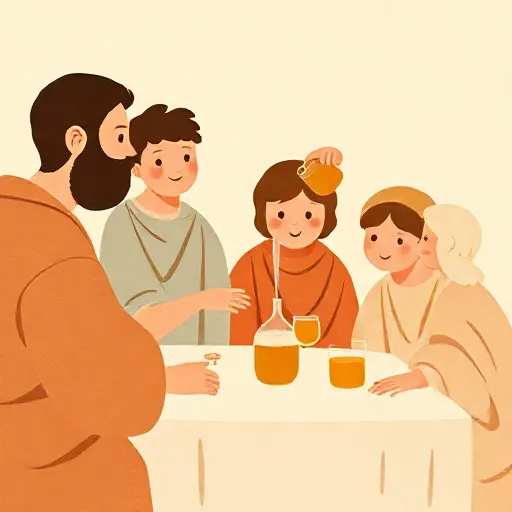
His followers, called Pythagoreans, followed a strict set of oral rules called akousmata (“things heard”). Some sound strangely picky: pour libations to the gods from the handle of the cup, don’t wear images of the gods on rings, enter a temple barefoot, put your right shoe on first. They also avoided traveling on public roads and never looked back when leaving home. When asked what is most just, Pythagoras supposedly answered “to sacrifice.” About diet, the early reports are a mess. Aristotle’s pupil Aristoxenus, who grew up near Pythagoreans, said Pythagoras ate certain meats, even kids and suckling pigs, and only refused plough oxen and rams. Another contemporary, Eudoxus, insisted he wouldn’t go near butchers at all. The famous bean ban is one thing they agree on; Aristotle himself thought it had something to do with souls returning through bean plants.
Pythagoras was also a wonder‑worker. Aristotle, who dug into old records, reported that people in Pythagoras’s adopted city of Croton called him the “Hyperborean Apollo.” He supposedly had a golden thigh (a mark of a god), was seen in two cities at the same moment, and once killed a poisonous snake by biting it. He gave different speeches to different groups — elders, young men, women — and his followers became a sort of ethical club that held real political weight in the Greek cities of southern Italy, like a Masonic lodge. Whether you find these stories impressive or laughable, they make one thing clear: in his own time, Pythagoras was a religious figure, not a scientist.
The Mystery of the Missing Math

But wait — isn’t Pythagoras famous for the Pythagorean theorem? Every schoolkid learns that the square of the hypotenuse of a right triangle equals the sum of the squares of the other two sides. The truth is, we have no early evidence that he discovered or proved it. The story that he sacrificed a whole herd of oxen when he found the theorem comes from two lines of poetry written centuries later. Scholars think the Babylonians already knew the basic relationship long before Pythagoras. At most, he might have passed on a Babylonian arithmetic trick and celebrated it with a grand ritual — not with a geometric proof.
The same goes for music. The idea that Pythagoras discovered the whole‑number ratios behind the octave, fifth, and fourth (2:1, 3:2, 4:3) by listening to hammers in a blacksmith’s shop is a neat tale, but it doesn’t work as real science. The early evidence suggests Pythagoras treated numbers as symbols full of moral meaning: the number one was pure wisdom, two represented woman, three represented man, and the sum of the first four numbers (ten) was the perfect, sacred tetraktys. He likened things to numbers, but he didn’t develop rigorous mathematics.
This odd situation puzzled people even in the fourth century BCE. Inside the Pythagorean movement, a split opened between the akousmatikoi, who stuck religiously to the old oral sayings, and the mathēmatikoi, who pursued mathematical sciences. According to Aristotle, the mathēmatikoi admitted that the akousmata came straight from Pythagoras, but they claimed the real mathematical insights began with a later member named Hippasus. Even the math‑lovers didn’t try to pin their discoveries on the master himself. Aristoxenus summed it up: Pythagoras “honored the study of numbers above all” and removed it from mere trade, but he did this by likening all things to numbers — not by proving theorems.
Why the Puzzle Still Matters

The case of Pythagoras is not just about ancient history. It forces you to think about how you decide what is true about anyone who lived before YouTube and newspapers. If a legend can grow so thick around one of the most famous names of the ancient world, imagine what stories about your own heroes might be missing or exaggerated. And when you read anything about the past — a social‑media post, a biography, a family story — you have to ask the same tough questions: Who wrote it down? How close were they to the event? Do other sources agree? The Pythagorean puzzle reminds us that knowing the truth takes more than a good story; it takes a careful look at the earliest, most honest clues. That’s a skill as useful today as it was when Xenophanes first rolled his eyes at a puppy.
Think about it
- If someone wrote a story about you a hundred years after your death, using only rumors and secondhand memories, how much of it do you think would be true?
- People today sometimes become famous for talents they don’t actually have because of online myths. Can you think of an example, and how would you check the facts?
- Is it possible to be a great mathematician and a religious wonder‑worker at the same time, or do those two roles conflict? What would you need to prove one way or the other?