Why the Rules of Morality Are Made, Not Found
A Boy Amid the Flames
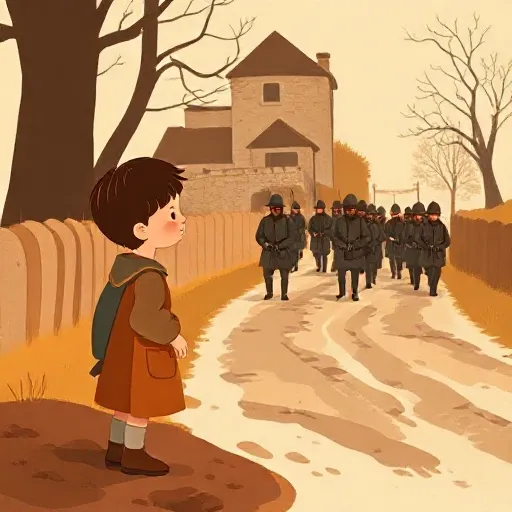
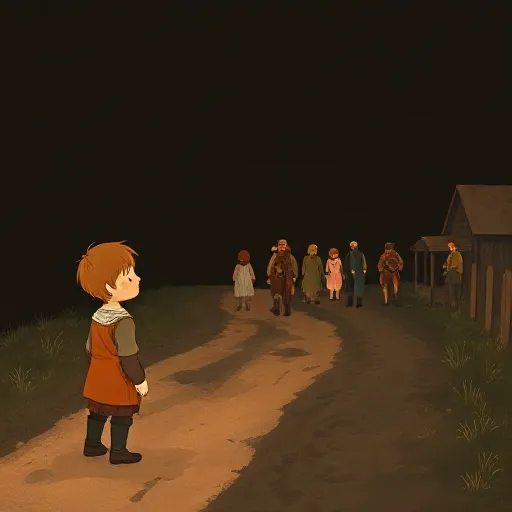
In 1633, a one-year-old boy named Samuel Pufendorf lived in a small German town called Flöha. The Thirty Years’ War was destroying Europe. His father was a Lutheran pastor. When soldiers came through, the family had to flee. As he grew up, Samuel saw neighbors killed, homes burned, and trust disappear. He never forgot that chaos. Later, as a philosopher, he would ask: What rules do humans actually need to stop killing each other?
Pufendorf (1632–1694) answered that question by building a whole new way of thinking about right and wrong. He built on the work of Hugo Grotius (1583–1645) and Thomas Hobbes (1588–1679), who also wanted to find a basis for law without relying on religion alone. But Pufendorf took their ideas further. He argued that morality is not something we discover in the world, like a hidden treasure. Instead, it is something we invent — rules we create to make social life possible. He called this approach modern natural law.
For centuries, philosophers had thought that moral laws were like mathematical truths — eternal and unchangeable. They believed that reason could uncover them by studying the purpose of things. Pufendorf disagreed. He thought that before we ask what is “right” or “wrong,” we need to ask a more basic question: What kind of creatures are we, and what do we need to survive and flourish?
His answer was uncomfortable. Humans, he said, are both vulnerable and dangerous. We can’t survive alone; we need each other for food, shelter, and comfort. But we are also selfish, fearful, and prone to hurting one another. Without rules, we would end up in a miserable state of war. This insight grew directly from the war he witnessed.
Rules Don’t Grow on Trees: The Idea of Moral Entities
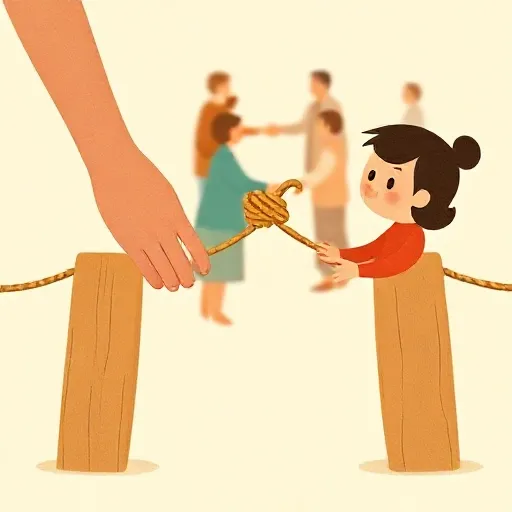
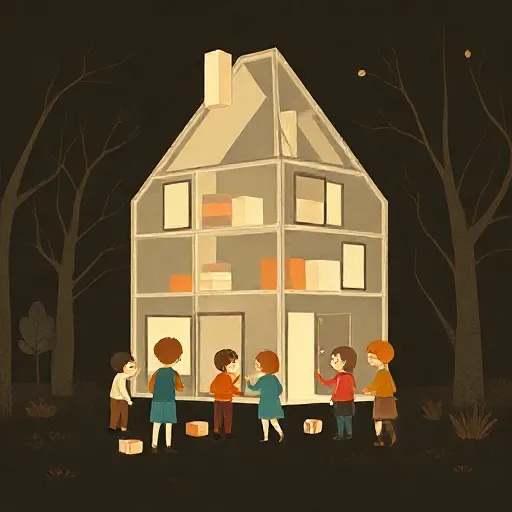
Pufendorf’s key concept was the moral entity (entia moralia). If you look at a chair, you can describe its size, color, and weight — those are “physical” properties. But when you say “this chair belongs to Lena,” you are adding something else. Ownership isn’t a shape or a color. It’s a moral quality — a rule we have attached to a physical thing.
Pufendorf said that moral entities are modes we “superadd” to the world. They don’t exist in nature; thinking beings create them by willing them into existence. Just as we invent words to give sound meaning, we invent moral categories — like “promise,” “property,” “guilt,” and “authority” — to order our lives.
He identified four basic kinds of moral entities: states (like being a citizen or a spouse), persons (the roles we play, such as “judge” or “parent”), moral qualities (powers and duties, like “rights” and “obligations”), and moral quantities (values, like the price of something or a person’s honor). Using these tools, we build complex societies.
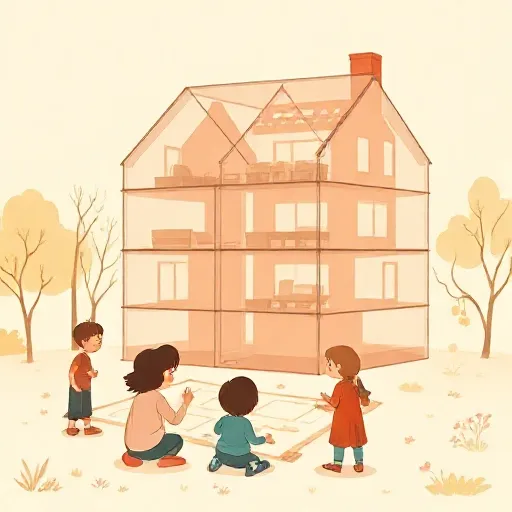
A good analogy is a game. In chess, a piece of carved wood has no natural power. But when players agree on the rules, that piece becomes a “queen” that can move in certain ways. The queen’s power is a moral entity — it exists only because players have decided to impose it. Pufendorf thought all human relationships work like this. A marriage, a promise, even a government — they are all built from moral entities we create together.
The crucial point: for Pufendorf, these rules are not discovered; they are invented. And they depend on people actually following them. That’s why they need backing from a powerful authority who can punish those who break the rules.
The Glue of Social Life

If rules are invented, what tells us which rules to invent? Pufendorf’s answer: the basic law of nature is to cultivate sociality. Sociality means living together peacefully, cooperating, and helping one another.
He argued that this isn’t just a nice idea — it’s a practical requirement. Humans are weak alone. We have no sharp claws, thick fur, or swift legs. But together, we can build cities, grow food, and protect ourselves. So we are naturally drawn to cooperate. Yet we also fight. The fundamental rule is: do whatever makes social life possible, and avoid whatever destroys it.
This is the natural law in Pufendorf’s system. It’s not a list of eternal truths written on the heart. It’s a command — he believed, ultimately from God — that we must seek peace. From this one command, he deduced all other duties: don’t harm others, keep your promises, respect others’ property, help those in need (when you can), and so on. These duties carry obligation — a moral necessity that binds us.
Obligation, for Pufendorf, has two parts. First, there must be a reason to obey — like the benefits of social living. Second, there must be a superior with the power to punish disobedience. If nobody could enforce the rules, why would anyone follow them when it’s inconvenient? Pufendorf insisted that obligation always involves both respect for the lawgiver and fear of punishment. God is the ultimate lawgiver who can impose sanctions, but even without religion, the social need itself gives us a rational basis for obligation.
Why We Need a Leash on Freedom: The State
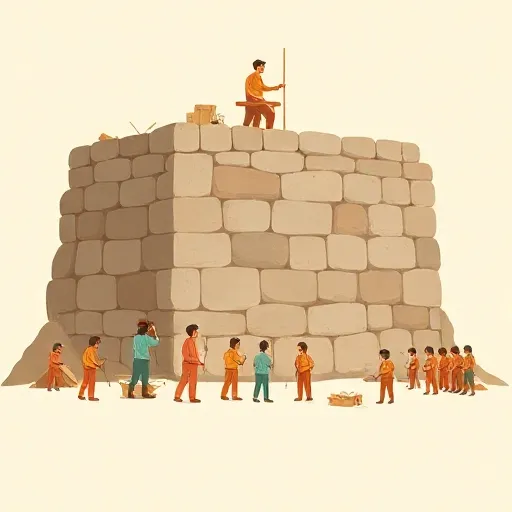
So far, we have moral rules and mutual duties. Why do we need government? Pufendorf’s answer is that pre-political societies — families, clans, villages — work fine up to a point. But as populations grow and resources become scarcer, conflict grows too. A promise to be nice is not enough when someone is hungry and your neighbor has grain. Eventually, fear and self-interest overcome moral feelings.
That’s why humans must create the state. Pufendorf imagined it happening through two agreements. First, a group of people (usually fathers of families) agree with each other to form a permanent union for mutual protection. Second, they all agree to submit to a single ruling authority — a sovereign — who has the power to make laws, judge disputes, and punish wrongdoers.
This sovereign is not a natural king or a person chosen by God directly; it’s a moral person created by the pact. Its authority comes from the people’s agreement, but once created, it is supreme. Pufendorf thought the sovereign must have undivided power — no split loyalties or competing authorities — because otherwise the state would fall back into civil war. He called this unity sovereignty.
But unlike Hobbes, Pufendorf believed that sovereignty could be limited. The people can set conditions in the original pact. For example, a monarch might agree to rule according to existing laws or consult a parliament. Even so, Pufendorf was no democrat in the modern sense. He thought that most of the time, subjects should obey, because rebellion would bring back the chaos of the state of nature.
Limits and Tolerance
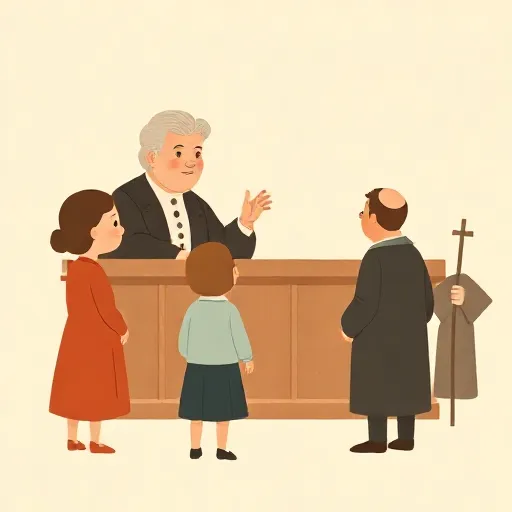
One of Pufendorf’s boldest moves was to separate religion from government. He had seen plenty of wars fought over religious differences. He thought that religious beliefs belong to the private conscience, not to the state. The sovereign’s job is to keep the peace, not to save souls. So the state can regulate churches — to stop them from causing trouble — but it shouldn’t force anyone to believe a certain doctrine.
This led him to argue for toleration. As long as a religious group doesn’t threaten public order, the state should leave it alone. He even argued that the state might allow multiple faiths to coexist, which was radical in his time. He also defended the right of immigrants to flee persecution, though he recognized that states could limit it for their own security.
He applied the same flexible, realist logic to war and punishment. Punishment, for Pufendorf, is not about cosmic justice or revenge; it’s about protecting society. A ruler should punish only as much as necessary to deter crime and keep order — never out of rage. Even the worst criminal remains a fellow human. Similarly, war is sometimes necessary for defense, but it should be governed by rules that aim for eventual peace.
Still Debating After 300 Years
Pufendorf’s ideas had a huge impact. His textbooks were used in universities across Europe and America for over a century. Thinkers like John Locke (1632–1704) and Jean-Jacques Rousseau (1712–1778) borrowed from him — sometimes to criticize him. He shaped the way we talk about rights, duties, and the limits of government.
Why does this matter to you today? Because Pufendorf helped invent the modern idea that laws and morals are human creations designed to solve real problems. That doesn’t mean “anything goes.” It means we have to think carefully about what rules would actually make life together possible, and we must be willing to adjust them when they don’t work. It also means that even the most powerful ruler has a job to do — protecting the people — and can be judged by how well they do it.
Next time you hear people arguing about whether a law is “unnatural” or whether the government should stay out of private life, you’re hearing echoes of Pufendorf’s debates. He left us with a big question: if we built our rules ourselves, how do we make sure they’re just?
Think about it
- If all moral rules are invented by humans, could we decide that stealing is okay, as long as everyone agrees? What might go wrong?
- Pufendorf said that without government, humans would live in fear. Can you think of a situation where people cooperate peacefully without a government or police?
- He believed that the state should tolerate different religions to keep the peace. But what if a religious practice involves hurting someone — should the state step in? Where do you draw the line?