

Is History a March Toward Freedom, or a Storm of Wreckage?
The Man Who Wrote of Hope in a Prison Cell
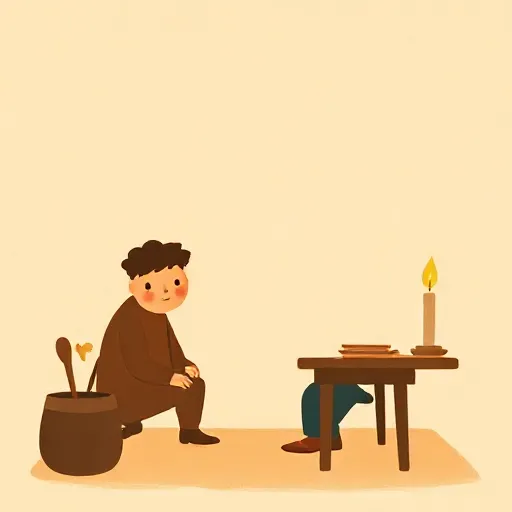
In 1794, a French thinker named Marie-Jean-Antoine-Nicolas de Caritat, Marquis de Condorcet (1743–1794), sat in a prison cell. He knew he might soon be executed. Yet there, he wrote an essay called Outlines of an Historical View of the Progress of the Human Mind. It was full of optimism. He believed that human history was slowly, unevenly, but surely getting better—more scientific, more free, more just. For Condorcet, progress was not just a hope; it was a fact.
Condorcet and his friend Anne-Robert-Jacques Turgot (1727–1781) were part of the European Enlightenment, a time when people began to trust human reason and science over old myths and religious explanations. Before the 1600s, many thinkers explained disasters or the rise and fall of civilizations by saying gods planned it all. Enlightenment philosophers mostly rejected that. They argued that science, especially the experimental method based on experience, was what pushed humanity forward. Turgot found that free republics let scientific geniuses flourish, while despotic rulers crushed them. In turn, he believed, growing knowledge would strengthen political freedom. Even wars and errors could, over centuries, help people organize better societies. The path was rocky, but the long-term trend pointed up.
But not everyone in the Enlightenment agreed on how that trend worked. The deepest split was between those who thought history had a built‑in destination and those who thought progress was only possible, never guaranteed.
A Hidden Plan: Hegel’s Spirit and Marx’s Machines
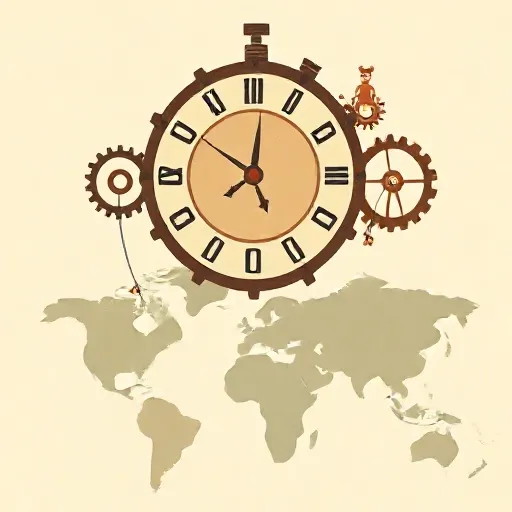
Some thinkers turned history into a kind of giant domino chain. They gave it a teleological explanation—from the Greek telos, meaning “goal” or “end.” On this view, history is not a random jumble; it has a direction and a purpose built into it, whether humans understand it or not.
The most famous teleological story came from the German philosopher Georg Wilhelm Friedrich Hegel (1770–1831). He believed there is a logic behind all world events: Geist, often translated as “Spirit” or “Mind.” Spirit’s essence is Freedom, and history is Spirit slowly discovering itself by shaping political structures. Wars, empires, and even suffering are just the workings of a “cunning of reason”—all grist to the mill that grinds out greater freedom. Hegel divided history into stages: Eastern despotism, the Greek and Roman worlds, and finally, the Germanic world after the Protestant Reformation. He saw his own Prussia as the place where Spirit had at last built a state that fully embodied freedom. Two controversial ideas followed: first, that we could basically predict humanity’s future by uncovering this logic; second, that every tragedy was necessary for the greater good.
Karl Marx (1818–1883) borrowed the shape of Hegel’s story but replaced its engine. For Marx, the real motor of history was not Spirit but material forces—the tools, technology, and productive resources of a society. His view, called historical materialism, says that a society’s “relations of production” (who owns what, how work is organized) rest on its “productive forces.” Over long stretches of time, changes in material life push societies from one system to the next—from ancient slavery to feudalism to capitalism—and eventually, he predicted, to communism, where human capacities would be truly liberated. Like Hegel’s, Marx’s history had a goal. It was predetermined, global, and linear: humanity would march through stages, and local setbacks were just temporary bumps.
Kant’s “As If”: Progress Without a Promise

Not everyone bought the idea of a hidden plan. Immanuel Kant (1724–1804) suggested something quieter and, in many ways, more modern. Kant certainly talked about nature having a “plan” for human history, but he did not mean a fixed script written into the cosmos. He meant a heuristic assumption—something we should believe as if it were true, so that hope and responsible action remain possible. His real account was not metaphysical; it was about human nature and agency.
Kant pointed to two features that make human beings special. First, we can set our own goals through reason, unlike animals driven purely by instinct. Second, we have what he called unsocial sociability—a tension between our desire to dominate each other and our deep need for friendship, love, and cooperation. That conflict, Kant argued, is what forces our reason to grow. We invent rules, institutions, and laws to tame our unruly passions and live together as free and equal citizens.
But progress is not automatic. It depends on the right conditions. In his essay Perpetual Peace, Kant imagined a federation of republics—nations governed by laws, whose citizens would be reluctant to start wars because they themselves would pay the costs. Peaceful institutions give reason its best chance to flourish. And yet, he never said humanity will certainly become free. He only said that if we reason well and build institutions that protect freedom, then over time we might become better. The future remains open. Progress is not a train you are forced to ride; it is a path you might choose to walk.
Evolution’s Messy Puzzle: Progress as Problem-Solving

Today, many philosophers take Kant’s insight even further. They explain progress without any goal at all. Instead, they draw on evolutionary science. From this view, what we call progress is a form of naturalistic progress—a long, slow process of adaptation and learning.
The contemporary philosopher Philip Kitcher describes it as solving altruism failures. In the harsh environments our ancestors faced, small groups struggled to survive. If individuals consistently ignored each other’s needs, cooperation collapsed. Those groups that developed a simple “capacity for normative guidance”—the ability to follow a rule like “give weight to the wishes of the other”—could share food, defend each other, and pass on their social arrangements. Over thousands of generations, that capacity grew into complex systems of fairness, punishment, and moral norms. Progress, on this story, is not climbing toward a mountaintop; it is functional refinement—finding better tools for living together, with no fixed endpoint.
Because this progress is about solving specific problems in specific places, it is local and non-linear. Great regressions—wars, genocides, new tyrannies—are not proof that progress is an illusion; they are exactly the kinds of breakdowns a messy, adaptive process can produce. Progress can fail. And because different communities face different challenges and value different things, we cannot easily judge one culture’s history by another’s measures. Even within a single culture, improvement in one area (say, material wealth) may come at a cost in another (say, equality). The picture is open-ended: we keep finding that we were wrong and then try something new.
The Angel of History and the Dark Side of “Progress”

Not everyone is ready to call that “progress” at all. In the 20th century, witnessing world wars, the Holocaust, and the wreckage of colonialism, some philosophers argued that the whole idea is a dangerous illusion.
The German‑Jewish thinker Walter Benjamin (1892–1940) offered a haunting image. He pictured the Angel of History: its face is turned toward the past, where it sees not a chain of events but a single catastrophe piling wreckage at its feet. A storm blows from Paradise, catching the angel’s wings and propelling it helplessly into the future. That storm, Benjamin wrote, is what we call progress. On this view, history has no upward trajectory; it is a series of disasters that we later dress up with comforting stories.
Theodor Adorno (1903–1969), a member of the Frankfurt School, went further. He argued that Hegel’s habit of “reconciling” with past horrors was a way of excusing them. For Adorno, true critical thinking must dwell on the fractures and the suffering, not smooth them over. He and Max Horkheimer even claimed that the rise of modern science, technology, and capitalism in Europe was in many ways a regression—a system that blinded people to deeper unfreedom.
Meanwhile, postcolonial scholars attacked the idea of progress as politically toxic. They showed that the Enlightenment’s picture of history was deeply Eurocentric. It measured every civilization by a single Western yardstick of freedom and reason, labeling non‑European societies “backward.” That story was then used to justify colonialism, racism, and imperialism. Anibal Quijano and others pointed out that Europe’s material and intellectual wealth was actually built on the labor and resources of the colonies it dismissed as inferior. Edward Said (1935–2003) argued that Western scholars had created a fantasy of “the East” as exotic and uncivilized—a way to silence the colonized. When progress becomes a weapon to erase other ways of living, its glow dims.
Some thinkers today are trying to salvage the impulse to improve the human condition while purging it of arrogance. Amy Allen, for instance, suggests that progress may require unlearning—learning to question our own deeply held certainties rather than just adding new knowledge. Catherine Lu proposes that we need fewer proud narratives of progress and more tragic narratives that reveal how fragile all human power really is.
Why It Still Matters: Your Future, Open and Uncertain
So is history a stairway, a domino chain, a storm, or a messy toolkit? The answer shapes how you see your own world.
If you believe progress is guaranteed, you might relax and let history take its course. If you believe it is impossible, you might give up trying to fix anything. But if progress is an open possibility—something that depends on your reasoning, your cooperation, and the institutions you help shape—then the future becomes a question, not a verdict. The world could become more just, or it could slide backward. It all depends on what people actually do.
The next time you hear someone say “things are always getting better” or “nothing ever changes,” you can remember Condorcet writing in his cell, Hegel’s great clockwork of Spirit, Kant’s fragile hope, and Benjamin’s angel staring at the wreckage. Progress is not a simple story. It is an argument—one you get to join.
Think about it
- If you knew for certain that the future would be worse than the present, would that free you to act differently, or would it take away your hope?
- Think of a time you learned that a “great invention” or “great event” you once admired caused harm to people who were not in the story. How does that change what “progress” means?
- Can a group ever truly judge whether another group’s way of life is “better” without being unfair? If not, how can we ever say anything is real progress?