Why the Angel of History Is Flying Backwards
The Angel in the Storm

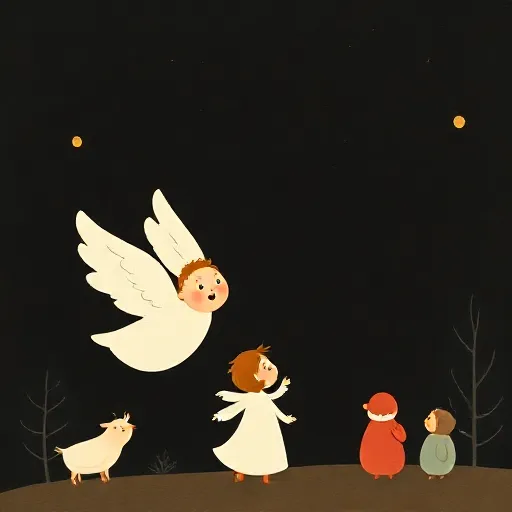
Walter Benjamin (1892–1940) once owned a small painting by Paul Klee. The angel has wide, terrified eyes, an open mouth, and wings stretched backward as if caught in a fierce wind. Benjamin looked at that angel and saw something horrifying: it was not flying into the future. It was facing the past, staring at a mountain of wreckage piling up at its feet. The storm from paradise pushes it helplessly forward, but it cannot look away.
For Benjamin, this was the true face of history. Not a neat line of progress, not a story of things getting better and better. History was a single, growing catastrophe. Every victory, every invention, every new era leaves behind ruins — the wrecked lives, forgotten ideas, and crushed possibilities that “progress” pretends it never happened. The angel sees them all. That is why it looks so horrified.
Benjamin spent his whole life trying to understand how we experience history, art, and time — and whether there could be a way to stop the storm.
What’s Wrong with Just “Progress”?

Benjamin refused to believe that history was like a smooth conveyor belt carrying us toward a better future. He saw that the idea of progress often just calms people down. If you believe things are automatically getting better, you stop noticing the disasters piling up right now — or you tell yourself they are just the “cost” of moving forward.
Benjamin’s worry came from what he called a crisis of experience. In the modern world, he said, real, deep experience was disappearing. We get flooded with empty sensations — news headlines, advertisements, rushing crowds — but they slide off us without leaving a meaningful mark. It’s like living on a diet of junk food for the mind.
Behind this crisis was something Benjamin had noticed as a young philosophy student. The philosopher Immanuel Kant (1724–1804) had said that all knowledge comes from experience, but then he described experience in a very thin way: just a stream of sense data hitting a mind, like a scientist measuring a pendulum. Benjamin thought that left out everything that makes experience rich — the way a smell can summon a whole lost afternoon, or a song can feel like it was written just for you. He argued that experience was more like a language that connects us to the world, not just a mechanical recording. When that deeper connection is lost, the world becomes flat and meaningless. That flatness, he believed, was the soil in which brutal politics could grow.
Art Loses Its Glow

Benjamin’s most famous idea is the aura. He defined it as a strange weave of space and time: the unique feeling of distance and awe that surrounds an original work of art, no matter how physically close you are. Think of standing before a very old painting. You know you are seeing the exact same canvas that the artist’s hand touched centuries ago. That shiver of connection — that’s the aura.
But in the 1930s, Benjamin noticed something new. Photography and film could reproduce an artwork perfectly, infinitely. Millions of people could see the Mona Lisa on a poster or a phone screen without ever visiting the Louvre. Benjamin did not think this was simply a loss. He wrote a famous essay, “The Work of Art in the Age of Its Technical Reproducibility,” arguing that the destruction of the aura could also free art. Once detached from its ancient ritual status, art could stop being a sacred object for the wealthy few and become a tool for the masses.
Film, especially, fascinated him. A movie camera can zoom, slow down, and cut, showing you things the human eye normally misses — what he called the optical unconscious. And because films are made to be watched by huge crowds together, Benjamin hoped they could train people to react collectively, like a body learning a new dance. He dreamed that the new technologies of reproduction could be used not to master nature, but to rehearse a more just society.
But he also saw a dark side. Dictators could use the same techniques to create a fake, powerful glow around a leader or a flag — what he called the aestheticization of politics, a dangerous magic trick that made crowds cheer for their own destruction.
The City of Shock
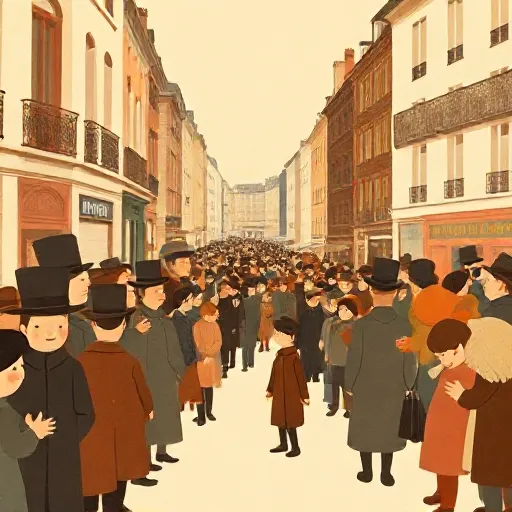
To understand modern experience, Benjamin dove into the poetry of Charles Baudelaire (1821–1867) and the streets of nineteenth-century Paris. Baudelaire wrote about the city’s crowds, arcades, and fleeting encounters. He described modern life as a series of shocks — like the jolt of a machine on a factory line or the sudden bump of a stranger in a packed street.
Benjamin latched onto this shock. He compared it to what soldiers suffered in the First World War: a constant battering of the nerves that wears down the ability to hold onto deep experience. In the modern city, he said, we all become a bit like the flaneur — a wanderer who drifts through the crowds without attachment, collecting impressions but never truly settling anywhere. This was the price, he thought, of living in a world where the new replaces the old every season, and where nothing seems to last.
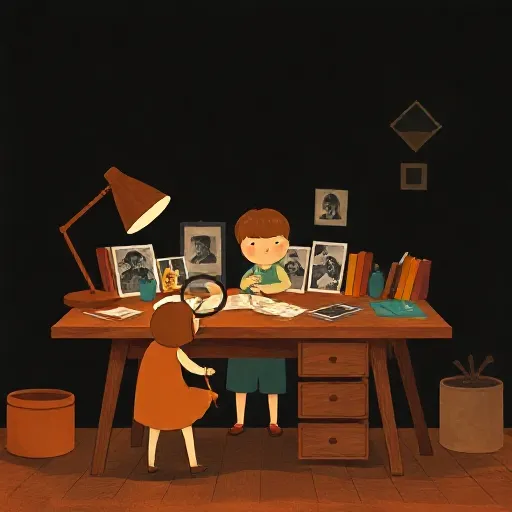
But Benjamin also found a strange kind of hope in this shock. He believed that certain images from the past could flash up in the present with the force of an explosion. He called these dialectical images. They are moments where the then and the now collide and suddenly make each other visible — like when you look at an old photograph and suddenly understand something about your own life that you couldn’t see before. In that flash, history is not a smooth flow; it’s an emergency lighting up the sky.
Time to Explode
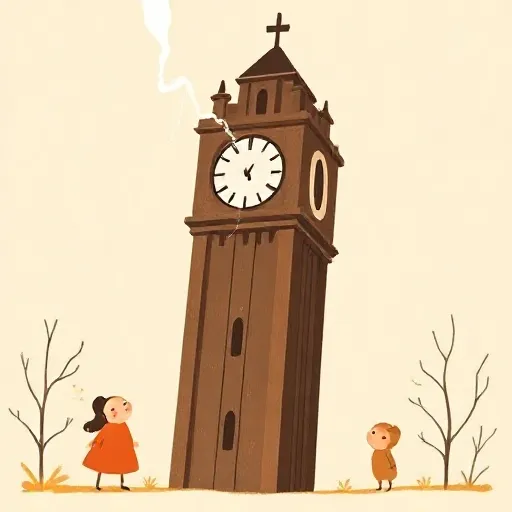
At the end of his life, fleeing the Nazis, Benjamin wrote a series of fragments called “On the Concept of History.” He argued that the usual way of thinking about time had to be shattered. Historicists said you should just describe the past “the way it really was.” Socialists often said communism was an ideal at the end of an infinite task. Benjamin thought both were dangerously sleepy. They treated time as an empty container — what he called homogeneous, empty time — and that made people wait patiently while the wreckage grew higher.
Against this, he set a different kind of time: now-time (Jetztzeit). Now-time is not a point on a line; it is a moment charged with revolutionary possibility. It is when the memory of an enslaved people flashes up and suddenly makes today’s crisis feel unbearable. The past calls for rescue, and a person or a group acts not to nudge the clock forward, but to interrupt the catastrophe entirely. Benjamin described this as “the sign of a messianic arrest of happening”—a moment when history’s forward march stutters to a halt and everything is at stake.
He knew this sounded strange. But for him, it was the only way to be faithful to the dead: to refuse to see their suffering as the necessary price of the paradise we are supposedly building. The angel of history is flying backwards because it sees only ruins. Now-time is the chance to turn around, grab the angel’s hand, and try something different.
Why Benjamin Still Haunts Us

You live in a world Benjamin could almost have imagined. You can pull up a perfect copy of a masterpiece in half a second. You scroll past news of disasters and celebrations in the same feed, and the sensation blurs. The aura of unique moments seems thinner than ever.
Yet you also know the feeling he called a dialectical image. A fragment of a song, a smell of rain, a photograph from a forgotten drawer — and suddenly the past is not done. It demands something from you right now. Benjamin believed those flashes are not just private moods; they are cracks in the story we tell ourselves that things are getting better all on their own. They are alarms. They are chances to act.
The angel is still in the wind. The question Benjamin leaves you is whether you will just watch the wreckage grow, or whether you will risk stopping the storm.
Think about it
- Can you think of a moment when a memory suddenly made the present feel completely different? What changed?
- If millions of identical copies make an artwork’s “aura” weaker, does that make it less valuable — or more available? Can both be true at once?
- Benjamin thought that believing in automatic progress can make people passive. Do you see examples of that in the world around you today?