One Cloud or a Million? The Puzzle That Messes with Your Head
Where Does the Cloud End?
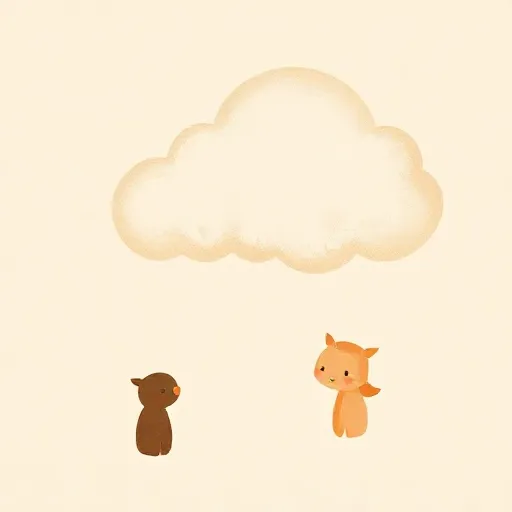
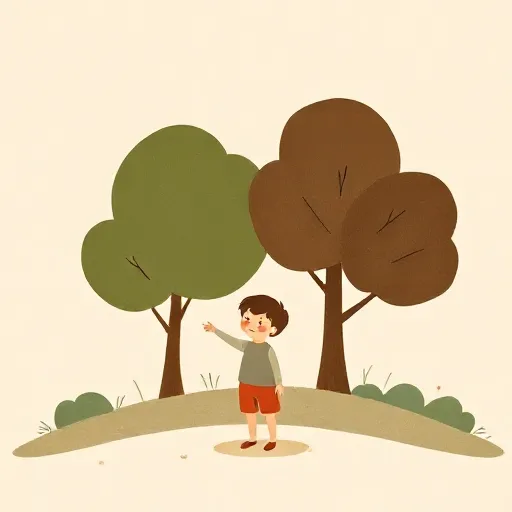
Imagine you are lying on a hill, staring at a single puffy cloud drifting across an otherwise clear sky. You try to trace its outline with your finger. The white bulge in the middle is obviously part of the cloud, but as you move outward, the white turns to wisps, and the wisps become nothing at all. Where exactly does the cloud end? You cannot find a sharp line. This is not just a trick of your eyes. It is a real puzzle about how things are put together.
In 1993, the philosopher David Lewis (1941–2001) asked us to think of a cloud as a swarm of water droplets. At the cloud’s center, the droplets are packed close. Near the edge, they get fewer and farther apart. The change is gradual. This means there is no single, correct set of droplets that makes up “the cloud.” Instead, there are many overlapping collections of droplets, each slightly different from the next. Each collection is a perfectly good candidate for being the cloud.
Most philosophers accept that for any collection of droplets, there is an object—a fusion—made out of them. (This view is called compositional universalism.) The puzzle, called the Problem of the Many, is this: if each candidate fusion is a cloud, then instead of one cloud in the sky, there would be millions of overlapping clouds. But you plainly see only one cloud. Yet if we say that no single candidate can truly be the cloud because none is special, then there is no cloud at all. And that also seems false. So we have three claims that cannot all be true: there is a cloud, many fusions of droplets are equally good candidates, and not all of them can be the same cloud. Philosophers have been arguing for decades about which claim to give up.
Maybe There Are No Clouds at All
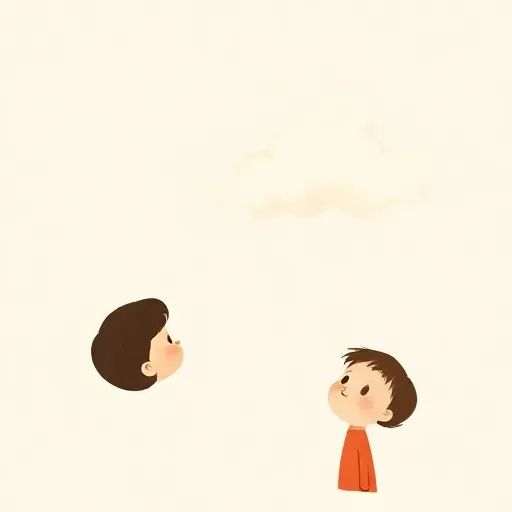
The simplest way to escape the knot is to deny that there really are any clouds. The philosopher Peter Unger (born 1942) argued that the very idea of a cloud is broken. To be a cloud, something must have a precise boundary; but physics does not supply one. So the concept demands something impossible. Because nothing can satisfy that demand, there are no clouds. Unger did not stop there. He pointed out that the same trouble appears for almost any ordinary object: a rusty nail (where does the rust end and the steel begin?), a cathode losing electrons, a person shedding skin cells. If the Problem of the Many is real, then nihilism—the view that no such objects exist—is the only consistent answer.
That outcome is hard to swallow. It means there are no clouds, no tables, and no people. If nobody exists, then you cannot even refer to “that cloud” or name anything. Most philosophers think that any theory that ends up erasing you and your friends is so wildly unbelievable that it must be rejected. Bradley Rettler (born 1978) has argued that nihilism faces an even deeper problem: it may solve one puzzle about composition, but it leaves a parallel puzzle untouched. Even if we deny that ordinary objects exist, we still have to explain how we talk about them so successfully. So nihilism remains a minority view, but it forced everyone to take the puzzle seriously.
Or Maybe There Are Millions of Clouds—and Millions of You
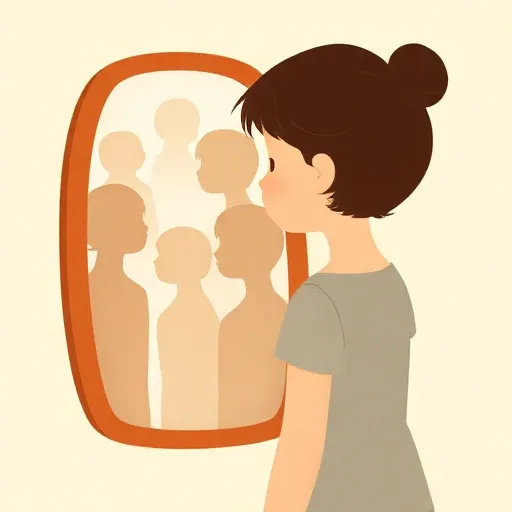
Another bold response is to accept that every candidate fusion really is a cloud. If the droplets in a slightly larger set compose an object, and the droplets in a slightly smaller set do too, then both objects are clouds. The sky would be packed with millions of overlapping clouds. Why, then, does everyone insist there is exactly one? Because in everyday life we count in a casual way. Ask how many people are in a room, and nobody bothers to count all the skin cells that just fell off someone’s arm. We care about a rough standard. The philosopher J. Robert G. Williams (born 1979) defends this overpopulation solution by noting that our ordinary words are not about the whole universe—they are about whatever is most relevant at the moment. So it can still be true to say “there is exactly one cloud,” as long as we are using a useful, restricted way of counting.
Overpopulation, however, brings its own troubles. Ned Markosian once imagined millions of overlapping people where you would normally say there is just one. Call that person Charlie. When Charlie raises her arm, every one of the millions of closely overlapping “Charlies” raises an arm in exactly the same way. They never act differently. But if every choice each one makes is forced by the others, then at most one of them can be acting freely. You are left wondering whether you yourself might be one of millions of copies, and whether any of you is genuinely free. Naming also becomes scary: when you point at a cloud and say “that one,” which of the countless candidates does your word pick out? The overpopulation story saves clouds, but it threatens our grip on who—or how many—we are.
The Cloud Is Vague, but Still One
The most widely discussed solution does not deny that there is exactly one cloud, and it does not multiply clouds into the millions. Instead, it says that the word “cloud” is vague—it just does not have a single, precise meaning. When we say “there is one cloud,” the sentence is true, but the vagueness means there is no definite answer to which exact collection of droplets makes it true. This is the supervaluationist approach, defended by Vann McGee and Brian McLaughlin in 2001.
A supervaluationist thinks of language as if we could draw every possible sharp boundary that fits how we use the word—provided we respect some rules. Suppose we try to draw a firm line through the fuzzy outer droplets so that exactly one collection counts as “the cloud.” There are many ways to do this; each way is called a precisification. The key rule, called a penumbral connection, is that no two clouds can massively overlap. So any allowable precisification must select only one candidate cloud, not two that are almost the same. Since every allowable precisification ends up with exactly one cloud, the sentence “There is exactly one cloud” comes out true on all of them. In supervaluationist terms, it is determinately true.
What is remarkable is that no single candidate is determinately the cloud. The cloud is like a promise: “I owe you a horse” can be true even if no particular horse is the one you are owed. The guarantee of exactly one cloud floats above all the individual doubtful candidates. This also explains why pointing at the cloud and saying “That is a cloud” feels right: on every precisification, the thing you point to falls within the boundary.
Some philosophers object that it is just too odd for an “exists” sentence to be true without any definite thing that makes it true. Others worry that the supervaluationist cannot explain why we are so confident that there is definitely a cloud—since none of the individual candidates are definite clouds. Yet the supervaluationist reply is that our confidence tracks the determinately true sentence, not the borderline cases. The debate remains lively, but the supervaluationist solution shows that a little vagueness can rescue our ordinary counting without multiplying objects outrageously.
Why This Puzzle Won’t Leave You Alone
The Problem of the Many is not just about clouds. It sticks to us because it forces a question about ourselves. Are you a single definite person, or are there millions of slightly different collections of cells—each making a different candidate “you”—that overlap here and now? If you follow Unger, there are no persons. If you go with overpopulation, you are one of a vast fuzzy crowd. Even if you prefer the supervaluationist story, you must accept that there is no precise fact about which exact clump of matter you are.
That might sound unsettling, but it also shows why philosophy matters. Every time you point at a puddle, a mountain, or your own reflection, you rely on a whole invisible scaffolding of assumptions about what counts as one thing. The puzzle does not have a single agreed-upon solution. But wrestling with it teaches you that the most ordinary-looking questions can open up deep mysteries about how the world is put together and how our words latch onto it. The next time you see a cloud, you will know that your confidence in counting “just one” rests on centuries of zigzagging arguments—and that you are allowed to keep counting and keep wondering.
Think about it
- If a scientist told you that your body’s cells are constantly being replaced so that no single set of atoms is “you,” would you still feel like one person? Why or why not?
- Imagine a hill that slopes so gradually into a flat plain that nobody can point to the exact spot where the hill stops. Could you still truthfully say “there is exactly one hill”? What would settle the matter?
- Would you rather live in a world where every everyday object you see is really millions of overlapping objects (like millions of overlapping clouds), or a world where nothing you name as a single thing—like your dog or your favorite book—truly exists? Why?