What Did “Probable” Mean Before Numbers?
What Made a Medieval Opinion “Probable”?

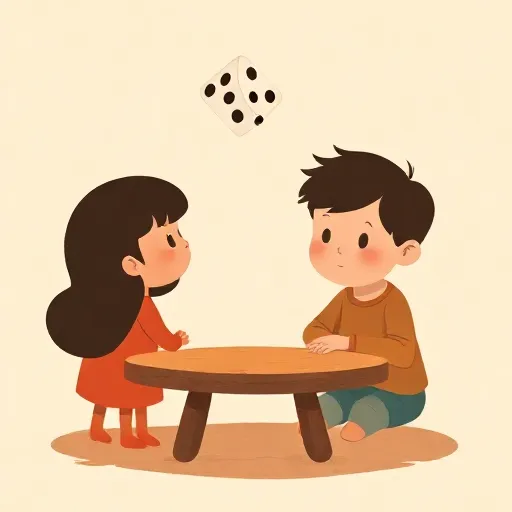
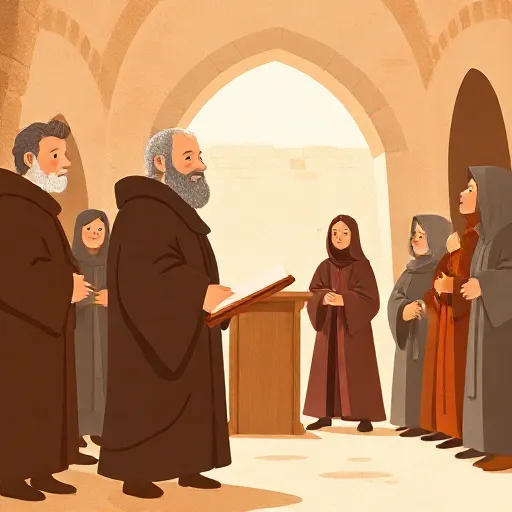
Imagine a university hall in the year 1320. A master of theology stands before a crowd of students, arguing that a certain kind of business contract is morally allowed. Another scholar rises and claims the opposite. Neither can prove their side with the certainty of mathematics. Instead, each calls their view probabilis — the Latin word for “probable.” But in that room, probable did not mean a 70% chance or odds of three-to-one. It meant the opinion deserved serious trust, even though the other side might also be reasonable.
For us, probability is a number between 0 and 1. Before the 1600s, however, no one in Europe talked about probability that way. Medieval scholars and Renaissance thinkers had a rich vocabulary for likelihood that never relied on counting. They used words like probabilis, verisimilis (truth-like), and credibilis (worthy of belief). Their world was full of uncertainty — about guilt in court, about the right moral choice, about disputed questions in theology — and they developed powerful ways to navigate it without a single fraction.
The Endoxic Rule: Trusting the Wise (or the Many)

The most important medieval meaning of “probable” came from the Greek word endoxon — a reputable opinion. Aristotle (384–322 BCE) defined it in his Topics: an endoxon is a belief held by everyone, by most people, or by the wise (and especially the most respected among them). When Boethius (c. 480–524) translated Aristotle’s work, he rendered endoxon as probabilis. Later scholastics like Thomas Aquinas (1225–1274) followed that lead.
In this endoxic probability, an opinion became probable not because of a lucky dice roll but because expert authorities or large numbers of people found it believable. It was like saying, “This idea is so well-supported by people who know the subject that you can safely treat it as true for now.” But medieval thinkers never forgot that probable opinions could turn out wrong. That’s why an opinion in the technical sense was a belief combined with some fear that the opposite might be true. Knowing you might be mistaken was part of the package.
Did this mean people just blindly followed famous names? Not exactly. The “wise” were judged by their training and field. A doctor’s opinion counted in medicine, a ship’s pilot in navigation, a theologian in moral questions. Trust was tied to real competence, at least in principle. Still, in practice it was hard to separate expert authority from institutional rank, and students were expected to take their masters’ word for quite a lot.
More Than Experts: Frequency, Testimony, and Nature’s Patterns
Not all probability rested on who believed what. Some thinkers turned to proto-frequentist probability: what happens “for the most part” (ut in pluribus). Thomas Aquinas himself wrote that mothers usually love their children, that human conception usually produces a healthy baby rather than a “monstrous” one, and that a probable certainty in moral matters means you are right in most cases and wrong only rarely. Such claims were not numerical; they were rough patterns of how the world works — nature’s regularities seen as evidence for likelihood.
Another source of probability was testimony. In medieval courts, a claim could be called probable if a single eyewitness supported it. The uncontested word of two witnesses produced probable certainty (certitudo probabilis), enough to make a legal decision or to act in a moral dilemma without sin. This wasn’t logical proof, but it satisfied the epistemic duties of the time.
A less familiar idea was semantic probability, grounded in the structure of statements. Think of the sentence “If she is a mother, she loves her child.” The predicate “loves her child” does not follow with iron necessity — some mothers, sadly, do not — but it fits the subject in most circumstances. Boethius of Dacia explained that probability is a property that disposes but does not force a subject to take on a predicate. You could say it’s probable in the nature of things, even before you count any cases.
When Opposites Are Both Probable: Two Sides to Every Story

One of the most striking features of medieval probability is that scholars routinely called a proposition and its negation probable at the same time. A theologian might say, “This view is more probable, but the contrary is probable too.” How could that make sense? Both-sided probability worked because probability was not about a single number summarizing the evidence. It was about whether a reasonable person could hold the opinion. Different groups of wise people could endorse opposite conclusions, and both sides could be credible.
This wasn’t a logical flaw; it was an early recognition of reasonable disagreement between epistemic peers. A confessor helping someone make a moral decision often faced exactly this situation: several reputable opinions pointed one way, several another. The agent might decide which side was “more probable” based on the weight of arguments, yet still see the rival view as affirmable by others. That insight — that you can be confident in your own conclusion while respecting intelligent opponents — still fuels debates about pluralism today.
Because both-sided probability made choices messy, moral theologians developed the notion of probable certainty. If a person followed the most careful reasoning available, even without reaching absolute proof, they had done all that could be expected to avoid wrongdoing. Probability, in practice, set the bar for morally safe action.
Humanists Turn the Page: Probability from Argument, not Authority
By the 1400s, a new wave of thinkers pushed back against heavy reliance on established authorities. Lorenzo Valla (c. 1407–1457) preferred to speak of worthiness of belief (credibilitas) rather than probability. He ranked beliefs according to how strongly they inclined the mind: very firm, fairly strong, or merely not unreasonable. For Valla, likelihood connected more to possibility and argumentative force than to a list of famous names who agreed.
Rudolph Agricola (1444–1485) rewrote the rules of dialectic. He defined dialectic as the art of speaking with probability on any question, but he insisted that probability arises from the aptness and fittingness of the reasoning itself, not from passing Aristotle’s endoxon test. A chain of argument could produce conviction (fides) stronger than mere opinion. Agricola’s move nudged probability away from the classroom census and toward a sense of internal coherence — a preview of later approaches that would measure evidential support.
These humanist voices did not instantly kill the older scholastic frameworks. They blended with them. But they planted a seed: probability could be generated by the shape of an argument, not just by whose wisdom stood behind it. That seed would grow into the great changes of the seventeenth century, when numbers finally entered the picture.
Why Medieval Probability Still Matters Today

You’ve never been a medieval student, but you’ve probably done something very similar. When a friend tells you a rumor, you weigh whether that friend usually tells the truth. If two people you trust give opposite advice about a tough decision, you might say both positions are probable, even though you have to pick one. When the weather forecast says “80% chance of rain,” you use numbers now — but if the forecast is uncertain and you step outside to gauge the clouds, you’re leaning on frequency-like patterns and appearances of truth, just as a medieval jurist did with circumstantial evidence.
The medieval story shows that probability was never just a math problem. It was always a tool for living with uncertainty, for deciding what to believe and do when proof is out of reach. Understanding that history can make you more thoughtful about your own judgments. Instead of asking only “what are the odds?,” you can also ask: “who says so? why? what happens most often? and could a sensible person disagree?” Those are medieval questions, and they are still good ones.
Think about it
- If most experts say something is true but a few respected dissenting experts disagree, should both sides count as probable? Why or why not?
- Imagine you’re a medieval judge with only witness testimony — no photos, no DNA. One witness claims the accused is guilty, another claims innocence. How would you decide what to believe?
- When deciding whether to trust a story you hear, what matters more to you: who is telling it, or how often similar things actually happen? Can you think of a situation where one of these guides you wrong?