Why Can't You Just Do Whatever You Want?
The Question Hidden in a Chopped Nut
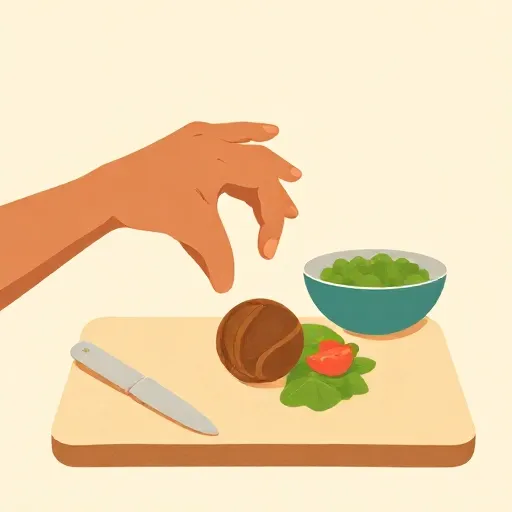
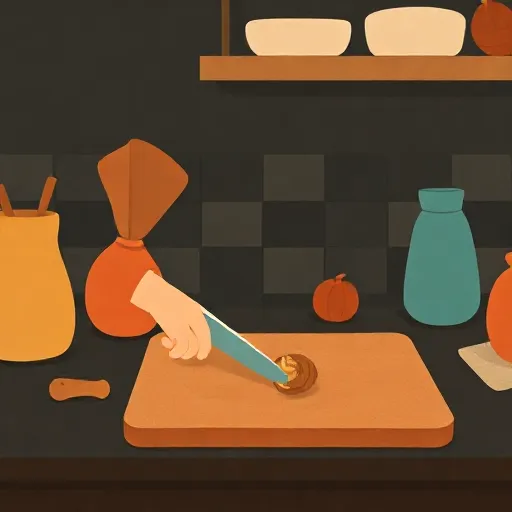
Imagine you’re in the kitchen, cracking walnuts for a salad. A friend wanders in and asks, “Why are you doing that?” You answer without thinking: “I’m making a salad.”
The philosopher G. E. M. Anscombe (mid‑20th century) noticed something strange about that tiny exchange. When you give a reason like “I’m making a salad,” you don’t peer inside your head to check. You look outward — at the nuts, the bowl, the recipe — and you describe an action that’s bigger than the chopping. Your chopping is a step inside that larger action, like a brick in a wall.
Anscombe’s observation started a revolution. Some of today’s most daring thinkers asked: can we figure out what makes a reason good just by looking at the structure of actions, without rummaging through invisible desires and beliefs? Their answer is yes. But as soon as they try, they split into vivid, clashing camps — and what they discover changes what you owe to other people.
Reasons Are the Steps That Build a Finished Action

Candace Vogler (born mid‑20th century) took Anscombe’s hint and ran with it. Look at your salad‑making recipe, she said. You coarsely chop the nuts. You slice the persimmons. You toss in watercress. You dress it. Each little action is either a means to the end (buying the cress lets you make the salad) or a part of the whole (chopping the nuts isn’t just a tool — it’s a piece of salad‑making itself). Vogler called these calculative reasons: reasons whose force is “this is a step toward finishing my action.”
A step makes sense if it moves you closer to the end. A step is irrational if it doesn’t. If you’ve already served the salad and you keep obsessively chopping walnuts, something has gone wrong.
Vogler’s big claim is that calculative reasons are nonoptional. You can’t shrug them off the way you can ignore a friend who complains that your music is too loud. If someone criticizes your calculative reasons — “Why are you still chopping? The salad is done!” — you can’t just reply, “Eh, that’s what I feel like.” You’re stuck with the logic of your own action.
What about reasons that aren’t calculative, like doing something simply because it’s fun? Vogler allows them. You can have other sorts of reasons, but they’re optional. You must have calculative reasons whenever you do something that matters. That means a perfectly rational person could be vicious, dishonest, or cruel — as long as their actions were well‑built steps toward some end they chose. Morality, on this view, doesn’t force itself on you through the logic of action alone.
When “I Want To” Isn’t a Feeling at All

Vogler’s fellow thinker Michael Thompson (born mid‑20th century) came at the same puzzle from a different angle — grammar. He asked you to notice the difference between “I made a salad” and “I’m making a salad.” The first is finished, past, perfect. The second is ongoing, still in motion. That tiny shift matters.
Suppose you ask me, “Why are you chopping the nuts?” and I answer, “I’m making a salad.” That naive rationalization uses the progressive form. It works because chopping right now is part of a larger action that’s underway. But actions unfold in time. Maybe the chopping step was actually finished ten minutes ago. If I say “I’m making a salad” while I’m already washing the bowl, I might also be forced to admit “I’m not chopping the nuts.” That could sound like a contradiction: “I’m chopping because I’m making a salad, but I’m not chopping.” Confusing.
Thompson’s move was to look at how we avoid that confusion. We learn to say things like “I’m chopping tomorrow” or “I’m going to chop” or even “I want to make a salad.” Each of these, he argued, is a clever device for pointing to where we are in the timeline of an unfolding action — not a name for a hidden inner state. Saying “I want to make a salad” is like saying “the chopping phase hasn’t started yet, but it’s part of my salad‑making action.”
This flips a common picture on its head. Many thinkers believe that reasons are fueled by inner states — desires, intentions, wishes. Thompson’s analysis suggests those “inner”‑sounding words are just practical tools for scheduling our steps. You don’t need to peek into your soul to find a reason; you just need to see your action’s shape.
The Whole Person Must Sign the Deed
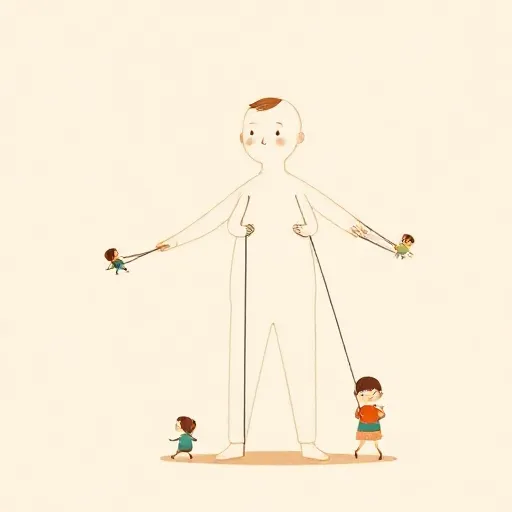
If Vogler and Thompson focus on the stepwise recipe of action, Christine Korsgaard (born mid‑20th century) started from a different hunch. An action isn’t just a sequence of steps; it has to be authored. The chopping isn’t mine if a random craving did it. An action needs an owner — a single “I” who can say, “That was me.”
Korsgaard imagined a scene to show what that takes. Suppose tiny pod creatures from outer space want to impersonate your Uncle Melvin. Each creature controls one part of the body — one leg, one eyelid. To fool anyone, they can’t let the left foot wander off while the right hand waves. They must coordinate as a single agent. They whisper to each other, adopt a shared plan, and move together. At that moment, they constitute themselves as a group agent.
In Korsgaard’s picture, your own mind works the same way. You have drives, desires, impulses — all pulling in different directions. To act, you have to gather those scattered parts into a unified agent, just like the pod creatures. And that requires a principle — a general rule that can organize everything under one point of view.
What would such a principle look like? Korsgaard argued it must be universal: you must be able to want everyone else to act on that same rule. If your rule was “I may lie when it helps me,” could you want everyone to follow it? If everyone lied whenever it was convenient, trust would collapse and lying wouldn’t even work anymore. So that rule can’t be a real principle for a unified agent. This is, in a nutshell, the famous Kantian demand: act only on a rule you could will to be a universal law.
The stunning result: the very structure of being an agent forces you — whether you like it or not — to care about rules that treat everyone fairly. A rational selfishness that makes an exception for yourself is, on this view, not just immoral but incoherent. You can’t really be the author of an action that pulls you apart.
Why Not Just Be a Slacker?

Critics jumped in immediately. If agency requires all this — uniting yourself under a universal principle — why bother? Why not drift like the characters in a movie about twenty‑somethings who do nothing all day? Can’t you just be a slacker, producing “acts” without being a full‑fledged agent?
Korsgaard’s reply was two‑fold. First, you can’t really opt out. There are things you simply have to get done — getting food, avoiding pain, reacting to emergencies. Those practical pressures push you toward acting with an end in view, which means you’re already making actions in her sense. Slacking is still doing something, and while you’re doing it, you are — however loosely — a unified agent making choices.
Second, the question “why not be a slacker?” is itself a request for a reason. Reasons, Korsgaard thinks, only show up inside the structure of agency. So by asking for a reason not to slack, you’ve already stepped into the game you’re trying to escape. The demand for an excuse is the mark of an agent who, deep down, cares about justification.
This response doesn’t satisfy everyone. Some philosophers point out that your inner life could be more like a noisy market than a totalitarian state — different parts competing without any single “you” in charge. Would that count as action? And if so, why must you be a unified agent at all? The debate is still live and unsettled.
Why Your View of Action Matters for How You Live

The gap between Vogler’s world and Korsgaard’s world is enormous. In Vogler’s world, a person can be entirely rational while lying, exploiting others, and never lifting a finger to improve himself — as long as his actions are calculatively well‑formed. In Korsgaard’s world, that same person would be irrational, because he’s trying to act on a rule he couldn’t will others to follow. The disagreement isn’t just an academic puzzle. It seeps into how we raise children, punish wrongdoing, and think about fairness.
When you’re twelve, you hear “why did you do that?” all the time. You might answer with a step in a plan: “I was trying to finish my homework before the game.” Or you might give a reason that appeals to a rule you expect others to accept: “I let my friend go first because that’s what I’d want someone to do for me.” Those two answers are tiny footnotes to the theories we’ve walked through.
Philosophers today are still fighting over which picture is right. They haven’t yet locked down what it takes to count as an action — let alone a good one. And that means the important question isn’t settled either: when someone tells you that you must treat others fairly, is that demand built into the very shape of your actions, or just one optional story among many? Paying attention to your own everyday “I’m making a salad” moments won’t let you decide the answer. But it will let you feel the weight of the question — and that feeling is where philosophy begins.
Think about it
- If a friend tells you a lie to help you feel better, can you still think of her action as reasonable in the same way as chopping nuts for a salad? Why or why not?
- Imagine you decide to never follow a rule that you couldn’t wish everyone else followed. Is there anything you’d have to give up that matters deeply to you?
- Could you go a whole day without doing anything that had an end in view? If you tried, would you end up sneaking little goals in without noticing?