Can Your Mind Survive Your Body? The Professor Who Said No
A Professor in Trouble
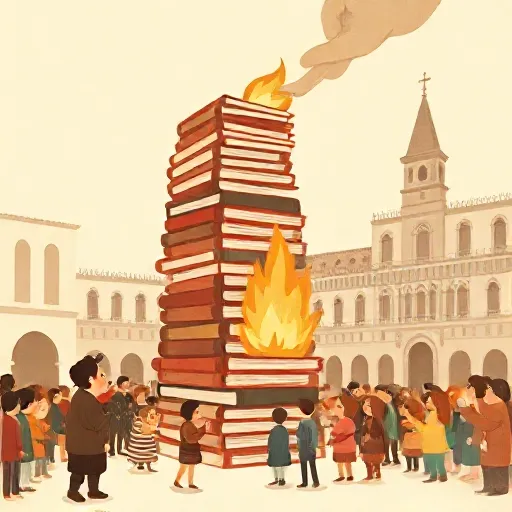
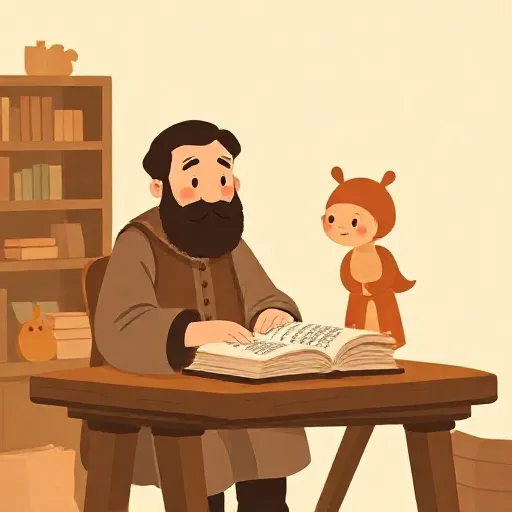
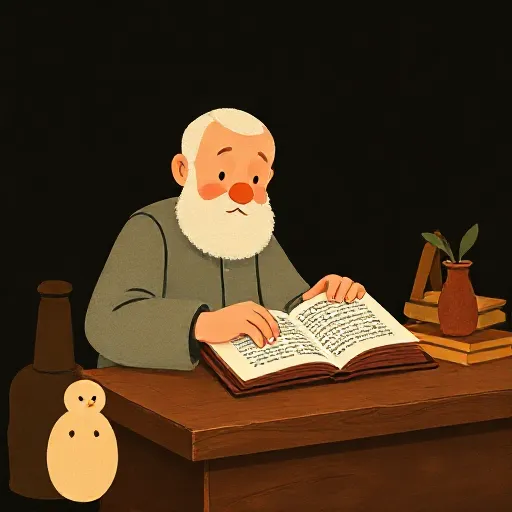
In 1514, a philosophy professor was quietly accused of heresy. His name was Pietro Pomponazzi (1462–1525). He taught at the University of Bologna, and he said something that made the Church deeply uncomfortable: if you rely only on reason and experience, the human soul cannot survive the death of the body. He did not say the soul truly dies — he insisted that as a Christian he believed it lives on — but he argued that Aristotle’s own principles and plain observation of nature lead to the opposite conclusion.
That stance nearly cost him everything. His 1516 book, Treatise on the Immortality of the Soul, was attacked by theologians and some of his copies were burned in public. Powerful cardinals defended him, and he was never convicted, but the question he raised refused to go away: what happens when honest thinking crashes into religious teaching?
Pomponazzi spent his whole career inside that crash. He was a master of natural philosophy — the study of the world using only reason, not revelation. He loved Aristotle, read his ancient Greek commentators obsessively, and believed that if you want to do philosophy properly, you must stick to the tools of the trade: observation, logic, and the writings of the ancient thinkers. Theology, he said, has its own principles, and a philosopher shouldn’t borrow from them. That was not a sneaky way to attack the Church (some scholars disagree), but a rule for keeping different kinds of knowledge from getting tangled.
Aristotle Without Miracles: The Via Peripatetica

When Pomponazzi approached the soul, he did something his colleagues often avoided: he put on a special pair of glasses called the via peripatetica — the “Peripatetic path.” That meant he would follow Aristotle’s principles and nothing else, even if those principles pointed away from Christian doctrine. He was not claiming that Aristotle was always correct about the world; he was claiming that this was Aristotle’s real view, and that natural philosophy cannot use supernatural evidence to solve its problems.
At the time, many thinkers in Italian universities followed Averroes (1126–1198), the great Islamic commentator on Aristotle. Averroes taught that all humans share a single, immortal material intellect — a kind of universal thinking-stuff that does not belong to you individually. Pomponazzi thought this was “most false, unintelligible, monstrous.” So he rejected it. Then he turned to Thomas Aquinas (1225–1274), the towering Christian philosopher who argued that each human has an individual soul that can exist without the body. But here too, Pomponazzi said: according to Aristotle’s own texts, without dragging in faith, this just doesn’t work.
His conclusion? The most probable answer within the limits of reason and experience is that your intellective soul — the rational, thinking part of you — cannot survive the body’s destruction. This was not a declaration of atheism. He called the question a neutral problem: neither side can be proved by reason alone, so faith must settle it. But he did believe that Aristotle himself leaned firmly toward mortality.
The Soul That Hangs on a Thread
Why would a sharp philosopher think the soul cannot outlast the body? Pomponazzi’s argument turned on a single tight knot: the soul needs images to think.
Here’s the chain. When you think about a tree, a cat, or the number three, your mind always works with a phantasm — a mental picture or sensory trace provided by your imagination. You’ve never thought about anything without some shadow of a sensation behind it. Aristotle wrote that “the soul does not know at all without some phantasm,” and Pomponazzi took this as an iron law. Now, those phantasms come from your senses, which depend on bodily organs. Your eyes, your nose, your skin — all material, all flesh. Damage those organs, and the phantasms vanish. So if the thinking part of you cannot operate without those material images, what happens when the entire body dies? In Pomponazzi’s view, the intellectual soul is dependent on matter for its object and therefore cannot function separately.
He did not say the human mind is just meat. He called it something halfway — it is immaterial with respect to its subject (the act of understanding itself doesn’t happen in a bodily organ like a stomach), but it is still yoked to matter because its fuel, the phantasms, is bodily. The human soul, he said, sits “midway between the eternal and the perishable.” You can catch a glimpse of timeless universals, but you cannot hold them. Compared to a dog’s soul, you are closer to immortality; compared to God or the celestial intelligences that move the stars, you are trapped in the mud of a body.
He also threw out other arguments that would have made him popular at no dinner party. If every human soul survived death, wouldn’t there be an infinite number of them after an eternal universe? Aristotle said an infinite number of actual things is impossible. Would souls transmigrate? Aristotle rejected that. Would God create a new soul for each baby? That’s a theological answer, not a natural one. For Pomponazzi, a philosopher who stays within the bounds of nature has no choice but to say: what comes from the body perishes with the body.
When the World Seems Magical — but Isn’t
Pomponazzi didn’t stop at the soul. In 1520 he finished a book called On Incantations, in which he tried to show that even the most bizarre events — miraculous healings, plagues, the visions of seers — could be explained by natural causes without demons or angels. He didn’t deny the possibility of genuine miracles; he just thought that most of what people called supernatural was actually the work of things like occult qualities, the hidden powers in plants, stones, and the human imagination.
Consider the story that the kings of France could cure skin diseases just by touching the sick. Pomponazzi didn’t dismiss it. He suggested that some humans might have extraordinary natural powers, like a magnet has the power to attract iron without any visible reason. Herbs, minerals, and even the vapors given off by the body could carry those powers from one person to another. If a mother’s intense thoughts at the moment of conception were said to shape a baby’s appearance, why couldn’t the imagination work as a real physical force?
He even turned toward the stars. In his universe, God arranges the world through the celestial intelligences, and the motions of the heavens drive all change on Earth. Charms, oracles, and omens weren’t direct messages from demons; they were signs, like a physician’s prognosis, of the orderly, cause-and-effect patterns that run through nature. Societies make up stories about demons, he argued, because most people can’t grasp the deep, natural causes that philosophers study. Laws and religious fears keep them moral — like a doctor tricking a child into taking bitter medicine for their own good.
At the end of the book, Pomponazzi added a careful promise: if anything he wrote went against Catholic teaching, he would take it all back. The Holy Office still banned his book decades later.
The World as a Falling Domino
Just months after finishing On Incantations, Pomponazzi wrote On Fate, Free Will, and Predestination. Here he took a hard look at the idea that you are free to choose between different possibilities. His conclusion, at least in the first two books, was striking: from a purely natural perspective, everything that happens — including your own decisions — happens by necessity.
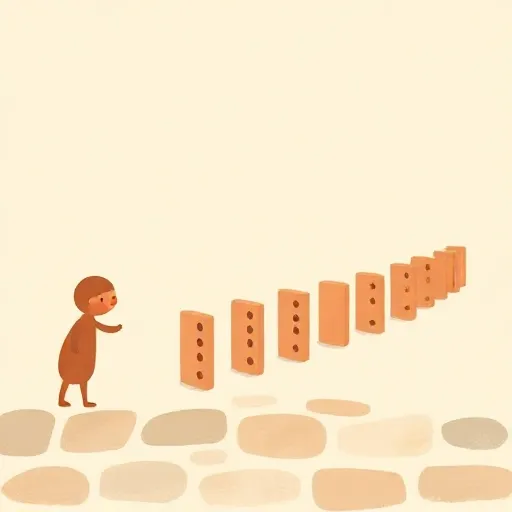
His reasoning used the same cosmic chain. God is the efficient cause of everything, but God works through the stars and planets as instruments. The motions of the heavens determine all changes on Earth, bit by bit, like an unbroken sequence of dominoes. Your will, Pomponazzi said, is no exception. If a potentiality exists and nothing blocks it, it will be realized by necessity. You feel as if you deliberate, weigh options, and freely pick, but what really happens is that your will is pushed by external causes you don’t notice, exactly as a river is guided by the shape of its bed.
Why did he accept such a grim view? Because he thought it preserved God’s power better than the alternative. If God really knows everything that will happen and nothing happens without God’s will, then human free choice seems to limit God’s knowledge and control. For Pomponazzi, a world without genuine human freedom seemed, in its strange way, more respectful of divine majesty.
But he didn’t stop there. In the later books of that same work, he sketched a possible escape hatch for Christians. He suggested that God might have limited his own omnipotence, opening a small space for the human will to suspend predetermined acts — a kind of negative freedom, the power to refrain rather than to create new actions. He still ended his book admitting that he had never understood how theologians can make human freedom and God’s foreknowledge fit together, calling it “an illusion and a trick.” Interpreters still argue about whether Pomponazzi genuinely wanted to reconcile faith and reason or was quietly showing that they are incompatible.
The Question No One Can Bury

Why does a 500-year-old controversy matter today? Because Pomponazzi faced a problem that hasn’t aged a day: what do you do when honest thinking and a community’s deepest beliefs pull in opposite directions?
He didn’t solve the problem; he put it on display. He insisted that natural philosophy cannot borrow supernatural answers, and that theology has the final word on matters of faith — but he also showed that the space between those two ways of knowing is full of tension. You might feel that tension yourself. Science can explain more and more about how the brain works, how decisions form, and how consciousness depends on neurons. At the same time, many people hold that there is something in the human mind that isn’t just physics. Pomponazzi would have told you to look at the arguments squarely, admit where reason can’t reach, and then — carefully — decide where you stand.
He also left a concrete tool: the idea that questions can be neutral problems, where neither side can be proved by reason alone. That’s not weakness; it’s honesty. He was accused of heresy, his books were burned, and later thinkers linked him to atheism, but he was never convicted. He died in 1525, a lonely kidney patient who had spent his life following Aristotelian arguments wherever they led. Whether you find that heroic or reckless, his life poses a question that cannot be burned: when your own mind tells you something the whole world says is wrong, what do you owe to the truth?
Think about it
- If a supercomputer could perfectly predict every choice you’ll ever make, would you still be free in any way that matters?
- Can someone be a devoted member of a religious community while also believing that reason alone cannot prove the soul lives after death?
- Imagine a doctor invents a machine that lets a brain survive without a body, still thinking and dreaming. Would that brain still be “you”?