

Should Leaders Do What You Say, or What They Think Is Right?
The Field Trip Vote

Maria just got elected to the student council. The first big vote is about where to go on the spring trip. Her classmates are loud and clear: they want the zoo. Maria loves animals, but she also knows that the science museum has a new space exhibit that could tie into their lessons. She thinks the museum would be better for everyone’s learning, even if her friends don’t see it now. The vote is tomorrow. Should Maria vote for the zoo because that’s what the class wants? Or should she vote for the museum because she believes it’s the right choice?
Maria’s problem is not new. It’s a puzzle that philosophers and political thinkers have wrestled with for centuries. It hits the very core of what it means to represent someone — to speak and act on behalf of others. And it splits into two big, competing answers: the delegate and the trustee.
Be a Delegate: Your Mouthpiece
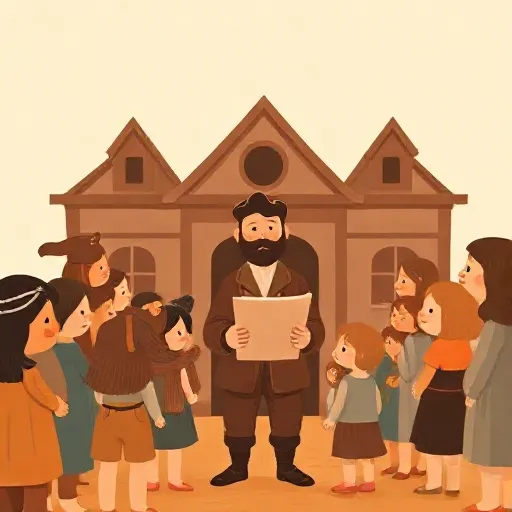
Imagine you hire a messenger to deliver a sealed letter to a friend. You don’t want the messenger to change your words. You want them to carry exactly what you said. A delegate acts just like that messenger. A delegate does what the people who sent them want — no changes, no personal opinions. If your class says “pick the zoo,” you pick the zoo.
One of the Founding Fathers of the United States, James Madison (1751–1836), thought this way about government. He described representative government as a delegation of power to a small number of citizens chosen by the rest. He knew that not all elected officials would be wise or honorable. But a large and diverse population, he said, could help guard against bad decisions. If the representatives were merely following the clear wishes of many different people, the worst mistakes might be avoided.
The delegate idea has a strong pull. It feels fair and democratic. The voters are the bosses. The representative is just their worker. If Maria is a pure delegate, her own thinking about the museum doesn’t matter. The class has spoken. She votes for the zoo.
But wait. What if the class changes its mind every day? What if the class is badly informed? What if the class wants something that will hurt them later? Then being a pure mouthpiece might not serve them well. That’s where the second idea steps in.
Be a Trustee: Your Conscience
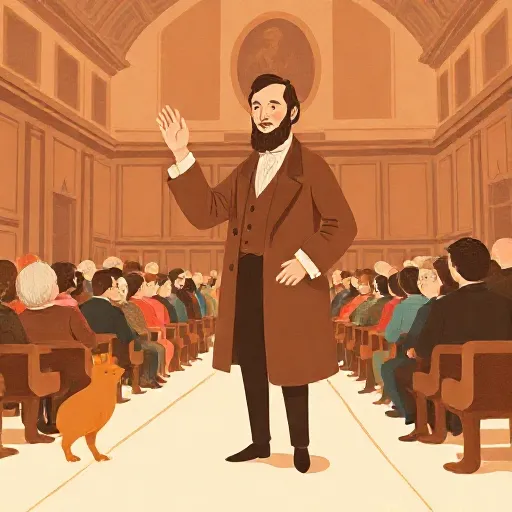
Now imagine you hire a doctor, not a messenger. You don’t tell the doctor exactly which medicine to prescribe. You trust her to use her training and judgment to make you healthy. A trustee is like that doctor. A trustee is chosen to think, deliberate, and decide what is best for those they represent — even if the people disagree.
The British statesman and philosopher Edmund Burke (1729–1797) made this argument in a famous speech to his own voters in Bristol. He told them:
Parliament is not a congress of ambassadors from different and hostile interests, which interest each must maintain, as an agent and advocate, against other agents and advocates; but Parliament is a deliberative assembly of one nation, with one interest, that of the whole… You choose a member, indeed; but when you have chosen him he is not a member of Bristol, but he is a member of Parliament.
In other words, Burke was not just a tool for Bristol’s wishes. He was supposed to think about what was good for the whole country. That meant sometimes voting against the loudest voices back home. For Maria, the trustee path means listening to her class but then voting for the museum, because her own careful thinking tells her it’s the better learning experience.
But the trustee idea has a scary side, too. What if the representative is selfish or mistaken? What stops a trustee from ignoring everyone and doing whatever they like? If there’s no way to fire them, the represented are stuck. The delegate and trustee pull in opposite directions. So which one is right?
Hanna Pitkin’s Four Lenses

The political thinker Hanna Pitkin, writing in her 1967 book The Concept of Representation, argued that this tug-of-war can’t be solved by picking one side. Representation itself is a complicated, three-dimensional shape in a dark room. Every time we shine a light on it from a different angle, we get a different photograph. Pitkin said there are at least four main angles, or views, that we use to understand what a representative is and does.
Formalistic representation is all about rules and procedures. It asks: How did the representative get the job? And can the voters punish them if they do a bad job? The first part is authorization — maybe through an election or an appointment. The second is accountability — the ability of voters to vote someone out or make them answer for their choices. If Maria’s student council has a fair election and her classmates can vote her out next term, the formal side is in place. This view doesn’t tell Maria how to vote. It just sets the machinery around her.
Descriptive representation asks whether the representative looks like or shares life experiences with the people they represent. Does the representative have the same background, face the same challenges, or belong to the same group? For instance, a class president who is also a new student might better understand the fears of other new students. Merely resembling your people, though, doesn’t guarantee you’ll act for them.
Symbolic representation is about what a representative means to others. They stand for something. A captain of a sports team might be a symbol of courage and teamwork, even if she never says a word. The emotional response she creates matters. Someone can be a powerful symbol without ever changing a single policy.
Substantive representation is the one that feels closest to the Maria puzzle. It looks at what the representative actually does — the actions taken, the decisions made, the policies pushed. Do they advance the interests and preferences of the people they represent? This is the plane where the delegate/trustee fight rages most fiercely. Is Maria substantively representing her class by following their zoo vote, or by following her own judgment about what’s in their best interest?
Pitkin’s key move was to say we should not try to crush the paradox. Instead, we must protect both the autonomy of the representative (like a trustee needs) and the autonomy of the represented (like a delegate protects). That means Maria should have room to think, but her classmates need real ways to hold her accountable if they think she made a lousy choice. The dance between those two pulls is what keeps representation alive.
Why the Tug-of-War Never Ends

This isn’t just a dusty debate from the 1700s. You meet it every time one person speaks for a group. Student council reps, club presidents, team captains, even the friend who orders pizza for everyone — all of them stand on the same fault line. Do you get the toppings most people want, or the ones you know won’t leave anyone feeling sick later?
Pitkin’s insight reminds us that there is no single, final answer. The delegate model keeps representatives humble and tied to the people. The trustee model allows for wisdom, long-term thinking, and moral courage. Modern democracies are built to hold both in tension. Elections punish representatives who ignore voters, but leaders are also expected to make hard choices in a crisis, even when polls say otherwise.
When you cast a vote — for a class officer or someday for a real government official — you are not simply picking a mini-you who mirrors your every wish. You are entering a relationship full of friction. You will sometimes be disappointed. You will sometimes be grateful that your representative thought beyond what you could see at the moment. That constant, uncomfortable balancing act is not a flaw. It’s the very heart of political representation.
Think about it
- If you were Maria, would you vote for the zoo or the museum? What would you say to the classmates who disagree with your decision?
- Can a representative who is nothing like you — different age, different hobbies, different life story — ever truly represent your interests? Why or why not?
- Imagine a leader who always does exactly what opinion polls say, instantly changing her mind whenever the numbers shift. Would you trust such a leader? Where’s the line between listening and just following?