
Are Words Like Tools or Just Stickers? An Ancient Debate
A Loud Argument in Athens

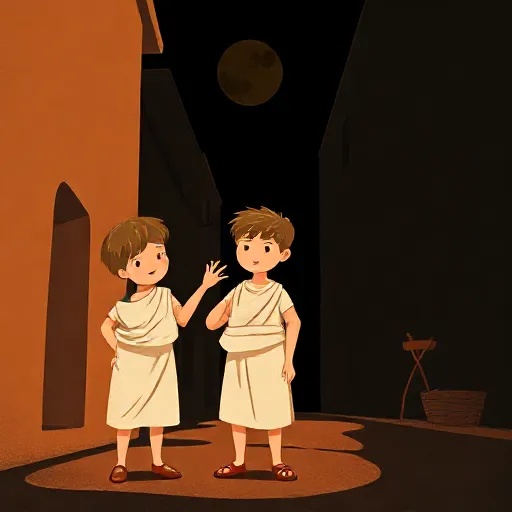
It’s a hot day in Athens, around 420 BC. Two men are shouting at each other in the street. One is Hermogenes (fifth century BC), a man who never inherited a penny and always worries about money. The other is Cratylus (fifth century BC), a wild-haired thinker who once believed that the world changed so fast you couldn’t even speak about it. People say Cratylus eventually just pointed at things instead of talking.
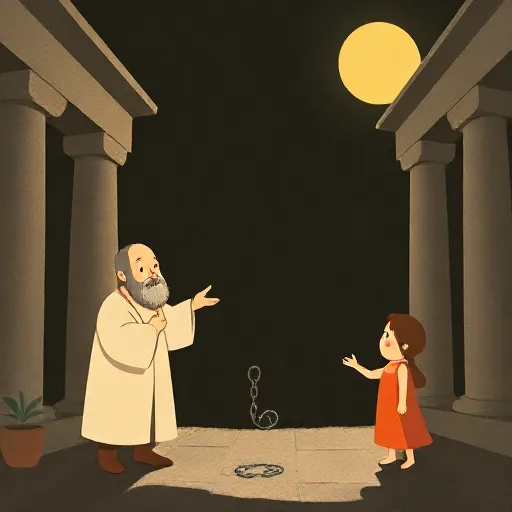
The shouting attracts a familiar figure: Socrates (469–399 BC), the famous question-asker of Athens. He stops, listens, and offers to be a referee. The two men are fighting about a question that sounds simple but turns out to be a puzzle that still bothers philosophers today:
Are the words we use just made-up labels we agree on, or do they have a natural, built-in correctness that fits the things they name?
Hermogenes insists names are pure agreements — conventions. Cratylus insists they must describe reality so perfectly that only the right name is a real name at all. Socrates doesn’t jump to a side. Instead, he starts asking questions, and soon the whole conversation becomes an investigation that twists and turns like a maze.
Hermogenes’ Wild Idea: Names Are Whatever We Agree To Call Them

Hermogenes explains his view clearly. A convention is simply a shared agreement. Today English-speakers agree that the sound “cat” picks out a furry animal that meows. But, Hermogenes says, there’s nothing in the sound or the letters that makes it the right name. If tomorrow everyone decided to call that same animal “boris johnson,” that would be just as correct. You can never get a name wrong when you’re first choosing it, because naming is like sticking a sticky note on something — the note works as soon as you stick it.
Socrates asks a sharper question: does every single person get to make up their own private names? Hermogenes thinks for a moment and says, sure — if you privately decide to call your cat “boris johnson” while everyone else uses that name for the former prime minister, then that’s your own private correct name. But he’s careful: he’s not saying you can misuse a name that a whole community already uses. If you call your cat “dog” and expect people to understand, you’ll just confuse everyone. Private naming doesn’t give you a magic shield against mistakes.
At first this position sounds very sensible, even obvious. But Cratylus looks disgusted. He believes words are like x-rays of reality, not sticky notes. So Socrates has to dig deeper.
Socrates’ Surprise: Names Are Tools for a Job
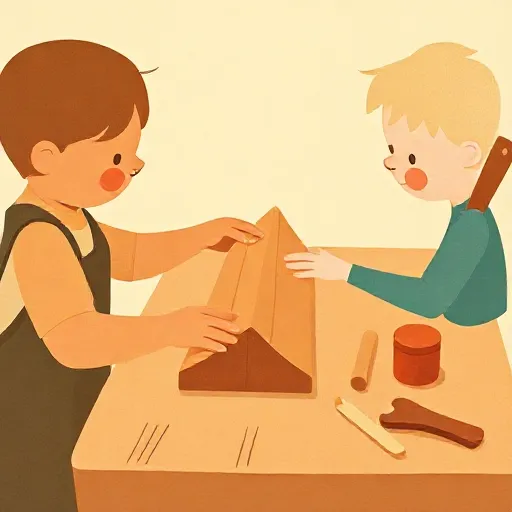
Socrates starts by talking about tools. Imagine you want to cut a piece of cloth. You don’t grab a spoon — you use scissors. A tool is made to do a specific job, and it must be shaped in the right way. A drill needs a pointy, spiraling shape to bore holes. A shuttle in a loom has to slide between threads smoothly to separate them.
Now, Socrates says, speaking is also an action, and part of speaking is naming — using a word to pick out a kind of thing, like “dog” for all dogs. So a name is a tool for doing that job. Just like a drill, it has to be built correctly to work. A name that can’t pick out the kind it’s meant for is as useless as a drill with no point.
From this, Socrates draws a surprising conclusion: names aren’t just arbitrary stickers. They have a natural correctness — a standard they need to meet. The right name for a kind of thing is one that has been crafted by an expert (Socrates calls them a “lawgiver” of language) so that it successfully picks out the nature, or way of being, that all members of that kind share. A name for dogs must somehow get at what it is to be a dog.
Hermogenes is startled. He wanted a simple agreement theory, but now Socrates has argued that there’s a natural right and wrong to words. But what exactly makes a name succeed at picking out a kind? Socrates must describe that.
The Etymological Explosion: Digging Up Hidden Descriptions

Socrates takes a deep breath and launches into a gigantic demonstration. He starts pulling apart Greek names to find their etymological meaning — the older words they’re built from — and claims that these hidden meanings show that the names describe the being of the thing.
He points to the name “Astyanax.” It belonged to the son of Hector, a prince of Troy, but Socrates treats it as a label for the kind “king.” “Astyanax” comes from words meaning “town” and “lord.” So the name means “townlord” — it describes what a king is: someone who rules a city. If a name is a correct tool for picking out a kind, Socrates reasons, it works because its built-in description matches the nature of that kind.
Then he goes wild. For over twenty pages in the dialogue, he breaks down more than a hundred Greek words and finds again and again that they seem to describe a world in constant flux — a universe where everything is always moving, flowing, and changing. A word for “excellence” seems to contain the idea of “always flowing.” The name for “practical wisdom” hints at “understanding of movement and flux.”
Why would so many names contain descriptions of a shifting, unstable reality? Socrates suspects that the ancient people who invented these words secretly believed in the philosophy of Heraclitus (c. 500 BC), who taught that everything is in motion like a river. The whole lesson gets so bloated and weird that many scholars think Plato is half-joking — showing that chasing hidden meanings can lead to parodies, not real knowledge.
But the wild ride also uncovers a real problem: some words, like “ion” (going) or “rheôn” (flowing), can’t be broken into yet smaller names. They’re first names — atomic bits. So Socrates can’t explain their correctness through etymology. He needs a new idea.
Cratylus Cheers — Then Socrates Pulls the Rug
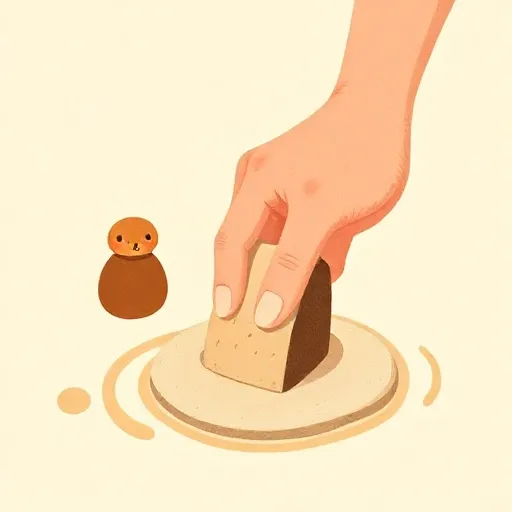
Socrates makes a fresh proposal: first names work by imitation. They don’t describe with words; instead, their very sounds or the way your mouth moves when you say them imitate the thing’s being. For example, the Greek letter rho seems to involve a rolling, trembling motion of the tongue — so it naturally imitates movement. If a name-maker strings together the right imitative letters, the whole name will be a sound-picture of its kind.
Cratylus is delighted. He jumps in and pushes the idea to the extreme. He makes three wild claims: (1) all names are equally correct; (2) only names that perfectly imitate a being really count as names — a badly formed sound isn’t really a name at all; and (3) you can’t speak falsely by using a name, because if the word doesn’t fit, you aren’t really naming.
Socrates stops smiling and turns against his own theory. He starts with pictures. If someone hands you a portrait of Cratylus and says “this is Hermogenes,” you know they’re wrong. A picture can be applied to the wrong person. So, Socrates argues, an imitative name can be applied to the wrong object, too — false speaking is possible.
Then he lands a heavier blow with the name sklêron, the Greek word for “hard.” The sound of the letter rho seems to imitate hardness, but the name also contains lambda — a letter whose smooth, liquid movement imitates softness, the opposite of hard. So the word “hard” itself contains a built-in whisper of softness. If imitation alone made a name correct, sklêron would be a mess.
So how do we still know that “hard” means hard? Socrates answers: convention. We’ve all agreed to use that sound for that meaning. Convention steps in and saves the name when imitation fails.
Socrates’ final words are careful and a little disappointed. He says convention contributes to the correctness of names, but he still likes the idea that names, as far as possible, resemble the things they name. The dialogue ends with the puzzle not fully solved. Cratylus stomps off to the countryside, still clinging to his Heraclitean beliefs. Socrates himself decides that investigating things directly — not just words — is the real task.
Why It Still Matters: The Stickiness of Words

So why should you care about a messy argument from 2,400 years ago? Because you use language every day, and you’ve probably felt the tug of both sides.
When you hear a word like “buzz,” it seems to fizz in your mouth — almost like the sound a bee makes. That feels natural, as though the word really fits. But if you grew up calling a bee something else, like “zoum,” that would feel just as right. So is it all just convention? And if every name is just an agreement, why do we sometimes argue over the “right” word for something — like whether a tomato is a fruit or a vegetable, or whether an old video game counts as “art”?
The Cratylus leaves these questions open. It shows that words aren’t purely random, because they help us carve up the world into kinds that matter. But it also shows that sheer agreement holds language together when the sounds don’t match the reality. The tension between natural fit and social deal is still at the heart of modern philosophy of language. And it’s also in your pocket: the next time you learn a new slang word, ask yourself — does the sound of it capture something real, or is it just a password for belonging to a group?
Think about it
- If everyone in the world agreed tomorrow to call cats “dogs” and dogs “cats,” would anything be wrong with that? Who would decide?
- Could a name ever be “bad” at doing its job, even if the whole community uses it? Think of a word that feels too vague or misleading.
- Imagine you discover a box of perfect words that exactly match the things they name. Would you want to switch your language to use them, even if nobody else did? Why?