The Prince Who Wanted to Stop Being Human
The Prince Who Challenged the World
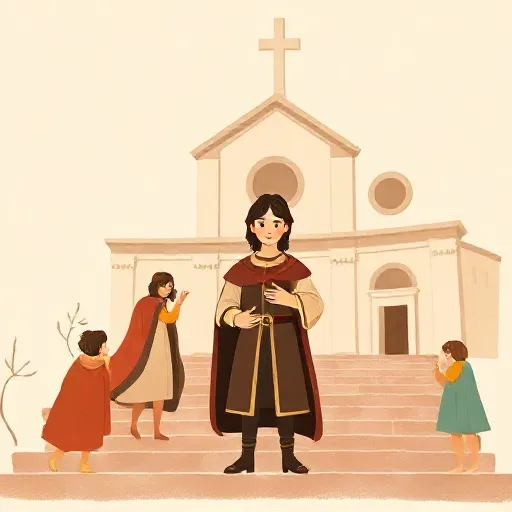
In 1486, a 23-year-old Italian count named Giovanni Pico della Mirandola (1463–1494) did something breathtakingly bold. He printed a slim book containing exactly 900 short statements — claims about God, the universe, magic, and the hidden meaning of the Bible — and announced that he would pay for any scholar who wanted to come to Rome and debate them all. Pico was a young man with a vast memory, stunning looks, and the wealth of a noble family. He had already studied law in Bologna, philosophy in Padua, and the latest revival of Plato’s ideas in Florence. He had also, notoriously, tried to kidnap a married woman and needed powerful friends to get out of the mess. Now, he wanted to stage the intellectual event of the century.
The problem? Many of his 900 claims were outrageous. He argued that magic and Kabbalah (a secret Jewish mystical tradition) could prove that Jesus was the Son of God. He claimed that the great thinkers of the past — Plato, Aristotle, Muslim Averroists, Jewish sages — all secretly agreed with one another, beneath their surface quarrels. And he published these statements not as careful arguments but as short, shocking theses, expecting to prove them in live debate. The papacy called it recklessness. Pope Innocent VIII first condemned 13 of the 900, then soon declared the whole collection suspect. The debate was canceled, and Pico had to flee Rome before he was arrested. His grand plan had blown up in his face.
The Search for a Hidden Symphony
Pico did not just want to win a debate. He wanted to heal what he saw as the deepest wound in human knowledge: the endless fighting between schools of thought. He called his vision concordia, the Latin word for harmony or a symphony of minds. Where others saw contradiction — Plato against Aristotle, Christian theology against Muslim philosophy — Pico saw the same truth expressed in different words. He believed that if you dug deep enough, every serious thinker was saying the same thing.
To prove it, he dove into traditions most Christians of his day dismissed. From a Jewish teacher named Elia del Medigo, he learned the Arabic commentaries of Ibn Rushd (Averroës) and the controversies among Muslim and Jewish Aristotelians. From a brilliant but slippery Jewish convert named Flavius Mithridates, he received thousands of pages of Kabbalah — a Jewish mystical system that read the Hebrew Bible as a cosmic code. Mithridates sometimes slipped Christian-sounding phrases into his translations to please Pico, but even so, Pico became the first Christian to seriously study Kabbalah and present it as higher wisdom. He argued that its secret teachings, passed down from Moses himself, foretold the Christian Trinity and the divinity of Jesus.
This was not just tolerance. It was a staggering claim: that you could unlock the one true philosophy by blending Plato, Aristotle, Jewish mysticism, and Christian faith into a single ladder of understanding.
The Most Misunderstood Speech in History
If you have heard one thing about Pico, it is probably his famous “Oration on the Dignity of Man.” That title, however, was invented after his death. Pico never used it. And the speech itself, often taught as a celebration of human freedom, actually says something far stranger.
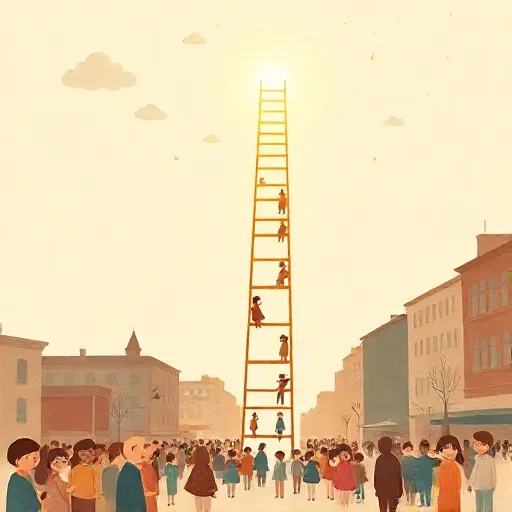
The oration opens with an image of God telling Adam that, unlike other creatures, he has no fixed nature. You can make yourself animal, human, or even angelic, depending on what you choose. So far, this sounds like a message of empowerment. But Pico’s real point was that the only good choice is to stop being fully human. He laid out a seven-step ladder for climbing toward union with God:
- Moral philosophy to calm your emotions.
- Dialectic (logic) to dispel errors of reason.
- Natural philosophy to understand the world.
- Theology to grasp divine truth.
- Magic (theurgy), a ritual art that purifies the soul and propels it heavenward.
- Kabbalah, which lifts you beyond even theology into the secrets of divine names and numbers.
- Mystical union — the final goal — where you cease to be a separate self and merge completely with God.
Pico compared this path to the biblical Jacob’s ladder. He said, “Let us scorn the things of earth, let us despise those of heaven, and then, leaving behind whatever belongs to the world, let us fly up to the hypercosmic court nearest the most exalted divinity….” The climax sounds like becoming a Cherub, one of the highest angels. But even that was not enough. The true end was to lose every trace of your personality, your body, your gender — “to die in herself that she might live in her spouse,” as he put it, so that “we shall be ourselves no longer, but shall be Him, the very one who made us.”
For Pico, human dignity was not about celebrating your individual greatness. It was about realizing that being merely human was a problem you had to solve by transforming into something else.
Secrets in Numbers and Letters
To understand how Pico imagined this ladder, you have to understand his obsession with numbers and the Hebrew alphabet. In Kabbalah, God is infinite and hidden, but He expresses Himself through ten aspects or emanations called sefirot (Pico called them numerationes). These sefirot are like a tree of divine energy flowing down from the highest, most hidden height to the world we experience. Each sefirah has a name, a number, and a rich set of symbolic associations — with colours, biblical figures, parts of the body, even days of creation.
Pico latched onto the Kabbalistic idea that the Hebrew letters of the Bible are also numbers and that every word hides worlds of meaning. In his later book, the Heptaplus (1489), he gave a sevenfold commentary on the first 26 verses of Genesis. Seven was a sacred number for him. He wrote that Moses, the author of Genesis, had passed through 49 gates of understanding — seven times seven — before reaching a 50th Gate, which was the ultimate union with God. The 49 lower gates corresponded to the sefirot, and the journey through them was no mere metaphor. Pico believed that a wise reader could actually traverse them by decoding the letters of the first Hebrew word of the Bible, Bereshit (“In the beginning”).
He combined this with theurgy, a form of ritual magic that late antique Platonists had used to purify the soul and make it ready for ecstatic ascent. For Pico, magic and Kabbalah were not superstition. They were dangerous, secret sciences that could help a prepared soul climb back to its divine source — if only you could keep the secrets safe from those not ready to receive them.
The Count Who Still Haunts Us

After the Roman disaster, Pico spent years in disgrace. He wrote a long, scholastic Apology to defend himself, which only made things worse. The brilliant Florentine friar Girolamo Savonarola became his spiritual guide, and Pico grew ever more pious, giving away his property. He died suddenly in 1494, at only 31 — some whispered of poison. His last major work, the Disputations Against Astrology, attacked star-gazers by showing that their alleged ancient authorities were historically unreliable, a surprisingly modern move. But he never finished it, and his own nephew edited his papers, shaping the story of his uncle’s life into a pious legend.
Then something strange happened. Pico’s undelivered oration, which his nephew first published in 1496, gradually acquired a title — “On the Dignity of Man.” By the 1860s, historians who celebrated the Renaissance as the birth of modern human freedom made the speech into a manifesto. Kantian philosophers, fleeing Nazi Germany, carried that image to American universities, where it appeared in countless textbooks. Pico became the poster child for the idea that each of us freely creates our own destiny.
Yet if you read his actual words, his ladder ends not with a proud, free individual but with a soul dissolved in God. His dream of concordia was not a call for open-minded dialogue but a secret Christianizing of all wisdom. The story of Pico matters today because it warns us how easily we can project our own hopes onto the past. It also challenges us to ask: if you could trade your self for something greater, would you? And what, in the end, is truly worth climbing for?
Think about it
- Pico was certain that all major philosophies secretly agreed. Can you think of two views today that seem completely opposed — and could they ever point to the same deeper truth?
- If you could use a discipline like magic, meditation, or science to erase your personality and become part of something limitless, would you do it? What might you lose?
- Why do you think historians for centuries saw Pico as celebrating human freedom, when his own writings point the opposite way? What makes us misunderstand the ideas of the dead?