Can a Buried Philosopher Teach You How to Be Happy?
A Library Buried in Ash

In August of the year 79, Mount Vesuvius erupted with terrifying force. The towns of Pompeii and Herculaneum vanished under waves of ash and boiling mud. Among the buried buildings was a seaside villa filled with statues, mosaics, and something far more precious: hundreds of papyrus bookrolls.
The heat carbonized the scrolls, turning them into black, brittle lumps. But instead of burning to ash, they were preserved. In 1752, nearly 1,700 years later, excavators began to unearth them. Scholars hoped they had found lost plays by Sophocles or histories by Livy. Instead, the scrolls turned out to be a library of Epicurean philosophy, and many of them were written by a figure nobody expected: a Greek thinker named Philodemus (around 110 to 30s BCE). His words had survived a volcano, and they carried a striking message about how to live without fear.
Who Was Philodemus?
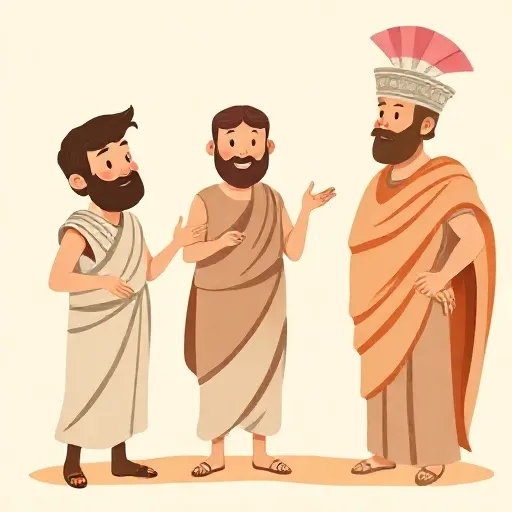
Philodemus was born in Gadara, a hilltop city in what is now Jordan. As a young man he traveled to Athens and joined the Garden, the school founded by Epicurus (341–270 BCE) two centuries earlier. Philodemus studied under Zeno of Sidon (c. 150–c. 75 BCE), the head of the school, and soaked up the careful, book-loving methods of the early Epicureans. He learned that the goal of life was pleasure, but not the kind you might imagine—not wild parties or endless desserts. For Epicureans, pleasure meant ataraxia: a calm, untroubled state of mind and body, free from pain and anxiety.
Later, Philodemus moved to Italy and became a close companion of the Roman senator Lucius Calpurnius Piso Caesoninus (born around 101 BCE). Cicero, who disliked Piso, grumbled that the Greek philosopher was always whispering about pleasure in the senator’s ear. Philodemus wrote elegant, witty epigrams and invited friends to modest dinners to celebrate Epicurus’ birthday. He also produced dozens of philosophical treatises—books with titles like On Death, On Anger, On Flattery, and On the Gods. Most of his work would have been lost to us forever if not for that villa in Herculaneum.
The Four-Ingredient Remedy

To understand Philodemus, you have to understand the tetrapharmakos—the “four-fold remedy.” He condensed the core teachings of Epicurus into four short slogans that a follower could memorize easily:
- God is not to be feared.
- Death is not frightening.
- What is good is easy to get.
- What is terrible is easy to endure.
The first two aim at the big anxieties that, according to Epicureans, ruin our peace of mind. Philodemus argued—along with Epicurus—that the gods are perfectly happy beings who don’t bother with human affairs, so there’s no reason to cower before their anger. As for death, it’s simply the end of sensation. When you die, you won’t be there to suffer anything, so worrying about being dead makes no sense.
The last two slogans are about everyday life. The things that truly satisfy our natural needs—food, shelter, friendship—are not hard to find. Meanwhile, severe pain rarely lasts long, and long-lasting pain is usually mild enough to tolerate. By keeping these four truths in mind, a person could stay calm even when life became rough. Philodemus didn’t invent these ideas, but he packaged them so that anyone, even a beginner, could carry them around like a first-aid kit for the soul.
Frank Criticism: Friendship with an Edge
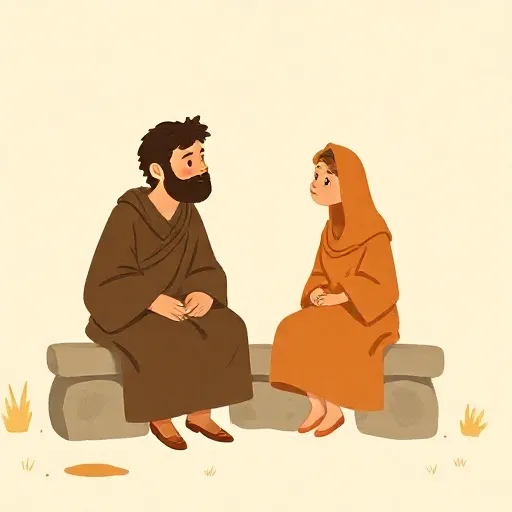
Epicureans didn’t think you could become wise all by yourself. Philodemus wrote an entire manual titled On Frank Criticism, which set out the art of parrhēsia—speaking honestly to help another person improve. He compared the philosophical group to a medical clinic. The leader of the community, a kind of sage-physician, would diagnose the moral “illnesses” of his companions—arrogance, flattery, greed, anger—and apply just the right kind of medicine: sometimes gentle, sometimes blunt, occasionally even harsh, all tailored to the personality of the person.
What made this hard? Nobody enjoys hearing about their faults. A rich person might bristle at criticism, a shy person might crumble, an angry person might rage. So the community had to learn to give and receive criticism without flattery or hostility. Philodemus believed that living this way, with friends who tell you the truth, was one of the greatest pleasures a human being could have. The goal wasn’t to feel good about yourself all the time, but to become the kind of person who actually was good—and happy, too.
Anger: The Bite That Shouldn’t Devour You
Philodemus devoted a whole treatise, On Anger, to a problem we still wrestle with today. He noticed that getting angry often includes a flash of pain—a “bite” that is completely natural. If someone insults you or breaks a promise, it stings. That bite might even be useful: it signals that something wrong has happened. But Philodemus drew a sharp line between natural anger (which Greek speakers called orgē) and empty anger—thumos, a boiling, vengeful rage that takes over your mind.
Empty anger arises from false beliefs. It convinces you that the insult has ruined your life, that you must have revenge, that revenge will even be sweet. Philodemus, following Epicurus, argued that such beliefs are mistakes. The only real harm comes from losing your own peace of mind, and exacting revenge usually just creates more pain. Even a wise person may feel a sharp pang of anger, but that pang fades quickly because the wise person doesn’t feed it with false stories.
He taught that we can loosen anger’s grip by remembering the four-fold remedy, by trusting friends who give us honest feedback, and by asking: “What is truly at stake here?” Often, the answer is much less than our rage suggests.
From a Buried Villa to Your Own Mind

Why should a philosopher whose scrolls almost got destroyed by a volcano matter to anyone today? Philodemus spent his life thinking about the very things that still keep us up at night: the fear of dying, the shame of being judged, the anger that shoots through us when somebody cuts us off in traffic or posts something cruel online. He didn’t promise a magical cure. He promised a different way of looking.
His method worked like this: identify the belief that is causing your distress—say, “I can’t be happy unless everyone admires me”—and then test it. Are people’s opinions really that easy to attain? Are they worth the effort? What happens to your calm when you chase them? More often than not, Philodemus would say, the belief crumbles. And when the belief crumbles, the fear and anger that went with it have nothing left to feed on.
The carbonized scrolls from Herculaneum remind us that ideas can outlast empires. Philodemus wasn’t trying to be original. He was trying to be useful—to give his friends a way to think, speak, and live that didn’t depend on status, wealth, or panic. His pages crumbled in the hands of the first unrollers, but now we can read them more clearly than ever. The work of becoming a calmer, clearer-headed person is just as urgent now, and his four-fold remedy remains wonderfully simple: look at your fears squarely, lean on honest friends, and don’t let a bite of anger become a feast of rage.
Think about it
- If you could completely stop being afraid of death, would that change the way you spend an ordinary Tuesday? Why or why not?
- Think of the last time you got really angry. If you had paused and asked “What belief is making me this angry?” right in that moment, what might you have answered?
- Suppose a friend told you a hard truth about yourself that you didn’t want to hear. How would you decide whether to trust their criticism or shrug it off?