Can Thoughts Mean Anything Without Feelings?
What Makes a Thought About Something?

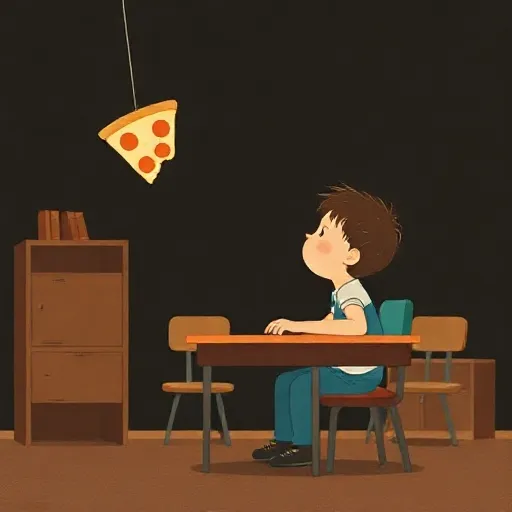
You’re in a boring class. Your mind drifts. You picture a pizza: hot cheese, crispy crust. But what is that thought? It’s not a real pizza on your desk. Yet your thought is about pizza—it points to it, represents it. Philosophers call this intentionality, the “aboutness” of mental states. A belief that cats purr, a memory of your locker, a desire for summer: they all aim at something beyond themselves. The big puzzle: how can a lump of brain matter be about anything?
For decades, many philosophers treated the mind as having two completely separate kinds of stuff. One kind is phenomenal consciousness—the raw, felt quality of experience, the “what it’s like” to taste chocolate or see deep blue. The other kind is intentionality—your thoughts, beliefs, and concepts. They seemed independent, like two different rooms in a house. But a growing group of philosophers says this picture is dead wrong. They offer a startling alternative: consciousness comes first. Without feeling, they claim, nothing would mean anything.
The Standard View: Mind as Two Separate Kingdoms
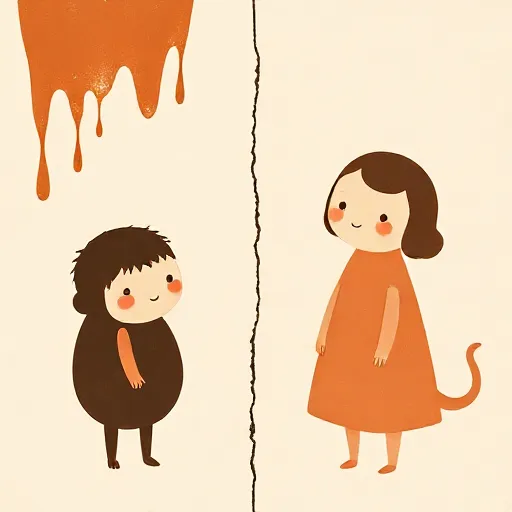
Philosophers used to accept what John Searle (b. 1932) and others have called separatism. Phenomenal states—pains, itches, smells, color experiences—were one thing. Intentional states—beliefs, desires, judgments—were another. You could have a toothache without representing anything, and you could believe that Paris is a city without any particular feeling. The mind seemed to have two distinct domains that could operate independently.
This split made some sense because many intentional states don’t appear to have much feeling. Your standing belief that monkeys like bananas feels like nothing at all when you’re not thinking about it. Meanwhile, a sharp pain seems purely felt, not about anything else. So the standard picture took hold: consciousness and intentionality are separate mental phenomena with no deep connection.
But trouble lurked. If thoughts are just colorless computational states, what ties them to the world in a way that makes them about anything definite? Purely physical facts seem insufficient to pin down content—a problem that would soon fuel a very different approach.
A Radical Idea: Consciousness Comes First
In the early 2000s, philosophers like Terence Horgan and John Tienson (2002) and Brian Loar (1939–2014) proposed that the aboutness of mental states is not separate from consciousness but is actually grounded in it. They called this the phenomenal intentionality theory, or PIT. At its heart is a simple idea: some of our mental states are phenomenal intentional states—states whose very feel constitutes what they are about. When you have a reddish-cube-ish visual experience, that experience automatically and necessarily represents a red cube. The feeling itself is the representing.
Not all supporters agree on how far this goes. Weak PIT merely claims that some intentional states are phenomenal intentional states—many philosophers accept this. Strong PIT claims that all intentional states are, in the end, phenomenal intentional states. The most influential and widely defended version is Moderate PIT: all actual intentional states either are phenomenal intentional states or are at least partly grounded in them. So even thoughts that seem dry and unfeeling derive their meaning, indirectly, from consciousness.
This is a “consciousness-first” picture. Instead of explaining consciousness in terms of representation (the more common modern approach), PIT explains representation in terms of consciousness. It tries to put felt experience back at the center of the mind.
The Case for Putting Experience First
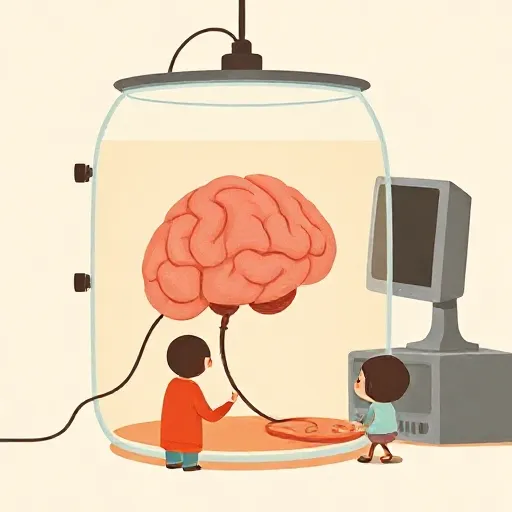
Why think meaning depends on feeling? One powerful argument comes from brain in a vat thought experiments. Imagine an exact physical duplicate of your brain kept alive in a vat and hooked up to a computer that feeds it the same patterns of stimulation your brain normally receives. Most people find it obvious that the vat brain would have a mental life exactly matching yours: the same perceptual experiences, the same thoughts. For example, when you think about a beach, the vat brain also thinks about a beach—even though it has no real sand or water nearby. If you both have identical conscious experiences, you share a common layer of meaning that can’t differ. PIT elegantly accounts for this: the narrow content of thoughts is fixed by phenomenal consciousness. Philosophers like Loar and Horgan & Tienson argue that PIT gives the best explanation of such internal, conscious-determined meaning.
Another argument focuses on content determinacy. Consider your thought “rabbit.” Why does it mean a whole rabbit rather than undetached rabbit parts, or a time-slice of a rabbit? If we only had physical facts—neural firings, causal links to the environment—nothing seems to settle the matter. A Martian looking at your brain couldn’t tell which exact content you’re thinking. But from the inside, your conscious understanding feels determinate. There is a felt difference between thinking of a rabbit and thinking of rabbit parts. Many PIT advocates claim that consciousness itself can supply the needed determinacy. Their proposal relies on a rich inner life for thought, a topic we’ll return to.
Even everyday experiences support the tie. Charles Siewert (b. 1961) points out that if it visually seems to you as if a red pen is on the table, that very seeming makes you automatically assessable for accuracy: if there really is a red pen, your experience is correct; if not, it’s mistaken. The felt quality of the experience itself carries a “rightness condition” without any added bit. For Siewert, this shows that phenomenal states are inherently intentional—the feeling already includes the aboutness.
But What About Thoughts That Don’t Feel Like Anything?

If PIT is correct, every thought should have some connection to feeling. This is where the biggest fight breaks out: cognitive phenomenology—the idea that thinking itself has a special, non-sensory felt quality. Many philosophers, like David Pitt (b. 1966) and Galen Strawson (b. 1952), insist that when you consciously think “democracy is fragile” or “5 + 7 = 12,” there is something it’s like for you—a quiet inner sense of understanding, distinct from just hearing words in your head. They point to the tip-of-the-tongue phenomenon: you know exactly what you want to say but can’t find the word. That frustrated feeling, they claim, is a direct experience of conceptual content itself.
Critics retort that thought usually comes wrapped in sensory imagery—silent speech, faint pictures—and that this imagery is all there is. When you think about rabbits, you might just subvocalize the word “rabbit” or picture floppy ears. If so, the heavy lifting is done by sensory experience, not by some special thinking-feel. The evidence is deeply disputed; both sides appeal to introspection, and the disagreement remains live.
Other challenges pile up. Standing beliefs—like your permanent belief that water is wet—don’t seem to be conscious at all when you’re asleep or absorbed in a video game. Where is the feeling? PIT defenders usually give a dispositional answer: a standing belief is a readiness to bring a certain conscious thought to mind. Your belief about water is your tendency, under the right conditions, to have a felt judgment “water is wet.” Some, like Strawson and Angela Mendelovici (writing in the 2010s), go further and say standing states aren’t truly intentional—they’re just useful ways of talking about patterns of potential experience.
A further worry involves wide intentional states that depend on your environment. On Twin Earth, a duplicate with your exact conscious life might have a different external world: their “water” is not H₂O but a different chemical, XYZ. Many philosophers think the two twins therefore mean different things by their “water”-thoughts. PIT can handle this by distinguishing two layers: a narrow content fixed by consciousness and a wide content fixed by outside relations. Your basic conscious meaning is the same; the reference to the outside world shifts.
Finally, unconscious brain processes pose a question. Your visual system does complex calculations without your ever feeling them. Do these unconscious states represent anything? PIT proponents often respond that such states aren’t genuinely intentional—they have the right functional shape to be treated as if they represent, but the real aboutness only arrives when consciousness gets involved.
Why It Still Matters: Who Really Thinks?
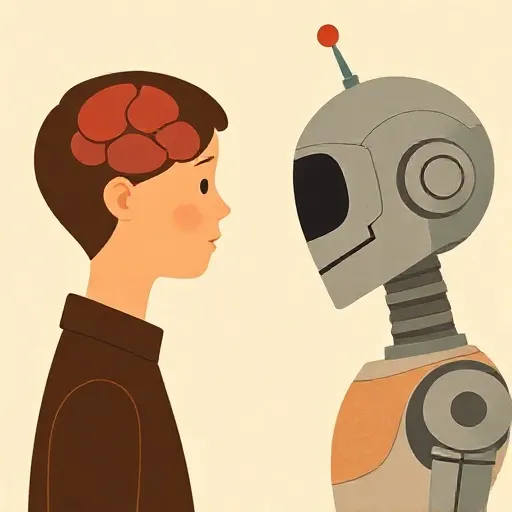
So why does this dusty-sounding debate touch your own life? Because it directly shapes what we think about understanding itself. If PIT is on the right track, then genuine meaning—the kind that makes a thought about something—requires consciousness. That would mean a sophisticated AI, no matter how clever at conversation, might be empty inside, a mindless pattern-matcher with no real comprehension. It would also mean that animals with rich sensory and emotional lives might have more meaningful thoughts than we sometimes credit them with.
More personally, it changes how you view your own inner world. That wandering pizza-thought wasn’t a ghostly sentence in your head. According to the consciousness-first picture, it was woven from the very texture of your experience: the remembered taste of warm cheese, the faint sense of comfort, the feeling of expectation. Meaning, on this view, isn’t an abstract code—it’s made of felt life. Whether the theory ultimately succeeds or fails, it forces us to ask: what does it take for a mind to really think?
Think about it
- If a future AI could hold perfect conversations but had no inner feel—no “what it’s like”—would that AI genuinely understand the words it uses, or would it just be copying?
- Try thinking about a banana without using any words, pictures, or sounds in your head. Can you find a felt “sense” of banana underneath the imagery, or is the feeling always tied to sensory stuff?
- If standing beliefs are just dispositions to have conscious thoughts, does that mean you stop believing that water is wet while you’re in deep sleep? What would that say about you?