Can Something Be Real If It Never Changes? Parmenides’ Ancient Puzzle
The Journey to the House of Night
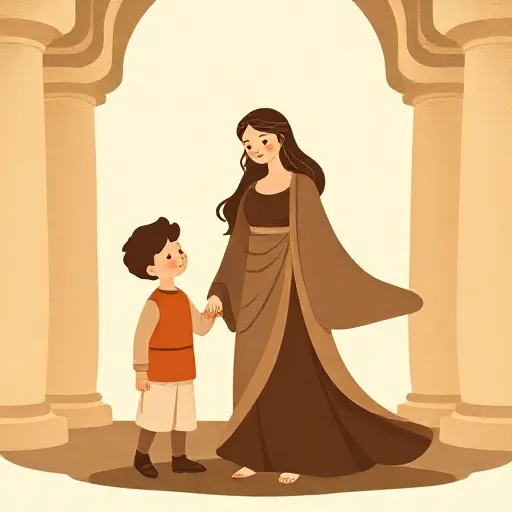
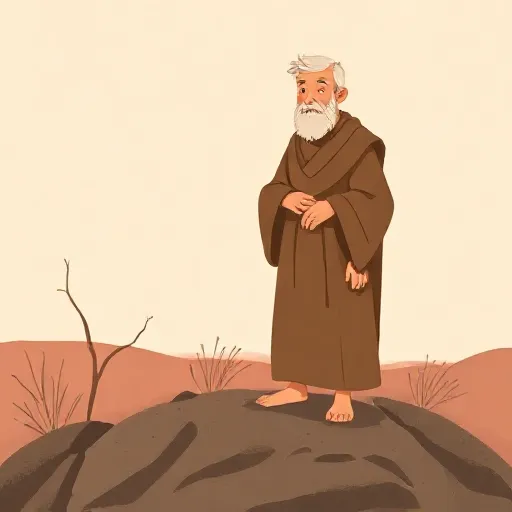
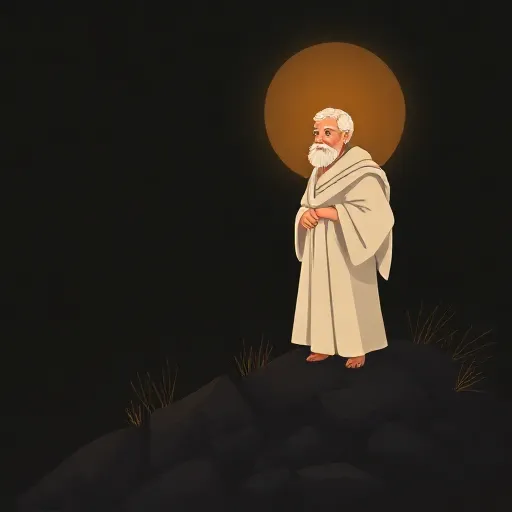
Around 515 BCE, a Greek thinker named Parmenides wrote a single poem — the only work he ever produced. The poem did not begin with an argument or a question. It began with a journey.
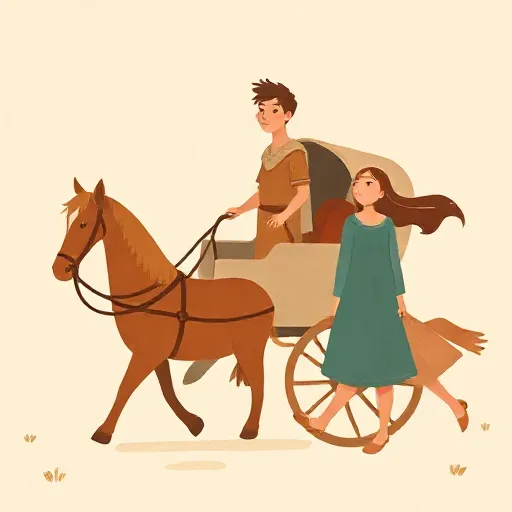
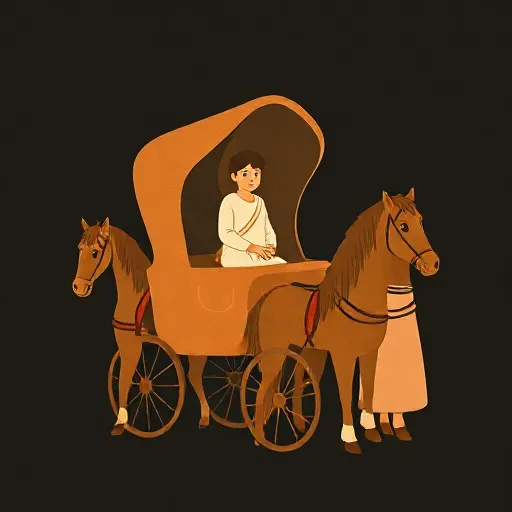
Parmenides described himself riding in a chariot pulled by mares, escorted by the daughters of the sun god. The maidens led him far from the roads humans normally travel, all the way to the gates of Night and Day. When the gates swung open, the goddess who lived there welcomed him. She took his right hand and told him he would learn something no ordinary person knew. She would reveal “the unshaken heart of well-rounded reality,” and after that, “the notions of mortals, in which there is no genuine trustworthiness.”
So the poem had two huge parts. First, Parmenides would hear about something rock-solid and true. Second, he would hear about the shifting, unreliable world that people think they know. Modern scholars call the first part the Way of Conviction and the second part the Way of Mortals. The puzzle that has gripped philosophers ever since is this: how can both parts belong to one poem without contradicting each other?
The Path of What Must Be
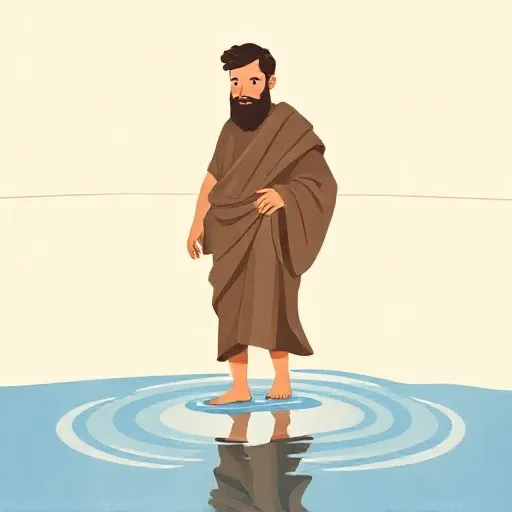
The goddess began by drawing two “ways of inquiry” — two routes your thinking can take. The first way says: it is, and it cannot not be. The second way says: it is not, and it must not be. Right away she shut the second door. You cannot think about what must not be, she said, because there is nothing there to think about. Try to picture a round square. You cannot do it, and you cannot point to one. So the only path that leads anywhere is the first one: what is — and cannot possibly not be.
Following that path, the goddess developed a long chain of reasoning about something she called What Is (in Greek, to eon). Because What Is is and cannot not be, it can never have been born and can never die. If it came from nothing, you would have to explain why it appeared at one moment rather than another — and there is no reason. So it must be ungenerated and deathless. For the same reason, it cannot change. Changing would mean it stops being exactly what it is, and that is impossible for something that must be what it is. So What Is is still, motionless.
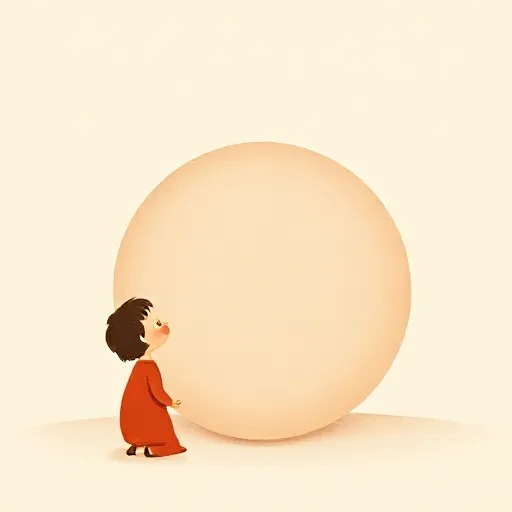
What Is must also be whole and uniform. If one part of it were different from another, then some part would be something that the other part is not. That would introduce a kind of “not being” inside What Is, which cannot happen. Every bit of it is exactly the same. At its outer limit, it must be equally complete in every direction — otherwise there would be a place where What Is stopped being What Is, and that would mean non-being existed around it. The only solid shape that is the same everywhere at its boundary is a sphere. So the goddess concluded that What Is is a perfect, unchanging sphere.
This is one of the most famous stretches of deductive argument in ancient philosophy. Starting from just one idea — that it is, and cannot not be — Parmenides derived a whole list of attributes that no one had ever put together before.
A Surprising Second Half: The World of Change

If the poem had ended there, Parmenides would be remembered as the thinker who proved the universe is a single, frozen ball. But the goddess was not finished. She announced that she would now sing a “deceptive” account — the beliefs of mortals. Then, for most of the original poem (perhaps six hundred of eight hundred lines), she laid out a detailed cosmology: how the cosmos formed from two principles, light and night, how the heavens, stars, sun, moon, and earth came to be, and how living creatures, including humans, were born and developed.
Many of Parmenides’ ideas in this part were genuinely scientific. He was the first Greek to realize that the moon shines by reflecting sunlight. He also identified the morning star and the evening star as the same planet — Venus. His cosmology was inventive and serious, not just a throwaway story.
And that is exactly the trouble. If the goddess’s first argument proved that change, birth, and plurality are impossible, why would Parmenides spend most of his poem on an account of a changing, many-thinged world? Did he think that world was completely fake? Did he change his mind? Or was he trying to do something subtler that readers have been misinterpreting for centuries?
Three Ways to Crack the Puzzle
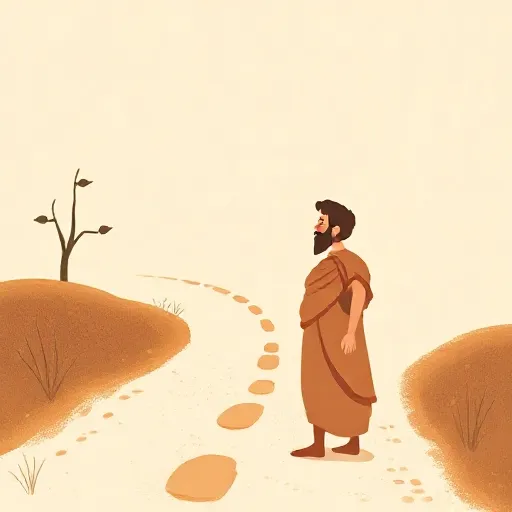
Over the centuries, interpreters have offered three main answers.
The first is strict monism. On this view, Parmenides meant exactly what the first part seems to say: only one thing truly exists, and it is unchanging and undivided. The world of trees, dogs, friends, and hot soup is a total deception. Your senses lie to you. The cosmology is just Parmenides’ best attempt to describe how the illusion works, even though he knows it is not real. An ancient critic named Colotes made fun of this idea by saying that if Parmenides really believed it, he would have no reason not to walk straight off a cliff — because on his view, there are no cliffs. Most philosophers find strict monism hard to swallow, because it denies the existence of everything you actually experience.
A second answer is the meta-principle interpretation. According to this reading, Parmenides was not saying that only one object exists. Instead, he was using “is” in a special way — the way we use it to ask what something truly is, in its essence. The first part of the poem tells you what any truly fundamental thing must be like: unchanging, whole, uniform. The later cosmologists — Empedocles, Anaxagoras, the atomists — tried to follow Parmenides’ rule by proposing basic ingredients (elements or atoms) that never come into being and never change, even while they combine to form the shifting world. But this interpretation faces a stiff problem: the two principles of Parmenides’ own cosmology, light and night, do not satisfy the strict standard he apparently set. If he knew a proper cosmology needed perfect, unchanging principles, why did he offer one that fails the test?
The third approach, which many scholars today find the most satisfying, is the modal interpretation. It focuses on the language Parmenides used when introducing the ways of inquiry. The first way is not just “it is” but “it is and cannot not be.” The second is “it is not and must not be.” These are not just statements about existence. They are statements about different modes or ways of being. The goddess is distinguishing between necessary being (what must be, what could not have been otherwise) and contingent being (what happens to be, but could have been different). What Is — the subject of the first part — belongs to necessary being. That is why it is eternal and perfect. The world described in the cosmology, however, belongs to contingent being. It is real, but it is not necessary. Yesterday’s flower has wilted; today’s weather could have been otherwise. Because contingent things are always sliding between being one way and being another way, they cannot give you the same kind of unshakable understanding that necessary being can. So the goddess’s “deceptive” account is the best you can do when talking about the changing world — it is still valuable, but it never reaches the certainty of the first path.
On this reading, Parmenides did not deny that the world of change exists. He simply insisted that there is something more to reality: an unchanging, necessary core that runs through everything, like a perfect sphere that fills all of space without being identical to the shifting things inside it. Many thinkers in antiquity, including Plato and Aristotle, understood Parmenides roughly this way — as a generous monist, not a strict one.
Why an Ancient Poem Still Echoes Today
Parmenides’ poem sparked a conversation that has never really stopped. He was the first philosopher to ask, in a rigorous way, “What must exist, no matter what?” That question launched the entire branch of philosophy we now call metaphysics — the study of the most basic features of reality.
The modal interpretation of Parmenides brings him startlingly close to questions you might ask today. Think about a math fact, like “2 + 2 = 4.” It seems that this could not have been false — no matter how the universe had started, two and two would still make four. That is a tiny taste of necessary truth. Now think about the fact that you are reading this sentence on a screen or on paper. That is a contingent fact — it happens to be true, but the world could easily have been different. Parmenides was groping toward exactly this distinction: some things just must be, and other things simply happen to be.
His work also gave later scientists a problem they could not ignore. If all change is a little suspicious, how do you explain the world’s constant motion without cheating? The atomists tried to do it with tiny unchanging particles. Aristotle tried with matter and form. Physicists today still debate whether there is anything at the bottom of reality that never changes. Every time someone asks whether the laws of physics could have been different, or whether there is a level of reality that cannot decay or alter, they are walking down one of the roads that Parmenides first mapped in verse, riding in a chariot toward the house of Night.
Think about it
- If there were something that never changes, could you ever notice it using your senses alone? Why or why not?
- Parmenides believed your eyes and ears could not lead you to the deepest truth. Can you think of something you know is true without relying on your senses?
- Imagine a scientist proved that the world you see and touch is a perfect illusion, but you still felt hunger, joy, and friendship. Would that change how you live your life?