You've Seen This Movie Before. So Why Are You Nervous?
You’ve Seen This Movie Before. So Why Are You Nervous?
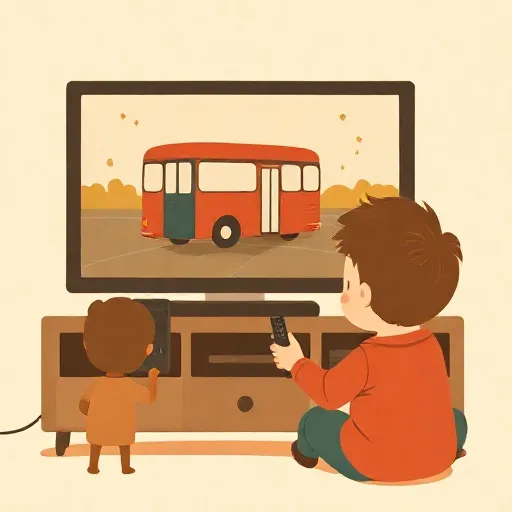
You have already seen the action thriller Speed twice. You know exactly what happens: the bus never explodes, the heroes survive, and the villain gets caught. Yet as the clock ticks down and the camera zooms in on the driver’s tense face, your stomach tightens and your palms go damp. You are not surprised by anything on screen—but you are definitely feeling something that seems a lot like suspense.
This is the paradox of suspense, a puzzle that philosophers and psychologists have been wrestling with for decades. If suspense really does require not knowing how things will turn out, then rewatching a familiar film should be as thrilling as waiting for a toast to pop up. Yet millions of people happily rewatch movies like Psycho, Rear Window, or Speed and still feel their pulse quicken. How is that possible? To get a grip on the problem, we first need to understand the standard recipe for suspense.
The Standard Recipe: Fear + Hope + Uncertainty
Psychologists Ortony, Clore, and Collins proposed what many now call the standard account of suspense. On this view, suspense is a blend of three ingredients: fear, hope, and a cognitive state of uncertainty. You fear a bad outcome—say, being caught in a dark alley by a stranger. You hope for a good outcome—you get home safely. And you are not sure which outcome will actually happen. If you are completely certain the stranger is just a neighbor walking a dog, the fear fades and the suspense evaporates. No uncertainty, no suspense.
Fear and hope are prospect emotions. That means they depend on how desirable a future event seems and how likely you think it is. The more awful and the more probable a bad outcome, the more intense your fear. The more wonderful and probable a good outcome, the stronger your hope. Suspense, in turn, gets its power from a combination of high stakes and high uncertainty: you care deeply about what will happen, and you honestly do not know which way it will go.
This account makes good sense of suspense in real life. The paradox appears when we turn to fiction. If you have already watched Psycho and you remember it well, you are absolutely certain that Marion Crane will be attacked in the shower. You know the outcome. According to the standard account, there should be no suspense. Yet you feel it anyway. We seem to have three claims that cannot all be true at the same time:
- Suspense requires uncertainty.
- If you know a story’s outcome, you are not uncertain about it.
- People feel suspense when watching familiar stories even though they know the outcome.
Each of the four main solutions to the paradox picks one of these claims and says, “That one is not quite right.” The first two solutions tinker with the idea that suspense demands genuine uncertainty. The third says we do not really know the outcome while the story unfolds. The fourth says we are not really feeling suspense at all.
Solution 1: Pretend You Don’t Know
Philosopher Noël Carroll offers a way out by softening the first claim. Suspense, he argues, does not need actual uncertainty; it only needs entertained uncertainty. That means you simply imagine that the outcome is uncertain. When you rewatch a thriller, you slip into a kind of make‑believe. Even though you know the hero will probably escape, you let yourself picture, accept, and play along with the possibility that they might not. The fear and hope in suspense are fed not by real doubt, but by entertaining the thought that the story could go either way.
Carroll’s thought theory holds that fiction works by guiding our imagination. You can work yourself into genuine distress just by imagining, say, that you have been left out of a team or that your bike has been stolen. Because you can feel real emotions in response to make‑believe scenarios, once you entertain the uncertainty of a familiar plot, suspense kicks in.
Attractive as this is, it runs into trouble. First, why does suspense usually diminish after many viewings? If all you need to do is imagine uncertainty, a willing viewer should be able to conjure the same level of suspense every time. But most of us find that the tenth viewing is nowhere near as nerve‑racking as the first. Second, some films actually become more suspenseful once you know the ending. Take the office scene in Psycho. The first time you watch, you feel only a mild unease while Marion talks with Norman Bates among the stuffed birds. On a second viewing, however, you notice all the warning signs—Norman’s twitchiness, his odd comments—and your suspense skyrockets. That cannot be explained by entertaining uncertainty: on the first viewing you were genuinely uncertain and felt less suspense; on the second, you are certain and feel more. Something else must be at work.
Solution 2: The Urge to Jump Into the Screen
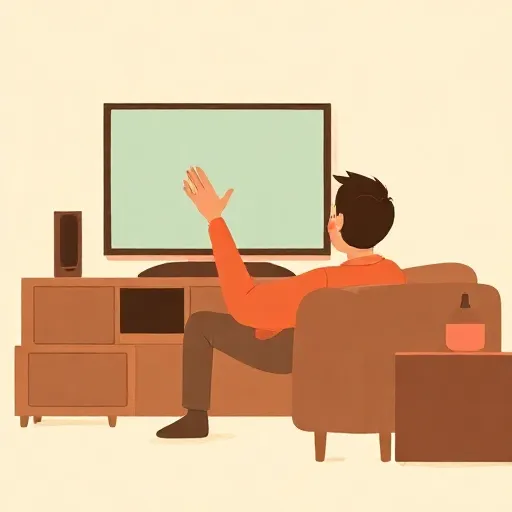
Philosopher Aaron Smuts takes a more radical step: he denies that uncertainty is necessary for suspense at all. His desire‑frustration theory says suspense is created whenever you have a strong desire to affect an event’s outcome but find yourself powerless to do so. The key ingredient is not doubt, but blocked action.
In real life, you can often do something about a tense situation—run, fight, call for help. But in fiction you are completely cut off. You cannot warn the character on screen, you cannot jump into the story, you cannot change a single frame. That frustration, Smuts argues, is what tightens your chest. One of the most unforgettable suspense scenes in Alfred Hitchcock’s Rear Window works exactly this way: Jeff watches through binoculars as Lisa searches an apartment; meanwhile Thorwald, the suspected murderer, walks in behind her. The audience shares Jeff’s helpless viewpoint—we see the danger but are utterly unable to do anything about it.
The theory also fits video games: the most suspenseful moments often occur when control is temporarily taken away from the player—your character leaps over a gap and you must simply wait to see if they land safely.
Still, questions remain. Why must the desire be for an imminent event? Smuts’ account does not fully explain that. More importantly, is it really true that, in every suspenseful scene, you find yourself actively wanting to change things? In the film Michael Clayton, two thugs try to install a tracking device in the protagonist’s car while he walks back toward it. The scene is intensely suspenseful, but what, exactly, do you want to do? It is not obvious that you desire to warn Clayton or stop the thugs; many viewers simply watch, gripped, without a clear wish to intervene. Smuts might reply that we nevertheless experience a kind of frustrated desire, perhaps only a “wish” that things go a certain way. Defenders of the view also admit that wanting to change a fictional world is a peculiar sort of desire—after all, you know it can never be satisfied. But maybe that peculiarity is just part of what makes fiction affect us so strongly.
The Brain That Forgets and the Feeling That Isn’t

Two other solutions try a different strategy: they argue that the remaining claims in the paradox are the weak links.
Moment‑by‑moment forgetting, defended by Richard Gerrig, denies claim 2—the idea that knowing the ending automatically makes you certain during the story. According to Gerrig, the human mind is not very good at recalling known outcomes while it is caught up in a gripping narrative. He appeals to an evolutionary story: in nature, no event ever repeats itself exactly, so we never developed a mental muscle for instantly retrieving “how it turned out last time.” While you are locked into the film’s flow, your brain treats the story as effectively uncertain, and suspense follows.
This sounds plausible for quick, jump‑scare moments, but many suspense sequences drag on for minutes. In Speed, the bus navigates one nail‑biting situation after another. It is hard to believe that your brain simply forgets you have seen the movie before for that entire stretch. Even more damaging, a common experience on repeated viewings cuts against Gerrig’s picture: you often notice new details the second time around. For example, when rewatching Hitchcock’s Shadow of a Doubt, you suddenly see every little gesture Uncle Charlie makes as proof of his dark past. That takes memory, not forgetting. If your mind were truly blocked from the known outcome while watching, this kind of clue‑spitting would be impossible. Gerrig’s lazy‑memory theory seems to conflict with the evidence.
The other approach, championed by Robert Yanal, denies claim 3 directly: we are not feeling genuine suspense upon rewatching at all. According to the emotional misidentification view, anyone who says they felt suspense during a repeat viewing is simply mislabeling their feelings. What they actually feel, Yanal says, is mere anticipation—a lighter, shallower kind of expectation. True suspense requires honest uncertainty, and since that is missing, the emotion cannot be suspense. Any reports to the contrary are cases of introspective confusion.
This solution has a blunt elegance, but it raises a heavy worry. If suspense and anticipation feel the same to the person experiencing them, how can we be so sure they are different? To say “you only think you feel suspense, but you don’t” sounds like defining the problem away rather than solving it. We can also turn to a parallel case: fear. You can feel real fear when a monster lunges at the camera, even though you know with absolute certainty that the monster is not real and you are safe on your couch. If genuine fear can exist without a real threat, why should suspense be forbidden without real uncertainty? Yanal’s strict definition risks telling viewers that their own inner life is mistaken—and that is a hard position to defend without a very clear guide for telling the two feelings apart.
What This Tells Us About Ourselves

The paradox of suspense is more than a puzzle for movie fans; it touches something deep about how our minds and emotions work. If you can know a story’s ending and still get caught up in it, then your feelings are not simply a faithful report of what you believe to be true. Your imagination, your memory, your desires, and your body can pull you in different directions. Part of you keeps track of the facts—the hero will live—while another part reacts as if the danger were real.
Philosophers and psychologists continue to disagree about which of the four theories (or which combination) gets things right. No single answer has satisfied everyone. That open question is itself worth noticing: it suggests that emotions like suspense are not simple switches. They are layered, partly conscious, partly automatic, and deeply tangled with the stories we tell each other.
Next time you sit down to rewatch a movie that makes your heart thump, you can be curious about what is happening inside you. Are you just playing pretend? Is your brain temporarily forgetting the ending? Or is something about wanting to jump into the screen making you tense? You might not find a final answer, but noticing the mystery is a first step into thinking like a philosopher.
Think about it
- Can you remember a time you felt nervous watching a movie you had already seen? What do you think was happening in your brain in that moment?
- If you could pause a suspenseful film and send a text message to warn the hero, would the suspense disappear for you? Why or why not?
- Some people love rewatching scary movies, while others prefer to see them only once. What could that difference tell us about how we handle the mix of knowledge and feeling?