Who Designed the Peacock's Tail? Darwin's Shocking Answer
A Secret Notebook and a Dangerous Idea
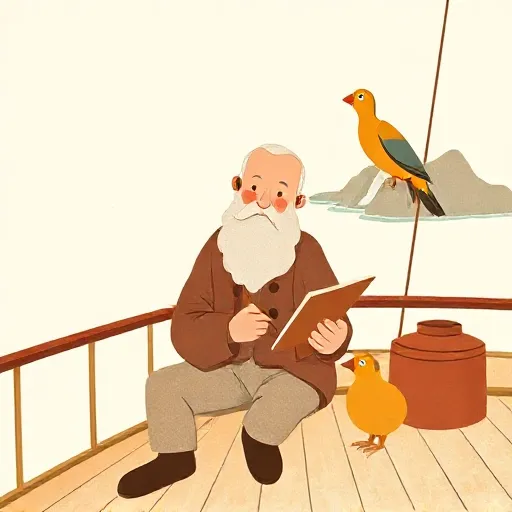
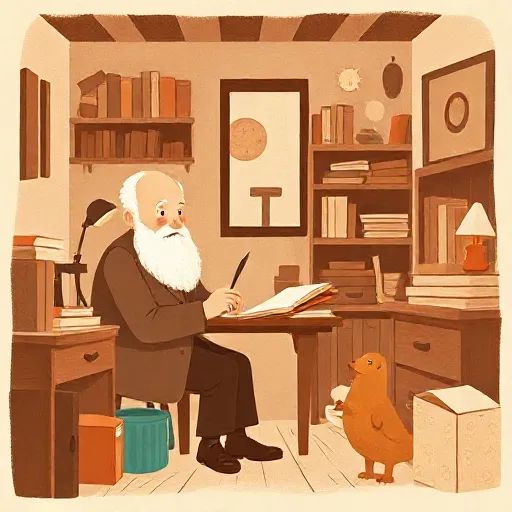
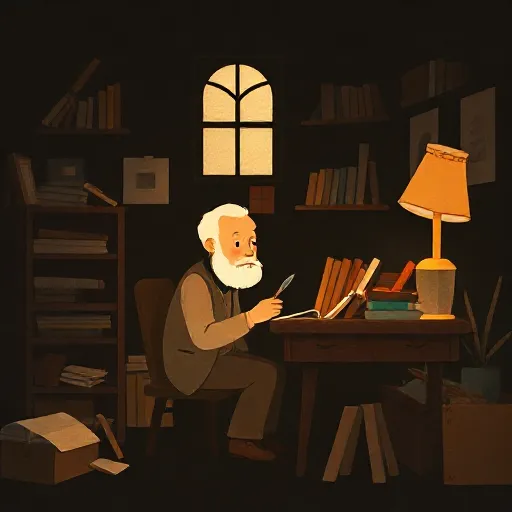
In October 1836, a 27-year-old Charles Darwin stepped off the HMS Beagle and returned to England. He had spent five years sailing around the world, collecting fossils, plants, and animals. But the most dangerous part of his thinking had not yet begun. In his study, he opened a red notebook and wrote the first faint thoughts that would terrify him for the next twenty years: species are not fixed. They change.
Darwin wasn’t the first to wonder if living things could transform over time. His own grandfather, Erasmus Darwin, had written poems about life evolving. At university in Edinburgh, Darwin had met the anatomist Robert Grant, who showed him the radical ideas of transformism—the view that new species arise from old ones. But these earlier ideas lacked a clear engine. They talked about a mysterious inner force pushing life to become more complex. Darwin wanted something more solid.
The breakthrough came in 1838, when Darwin read the economist Thomas Malthus. Malthus argued that human populations grow geometrically (like 1, 2, 4, 8, 16), while food supply grows arithmetically (1, 2, 3, 4, 5). Inevitably, there must be a struggle for existence. Suddenly Darwin saw it: this struggle wasn’t just for humans. It was the law of the whole living world. Every plant, every beetle, every bird produces more offspring than can survive. And that changed everything.
Why Does Life Look Designed? The Breeder’s Secret
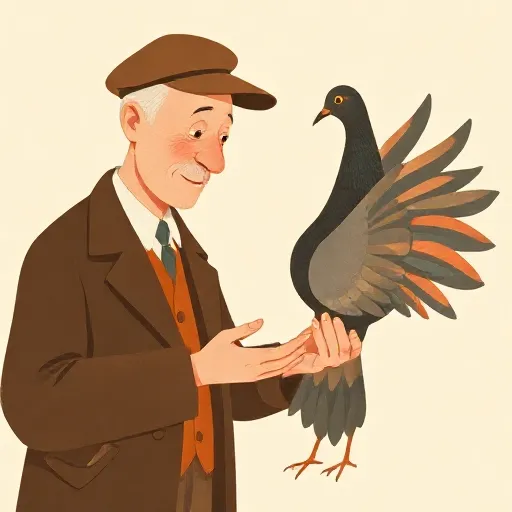
Darwin needed a way to connect the struggle for survival with species that did change. He found his model in domestic breeding. Farmers and pigeon fanciers knew that if you keep selecting the animals with the traits you want—a thicker coat of wool, a fluffier tail—you can reshape a whole breed. This is artificial selection. Humans act like a filter, deciding which traits get passed on.
Darwin’s radical move was to imagine a natural version of this filter. In his early notebooks, he drafted the idea with almost religious language, imagining a wise being that scrutinized every nerve and muscle, preserving the good and destroying the bad. By the time he wrote On the Origin of Species in 1859, he called this process natural selection. It works, he said, by the “preservation of favourable variations and the rejection of injurious variations.” No designer was needed—just time, tiny differences, and a brutal culling.
Many readers still heard an intentional push in his words. Darwin later regretted not calling it “natural preservation.” To quiet critics, he eventually adopted Herbert Spencer’s phrase survival of the fittest, which stripped away the hint of a conscious selector. The shift in language still fuels debates today about whether evolution has any direction or purpose.
The Web of Life and a Tree That Grows Forever
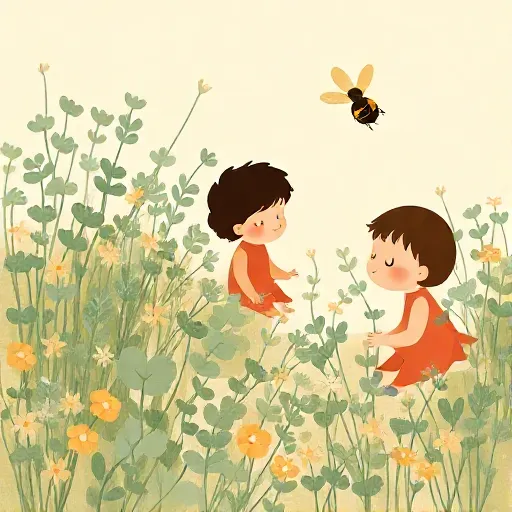
Natural selection isn’t just about fighting for food. Darwin saw a tangled web. He famously imagined the red clover fields of England: bumblebees pollinate the clover, but field mice destroy the bees’ nests, and cats keep mice in check. So the abundance of flowers partly depends on how many cats roam the village. This ecological vision meant that life shapes its own conditions—every interaction is a link in a chain of causes.
Darwin also pictured the history of all life as a single, branching tree. In the Origin he drew the only figure—a diagram showing dotted lines spreading from ancient ancestors like the limbs of an oak. At the tips, some branches wither; others keep sprouting. Species are not rungs on a ladder. They are twigs that split, diverge, and compete. A variety of pigeon, he argued, is just an incipient species—a species in the making. The blurry line between variety and species was not a mistake; it was the very engine of change.
Objections: Can Tiny Changes Really Build Eyes and Wings?
The Origin was published in November 1859, and the criticism was immediate. How could tiny, random variations add up to something as intricate as the vertebrate eye? Darwin answered that if a light‑sensitive spot gives even a slight advantage, natural selection can refine it over countless generations. Another difficulty was fossil gaps: if change was gradual, why didn’t we find smooth chains of intermediate forms in the rocks? Darwin pointed to the imperfection of the geological record—most of life’s history had simply been erased.
But the most damaging technical attack came from the engineer Fleeming Jenkin in 1867. Jenkin pointed out that any unusual variation in an individual would be diluted by breeding with normal mates—like pouring a drop of cream into coffee; the cream vanishes. This swamping argument suggested that slight variations could never pile up. Darwin never fully solved it with the inheritance ideas of his time. He offered a theory of pangenesis, imagining tiny invisible gemmules shed by body cells and gathered in the sexual organs. The gemmule theory was wrong, but it kept the conversation alive. Scientists would later discover genes, which clarify how variation can persist and spread.
From Beasts to Humans: The Moral Animal
For twelve years after the Origin, Darwin stayed mostly silent on the question that burned in everyone’s mind: what about us? In 1871 he published The Descent of Man, and his answer was frank. Humans are not exempt. Our bodies share a common ancestry with apes, but so do our minds. Courage, deceit, shame, imagination, even religious feeling—Darwin traced each of them to rudimentary forms in animals. Language, which Descartes had thought proved a non‑material soul, Darwin saw as an extension of animal cries and gestures, neither sudden nor supernatural.
The most startling chapter dealt with moral sense. Darwin sided with the Scottish philosophers who said humans have a built‑in ethical feeling, not just a calculation of pleasure and pain. But he rooted this moral sense in the social instincts of animals. A dog’s loyalty, a bird’s alarm calls, the ants’ self‑sacrificing work—these were the raw material that natural selection shaped into human conscience. Morality, he claimed, started when our ape‑like ancestors found that groups who protected each other outcompeted those who didn’t.
This natural history of ethics horrified many. Even Darwin’s defender Thomas Henry Huxley later argued that evolution gave us cruel instincts, which civilization must fight—not a foundation for good. In the 20th century, philosophers like G. E. Moore charged that you cannot logically jump from what is (an instinct) to what ought to be (a duty). That debate about evolutionary ethics—whether survival gives us a real moral compass—has never been fully settled.
Why the Peacock’s Tail Still Matters
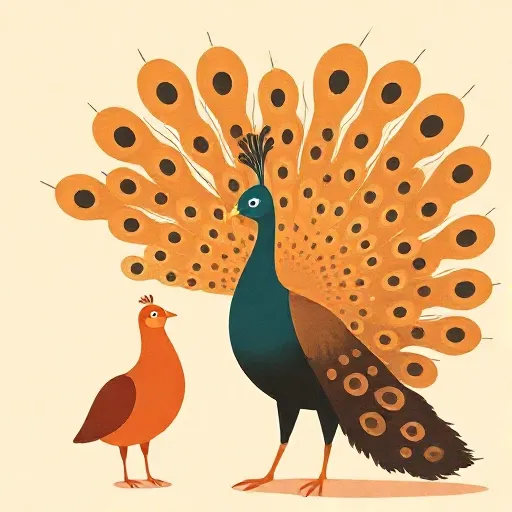
Darwin didn’t just explain the past. He changed how we see our own choices. When you feel a flash of pride, play a game of make‑believe, or pull your hand back from a flame, you’re using capacities that were shaped long before language existed. The peacock’s extravagant tail—so heavy and dangerous—is not for survival; it’s for attraction. Darwin’s theory of sexual selection showed that evolution can favor beauty, emotion, and social bonds, not just ruthless muscle.
Today, biologists still quarrel over how much evolution explains about the human mind. Some find love, art, and mathematics in the story; others insist that culture has loosened biology’s grip. But the central question remains Darwin’s: are we, at bottom, clever apes whose dearest values rest on ancient instincts? The answer matters because it shapes how we think about responsibility, meaning, and what it means to live a good life.
Think about it
- If every feeling of right and wrong came from instincts that helped our ancestors survive, would that make your sense of fairness any less real?
- Imagine you could design a living creature, and then nature took its course for a million years. Could the result be impossible to tell apart from something intentionally designed?
- If you watch a documentary about a penguin colony, do you see behaviors that remind you of human kindness, rivalry, or courage—and if so, does that change how you think about your own character?