Do You Have Free Will? A 13th-Century Monk’s Bold Answer
A Boy, a Vow, and a Dangerous Idea
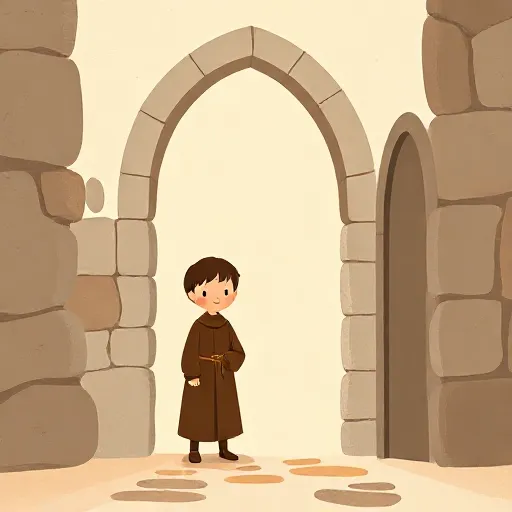
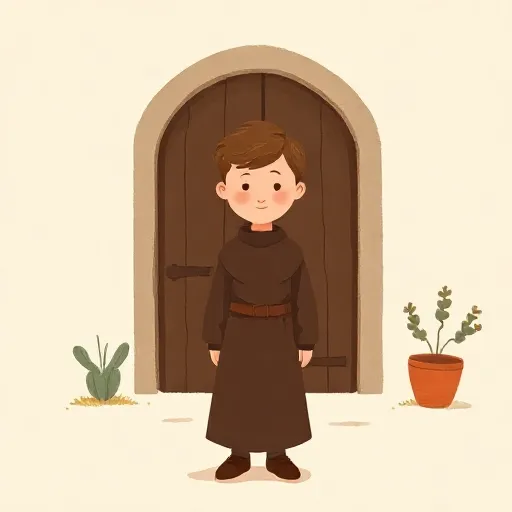
In 1260, a twelve-year-old boy named Peter John Olivi walked through the doors of a Franciscan monastery in Sérignan, southern France. He was joining a religious order that prized poverty and learning — and he would soon become famous for ideas that many people found alarming. Olivi spent his adult life teaching in southern France and Italy, writing a massive, largely unedited work called the Summa of Questions on the Sentences of Peter Lombard, and arguing for a view of the human will that set him apart from almost everyone else. Church authorities condemned his writings in 1283. Though he was later partly rehabilitated, his work was banned again after his death because he was linked to a controversial movement that wanted Franciscans to live in extreme poverty.
But the philosophical trouble went deeper than church politics. Olivi insisted on a kind of freedom that many thinkers thought impossible. He held that the will is not pushed around by anything outside itself — not by your upbringing, your emotions, your reasoning, or even by God’s direct action. This claim touched off a debate that would ripple through centuries.
Your Will: A First Mover, Not a Puppet

Most medieval philosophers agreed that every event must have a cause. If you decide to help a friend, something made you decide that — a thought, a feeling, a habit. Push back far enough, and you reach God as the first cause of everything. Olivi thought this picture got something wrong. If every choice has a prior cause that determines it, then your will is never truly free. It only feels free.
To show that we really do have free will, Olivi pointed to a list of attitudes that only make sense if we can choose otherwise. Think about zeal — that hot, angry reaction when you see someone do something wrong. You only feel zeal, he argued, because you believe the person could have freely avoided the bad act. If all actions were determined, that belief would be a massive mistake. Humans would be, as Olivi put it, “intellectual beasts” — creatures who think but never truly choose. He also listed friendship, shame, gratitude, hope, and carefulness. All of these, he said, would be hollow illusions without free will.
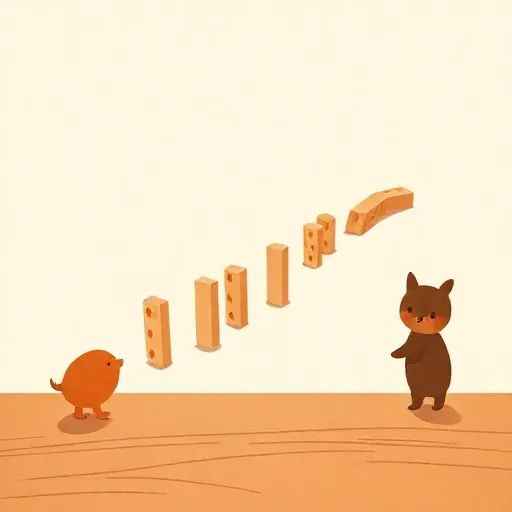
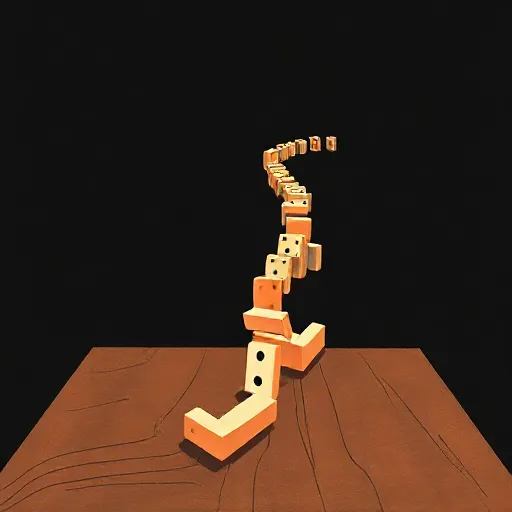
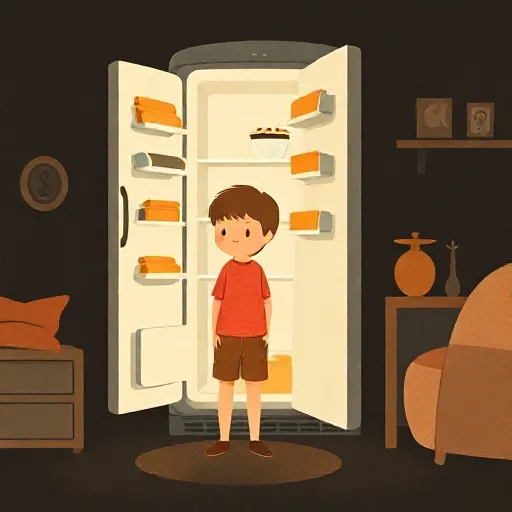
Olivi went further than most defenders of freedom. He argued that the will is a first mover: it can start an action all by itself, without being set in motion by anything else. When you pick a dessert, your will is not the last domino in a chain of causes. It is the very first one. He also claimed that even at the exact moment you choose to eat the cake, you retain the power to choose not to eat it. Many thinkers said you could only have been able to do otherwise before the choice, not at the same instant. Olivi’s idea — known later as synchronic contingency — was a breakthrough. John Duns Scotus (c.1266–1308), another Franciscan, would develop it into a full theory, but Olivi was the first to clearly state it.
The World, Seen Directly — No Inner Pictures Needed
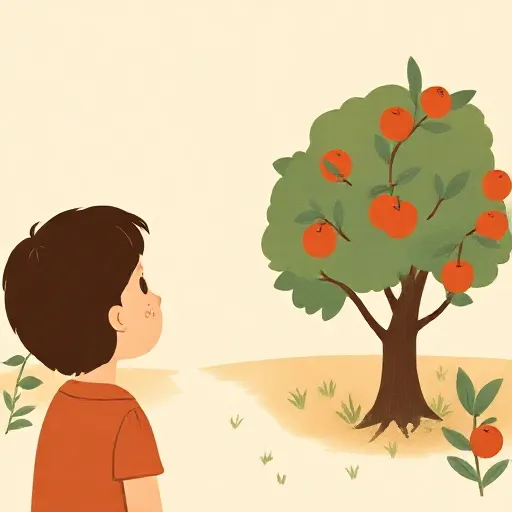
Many medieval thinkers believed that when you see a tree, your mind works with an inner image called a species. This species was thought to be a little picture of the tree, produced in your senses, and your mind would look at that picture to understand the tree. Olivi attacked this idea with a series of sharp arguments. He said that if you have to turn your attention to an inner species, then that species becomes the first object you perceive. You would be seeing the image, not the tree itself. That would make the tree an indirect, secondhand thing. But that’s not what it feels like to see. When you look at a friend’s face, you are not staring at a mental picture; you are directly in touch with the friend.
Olivi’s positive view, called an act theory, held that the act of seeing or thinking itself represents the object. There is no extra “veil” between you and the world. The mind reaches out with a kind of virtual attention — a focusing of your awareness toward the object. He was careful to say this attention is not a real thing flying out of your eyes. It is a mental directedness, like the way you can “look” at something even in a dream. This idea influenced later thinkers such as William Ockham, and in modern philosophy it resembles what is called the “adverbial theory of perception.” Olivi was one of the earliest direct realists — someone who says we know the world immediately, not through a screen of representations.
Personhood: More Than a Thinking Thing

Olivi didn’t just defend free will; he built a whole new understanding of what a person is. For him, being a person required two special abilities. First, you must be able to turn your mind back on itself — to know that you are the one who exists, thinks, and acts. He called this self-reflexivity. Even animals have a limited kind of bodily self-awareness (he thought the sense of touch allowed a dog to know its own body), but only an intellectual soul can know itself as a subject. Second, you must have a free will that can move itself. Olivi wrote that “personhood is the same as per se existence, governing, free, and reflexively turned (or turnable) to itself in a possessive way—that is, possessing itself by a certain free reflextion” In other words, to be a person is to own your own freedom.
This idea had consequences for how he understood the soul and body. Olivi rejected the standard view that the intellectual part of the soul is directly the form of the body. Instead, he said the soul has a sensory part that organizes the body, while the rational part is united to a “spiritual matter” and only through that to the body. This let him claim that the soul’s highest powers — intellect and will — are not material and can survive death, while still keeping the human being a single substance. The result is a picture of a person as an immaterial, free, self-aware center that uses a body. That picture would look surprisingly modern to later philosophers, even though Olivi was writing in the 1290s.
Why It Matters When You Choose Dessert

Today, scientists study the brain, genes, and environment, and they often say these factors shape our decisions in powerful ways. If everything about what you do can be traced to biology and upbringing, are you really free? Olivi would answer with a very old challenge: look inside yourself. He thought every human being has an inner certainty that they can choose. That certainty might be an illusion, but if it is, then huge parts of human life — blame, pride, love, even trying to improve yourself — make no sense. The next time you pause before picking between two desserts, ask yourself: is there any chain of causes that makes you take the chocolate, or is there a quiet space where you decide? Olivi would say that space is real. And that space, for him, is the core of being a person.
Think about it
- If a supercomputer could predict every choice you’ll ever make with perfect accuracy, would you still believe you are free?
- Olivi claimed you can always act against your own deepest habits. Have you ever surprised yourself by doing something completely out of character?
- If a friendly alien had no inner sense of “I” and no ability to choose, would it still be a person in the same way you are? Why or why not?