

Why the Smartest Plans for Society Often Fail
The Recipe Trap

Imagine you decide to bake a loaf of bread. You open a recipe book. It says “knead the dough until smooth.” But what does smooth mean? The book can’t tell you. You have to put your hands in the dough again and again until you get a feel for it. No amount of reading will replace that.
In the early 1920s, a young British history student named Michael Oakeshott was thinking about a similar puzzle, but on a much bigger scale. He looked at politics and asked: can we really run a society by following a set of perfect instructions? Oakeshott spent his life arguing that we can’t. Real knowledge — whether it’s baking, riding a bike, or making laws — is never just about rules. It always involves a kind of knowing that you can only get by doing things, making mistakes, and building judgment over time.
Knowing How vs. Knowing That

Oakeshott made a distinction between two kinds of knowledge. He called the first technical knowledge. This is knowledge of facts and rules that can be written down, memorized, and applied by anyone — even someone with no experience. A recipe is technical knowledge. So is a driving manual that tells you to press the brake when you see a red light.
The second kind he called traditional knowledge. This is “knowing how” rather than “knowing that.” It grows only from practice and experience. It involves judgment — the ability to handle rules wisely, not just follow them. A skilled baker doesn’t measure everything; they know when the dough is ready by how it feels. A good driver knows when to brake gently even before a light turns red, because they’ve learned to read the traffic.
Even the simplest rule needs judgment. Imagine a sign that says “no vehicles in the park.” Does that include a child’s tricycle? An ambulance? Rules never interpret themselves. Oakeshott thought this gap between a rule and its real-world use is everywhere in life, and especially in politics. You can’t govern a country just by applying a checklist.
The Danger of the Perfect Plan

What happens when people forget the limits of technical knowledge? Oakeshott gave a name to that mistake: Rationalism. For him, Rationalism was the belief that there is a correct answer to every practical question, and that you can find it just by applying rules or calculating outcomes.
A rationalist in politics tries to design a perfect society from scratch, using science or a big theory. They trust reason like a machine and ignore everything that can’t be turned into a formula — including the habits, customs, and traditions that real communities have grown over centuries. Oakeshott pointed out that even the grandest political ideologies, like Marxism, actually began as someone’s interpretation of a particular way of doing politics. They were not discovered in a laboratory; they were carved out of experience. But once they are turned into a fixed blueprint, their followers treat them as universal truths and try to force them on everyone.
Oakeshott saw this over and over in modern history: leaders who thought they had a scientific plan for society, whether it was an empire, a communist utopia, or a perfectly efficient market. He called such states enterprise associations — communities organized like a business to achieve a single big goal. When a government turns into a manager with a master plan, he warned, individual freedom quietly disappears. The Rationalist mistake is not just wrong; it can be dangerous.
Why You Can’t Play Chess with Soccer Rules
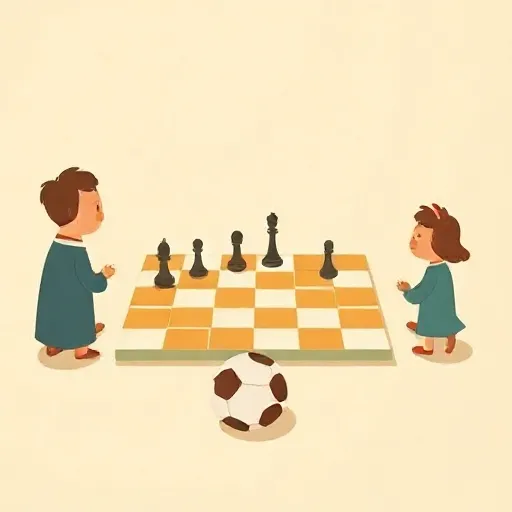
Oakeshott didn’t only worry about politics. He thought the whole world of human understanding was split into distinct modes of thinking. History, science, practical life, and poetry are each a different mode. Each has its own rules for what counts as true, what counts as evidence, and how you argue a point. A mode is like a whole universe of ideas that makes sense on its own terms.
He argued that you cannot use one mode to prove something in another. A scientific experiment can’t settle a historical question. A historian can’t decide a moral dilemma with a document. If you try, you commit what he called ignoratio elenchi — the fallacy of irrelevance. It would be like trying to get a goal in soccer by moving pieces on a chessboard.
For Oakeshott, the healthy way to connect these modes is not argument but conversation. In a conversation, different voices meet but no one has to win. He thought a civilized society was one where people could talk across these boundaries without demanding that one kind of thinking rule over all the rest. “To insist on the primacy of any single mode,” he wrote, “is not only boorish but barbaric.”
Two Kinds of Government: Hedges or a Destination
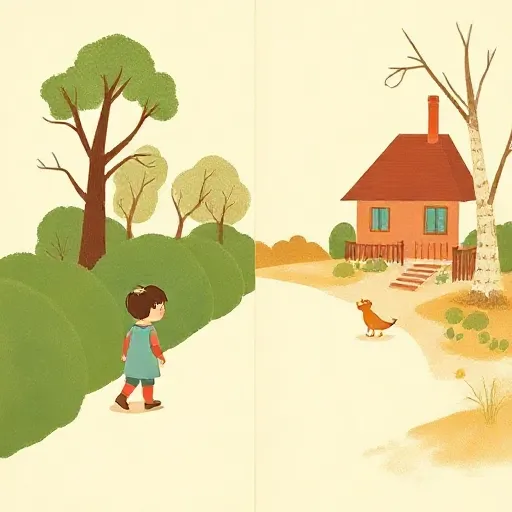
Oakeshott took this love of conversation and difference and poured it into his picture of a free society. He drew a sharp line between two ways of thinking about a state.
The first he called civil association. Think of it as a game with rules that everyone agrees to follow, but the rules don’t tell you where to go. They are like the hedges on a country road: they keep you on the path without prescribing your destination. In a civil association, laws are what he called noninstrumental. They don’t try to produce a particular result; they simply set fair boundaries so that millions of people can chase their own goals without crashing into one another. Oakeshott called these citizens cives and the law lex. The important thing is that you follow the law because it is law — because it has been properly made by a shared procedure — not because you agree with its effects.
The other kind he called enterprise association. Here the state is like a corporation with a mission: it wants to build an empire, maximize wealth, or create a perfectly equal society. Everyone living under it is expected to serve that purpose whether they chose it or not. Oakeshott used terms like universitas for such a collective undertaking. In an enterprise state, you are not an independent person; you are a role-player in someone else’s project.
No real country is a pure civil association, just as no country is a pure enterprise. Real states are always a messy mix. But Oakeshott thought the concept of civil association was crucial because it alone explains how law can be binding and still respect your freedom. He believed that individual liberty meant freedom from being legally forced to serve someone else’s plan — a version of an old republican idea that goes back through thinkers like Immanuel Kant. In the civil condition, the law is a hedge, not a yoke.
Why an Old Philosopher Still Speaks to You

Oakeshott’s ideas matter today because we are surrounded by temptations to replace judgment with algorithms. When a streaming service tells you what to watch, or a planning app maps out every minute of your day, that’s technical knowledge treating you as a predictable unit. Oakeshott would ask: where is the room for your own experience and your own power to choose?
He thought education was a perfect example. He wanted schools to be places where you encounter the great “voices” of history, science, art, and philosophy — not as a list of facts to be tested, but as a conversation you are invited to join. A liberal education, for him, was not about training you for a job; it was about giving you the judgment to know what to do when no rule fits. That kind of judgment, he believed, is the only real protection against the Rationalists who promise a perfect plan but deliver a cage.
Next time you face a problem that a rulebook can’t solve — a friendship in trouble, a decision with no obvious right answer — you are standing where Oakeshott stood. The answer won’t come from a flowchart. It will come from the kind of knowing that you can only build with your own hands, over time.
Think about it
- Oakeshott said you can’t learn to ride a bike from a manual. Can you think of a time when a set of instructions or rules completely failed you, and you had to rely on something that felt more like a “feel” for the situation?
- If a government created a perfect, science-based plan to make everyone healthy, but the plan forced every citizen to eat the same meals every day, would that be a civil association or an enterprise? Does it matter as long as the plan works?
- Should a school teach you how to follow rules or how to make good judgments when no rule fits? Can you do both?