
What If the World Is Built from Neither Mind nor Matter?
A Red Patch: Physical or Mental?

Imagine you stare at a ripe tomato. You see a bright red color. Is that red patch a physical thing – part of the tomato’s surface? Or is it a mental sensation, something happening inside your own mind? This question sits at the heart of the mind-body problem: how do minds and physical objects relate?
For centuries, philosophers gave three main answers. Dualism says mind and matter are two totally different kinds of stuff. Materialism (also called physicalism) says everything is physical – mental things are just brain processes. Idealism says everything is mental – physical objects are just ideas. But a small, bold group of thinkers proposed a fourth option: what if the basic building blocks of the world are neither mental nor physical? They called this view neutral monism.
Neutral monism holds that there are fundamental neutral entities. They have no mental or physical nature of their own. When these neutral elements get arranged in certain ways, they form physical things like tomatoes and brains. Arranged differently, they form mental episodes like seeing red or feeling pain. So a single neutral entity can show up in both a physical story and a mental story, without ever being intrinsically one or the other.
Three famous philosophers developed this idea in the late 19th and early 20th centuries: Ernst Mach (1838–1916), William James (1842–1910), and Bertrand Russell (1872–1970). Each started with familiar experiences and argued that what we experience is not mental or physical at base – it is something more primitive.
Mach and James: Sensations and Pure Experience

Mach was a physicist who also studied the senses. He noticed that a simple color – say, red – appears in two different scientific stories. If you study how red depends on light sources and other colors, you are doing physics; that red counts as a physical object. If you study how red depends on the retina of your eye, you are doing psychology; that same red counts as a mental sensation. But the red itself, Mach insisted, is the same neutral element. Its label comes only from the group it belongs to and the relations it has.
For Mach, the whole world is a vast, tangled web of these neutral elements. A material object is just a bundle of elements that stick together in a stable pattern. Your self – your ego – is also a bundle. Bodies and selves are convenient fictions we use for everyday purposes, but strictly speaking, only the neutral elements and their relations are real.
William James pushed a similar view under the name “radical empiricism.” He wanted to get rid of the idea of consciousness as a mysterious, diaphanous container that holds our experiences. Instead, he proposed that the starting point is pure experience – the raw, unlabeled flow of what is immediately present, before we carve it up into “mind” and “matter.”
James gave a famous example: the paper you see and your seeing of it. If you take them as they are given, there is just one undivided piece of pure experience. Call it “the paper” in one context, and it plays the role of a physical thing. Call it “the seeing” in another context, and it plays the role of a mental state. Perception, at its most basic, is not a relation between a mind and an outside world. It is a single neutral event standing in two different sets of relations.
Russell: Neutral Events and the Brain
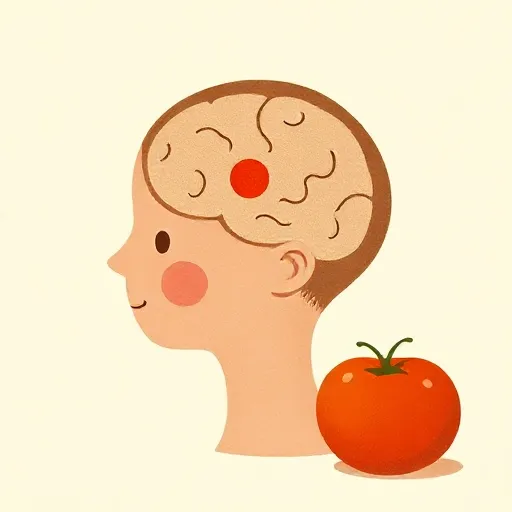
Bertrand Russell was initially a critic of neutral monism, but he converted around 1918 and remained a neutral monist for the rest of his long career. He brought a powerful tool to the project: logical construction. Instead of believing in mysterious inferred entities, you build them out of things you already know directly. This fit Russell’s motto: “Wherever possible, substitute constructions out of known entities for inferences to unknown entities.”
Russell started with what he knew most directly: his own sensations and perceptions. He argued that a sensation like a noise, or a red patch, is not a mental act directed at an object. There is just one item – the noise itself, or the color patch – which is neither mental nor physical intrinsically. He called such an item an event: something occupying a tiny bit of space-time.
The twist: Russell believed that events exist far beyond our experience. Based on our own percepts, we can cautiously infer a vast world of events that “do not form part of any experience.” The physical world described by science is a huge system of causally ordered events. Physics tells us how they relate – their structure – but does not reveal their intrinsic qualities. The only events whose inner qualities we know directly are our own perceptions: the redness of a red patch, the coldness of ice. Those inner qualities are not mental; they are just what the events are like.
Now, when you see a tomato, the red patch you perceive is, according to Russell, an event inside your brain. It is connected by complex causal chains to the group of events that make up the tomato, but it is not identical with them. This move solved a big problem: different people (or the same person in different conditions) can see the same tomato as having different, even incompatible, colors. If all those colors were directly part of the tomato, contradictions would arise. By placing the perceived colors in our brains, Russell avoided the chaos while still holding that the brain events themselves are made of neutral stuff.
The Promise: Closing the Gap Between Mind and Body
Why would anyone adopt such a strange view? Neutral monism offers several powerful advantages.
First, it is simpler than dualism. You only need one kind of basic stuff, not two. For Russell, this “immense simplification” was a major attraction.
Second, and more importantly, neutral monism seems to solve the mind-body problem. If mind and matter are both constructed from the same neutral events, there is no deep mystery about how they can interact. A red sensation and a brain state are just the same neutral event, grouped differently. Causation between mental and physical events becomes causation between different arrangements of the same neutral elements. The troubling gap that faces dualism and even some versions of materialism appears to close.
Third, the view promises to unite science. Both physics and psychology deal with the same underlying neutral events, just under different descriptions and laws. Mach saw this as a way to build a unified picture of all knowledge without forcing one field to reduce to the other.
Finally, for James, neutral monism achieved something even more dramatic: direct contact with reality. In perception, the very same piece of pure experience is both the thing perceived and the perceiving. There is no veil of ideas between you and the world.
The Suspicions: Is It Just Hidden Idealism?
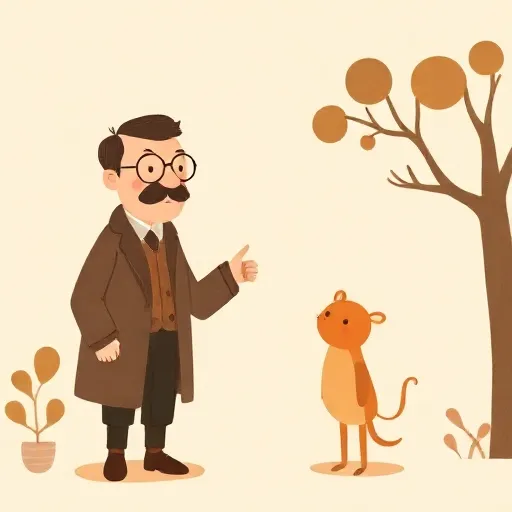
Despite its appeal, neutral monism has faced fierce criticism from the start. The most common charge is the mentalism suspicion: the supposedly neutral entities – sensations, pure experience, percepts – look awfully mental. After all, we usually think of a sensation as something conscious, something that belongs to a mind. If the basic stuff is a collection of sensations, isn’t neutral monism just idealism in disguise?
Mach, James, and Russell were well aware of this objection. They replied that a sensation like a red patch is not intrinsically mental. It becomes mental only when it plays a certain role in a larger system of elements that constitutes a subject. By itself, a red patch no more requires a mind than a rock does. Critics, however, retort that this strips sensations of their one sure feature – that they are felt. If the red patch is not experienced by anyone, it is not a sensation at all. This debate continues, with no easy resolution.
A deeper worry is the problem of experience. Even if we accept that neutral elements are not mental, can they ever add up to conscious experience? The philosopher David Chalmers (born 1966) has argued that there is a “quality/awareness gap.” No matter how many neutral qualities you arrange, they never logically force awareness of those qualities to exist. Just having redness instantiated somewhere does not mean anyone is seeing it. Neutral monists typically answer that awareness just is a complex pattern of causal relations among neutral events. When a bundle of events in a brain interacts with another event (like a red patch) in the right way, that interaction itself is the seeing. But critics find this unsatisfying – it seems to leave out the “what-it-is-like” of experience.
Why It Still Matters: New Kinds of Neutral Stuff
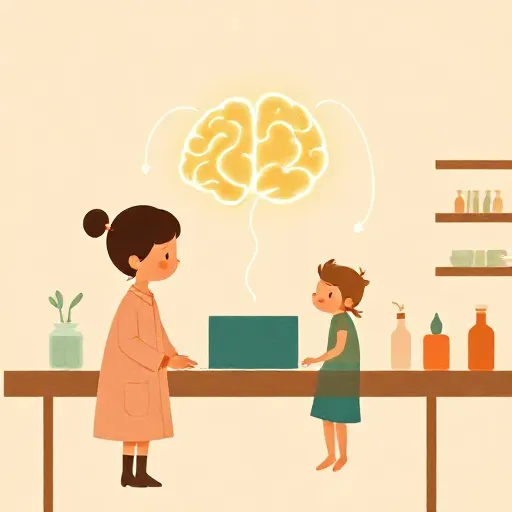
Neutral monism is far from a historical curiosity. In recent decades, it has returned to the center of philosophy of mind.
Many contemporary thinkers are drawn to Russellian monism, named after Russell’s idea that physics describes only the structure of the world, not its inner nature. The thought is that the intrinsic properties of physical particles – whatever they are – might also serve as the basis for consciousness. If those intrinsic properties are neutral – neither purely mental nor purely physical – we get a new form of neutral monism.
One lively version is panqualityism. It proposes that the simple qualities we encounter in experience – redness, sweetness, roundness – are the intrinsic properties of fundamental physical entities. These qualities are not themselves mental (redness does not feel anything) nor physical in the sense of being a measurable structure. When arranged in the extraordinary complexity of a brain, they somehow give rise to conscious awareness. This view revives the old neutral monist idea in a new key.
Others have looked beyond experience altogether. The philosopher Thomas Nagel (born 1937) has argued that the most basic constituents of the universe have properties that are both mental and physical, but also something more fundamental that explains why they have both. Still others have proposed that pure information – understood mathematically – could be the neutral base of reality.
So the question you faced with the red patch remains wide open. Is the world built from mind-stuff, physical-stuff, or something neutral that we are only beginning to grasp? The neutral monist bet is that the answer lies in a third, more basic kind of thing – and that finding it could finally show how a brain can feel.
Think about it
- If a scientist could ever prove that a certain pattern of neutral events is exactly what pain feels like, would that mean pain isn’t really “mental” anymore? Would you still mind feeling it?
- When you see the color red, do you think that redness exists anywhere outside your experience? Could a rock be red if no one is looking at it?
- Suppose a computer’s circuits were arranged from elements that are neither mental nor physical, just like the neutral monist’s world. Could that computer ever actually see red, or would it just be acting as if it does? What would convince you one way or the other?