Why Does “I Need It” Feel So Much Stronger Than “I Want It”?
Is Every “I Need” Really Just an “I Want”?

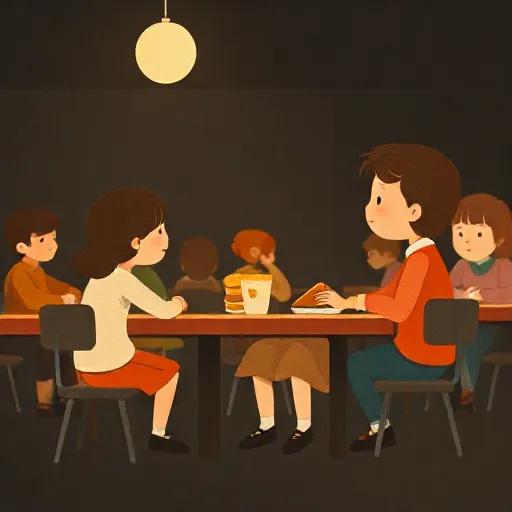
Imagine you’re sitting in the school cafeteria. Your friend Maya holds out her sandwich and says, “I need this — I haven’t eaten all day.” A minute later, another friend points to the latest phone and says, “I need that model; everyone has it.” Both sentences use the word need, but they hit you differently. The first feels like it calls for help. The second sounds more like a strong wish. Why? Philosophers have been asking this exact question for decades: can a need, by itself, give someone a moral reason to do something?
One side says no. The mid-20th-century philosopher Brian Barry argued that every need statement is really a shortcut. When you say “I need X,” you’re always leaving out the end: “I need X in order to achieve Y.” Maya needs the sandwich to stop being hungry. The phone, too, is needed for some purpose — maybe to feel included. Barry thought that what does the moral work is always the hidden Y, never the word “need” itself. If the end isn’t important, the need claim has no special force. From this view, needs are elliptical — they’re incomplete until you fill in the goal.
But other philosophers push back hard. David Wiggins (born 1933) pointed out that some needs don’t seem elliptical at all. If a parent says, “The baby needs its diaper changed,” it would be bizarre to ask, “What for?” The purpose — keeping the baby from harm — is already built into the meaning of the word. Wiggins calls these categorical needs: needs where the goal is fixed, and the harm of not meeting them is part of the package. A sandwich for the hungry isn’t a need because it leads to something else; the need and the avoidance of harm are one and the same thought. So maybe some needs really do have an independent power to demand action.
The Sleeping Friend and the Stranger on the Street

Even if a need is categorical, it doesn’t automatically create a duty for everyone around. A philosopher named Judith Jarvis Thomson made a useful distinction. Imagine your best friend stayed up all night and is now barely able to keep her eyes open. Thomson would say she has a dispositional need for sleep — all humans do. But right now, she also has an occurrent need: the need is active and unmet. If you have a spare bed, that’s when you feel a tug to offer it.
Now picture a different scene. You’re walking home and see a stranger collapse from heat exhaustion. You’ve never met them, but you still feel you ought to call for help. Some philosophers argue that only existing relationships — like family or friendship — can turn a need into a real obligation. But urgent cases like this make that idea hard to hold. Soran Reader (2007) tried to stretch the idea of a “relationship” to include a brief encounter, but many thinkers find it simpler to say: extreme need can create a duty even between strangers.
This tension is everywhere in real life. Should a country spend huge sums to treat a rare disease for a few citizens, or send that money to save many more lives from famine overseas? Some philosophers think we owe our own people a wider set of needs (like advanced medical care), while our duties to distant strangers are only about life‑or‑death emergencies. Others argue that where needs are at stake, impartiality should rule. Digging into the nature of need doesn’t just clarify words — it scrambles our sense of who we have to help.
But Who Decides What People Really Need?

Skeptics often point to a messy fact: people claim wildly different things as “needs.” A member of a nomadic desert tribe might say she needs camels, flatbread, and a sword. A city‑dweller might say he needs broadband internet and a subway pass. If needs are supposed to be objective and universal, how can they look so different? Worse, things that start out as luxuries — like refrigerators or smartphones — often come to feel like needs over time. The suspicion creeps in: maybe a need is just a desire that society has decided is respectable.
Philosophers who defend the power of needs reply with a crucial distinction: the difference between a need and its satisfier. All human beings share a need for proper shelter, but in a hot desert that need is satisfied by a well‑ventilated tent, while in a freezing city it’s satisfied by a heated apartment. The need itself doesn’t change; the way you meet it does. That’s why seeing different satisfiers across the globe doesn’t prove that needs are invented — it just proves that context matters.
A related worry is that needs and desires blur together. After all, many children genuinely don’t want the vegetables they need. Harry Frankfurt (1929–2023) tackled this by sorting needs into three buckets. A free volitional need is really just a desire you could give up — you need a new video game only because you want it. A constrained volitional need is something you can’t stop wanting, like an addiction, and a non‑volitional need is entirely independent of your desires, like a sick person’s need for medicine. For Frankfurt, only the last two kinds involve genuine harm if they go unfulfilled, and only those have the moral weight we normally attach to the word “need.” In short, real needs are tied to harm, not just to strong wishes.
From Sandwiches to Surgery: What Makes a Need “Basic”?

If only some needs matter morally, how do we pick them out? David Wiggins gave an influential answer. He said a need becomes vital when the harm of not meeting it is both grave and entrenched — meaning it’s not something you can easily work around — and there are few substitutes. Food and clean water are vital needs; you can’t just decide to stop needing them, and nothing else quite replaces them.
Another philosopher, David Miller (born 1942), ties needs to the idea of a minimally decent life in the society you belong to. In every society, you need enough food and safety to avoid harm — those are basic needs. But in a society where most people read and write, literacy becomes a societal need: without it you can’t live a decent life there, even though humans survived for millennia without it. Miller’s view explains why having a phone might be a need for a teenager in a connected city today, while it wasn’t a century ago. The standard isn’t just survival; it’s being able to function without shame in your own time and place.
These theories share a common core: normatively important needs are the ones that are necessary, inescapable, and linked to serious harm. They don’t depend on your particular hobbies or plans. David Braybrooke (1924–2013) went further and asked: what do you need to carry out the basic roles most people play — citizen, parent, householder, worker? His list included food, rest, companionship, education, freedom from harassment, and even recreation. The idea is that we can figure out objective needs by looking at the shape of a typical human life, not by asking people what they feel like wanting.
When There’s Not Enough to Go Around
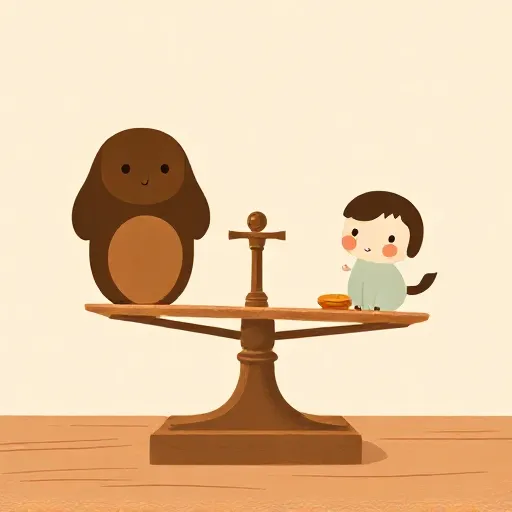
Suppose we agree that real needs create duties. The next headache is practical: what if we can’t meet everyone’s needs? Imagine two people, Elena and Kai, both need extra calories to stay healthy. Elena is short by 1000 kilocalories a day, Kai by 500. You have exactly 600 kilocalories to give. What’s fair?
One simple rule says: distribute in proportion to the size of each person’s claim. You’d give Elena twice as much as Kai — 400 kcal to Elena, 200 to Kai. After that, Elena is still 600 kcal short, Kai 300 kcal short. The result feels unfair; the needier person ends up with the bigger remaining gap. Another rule says: aim to make their unmet needs equal. You’d give Elena 450 kcal and Kai 150, so both end up 550 short. But what if Kai is much better at turning food into energy? Giving her fewer calories might be a waste, while Elena needs more help for a smaller gain. That rule could punish people for being efficient users of aid.
A third rule says: just minimize total unmet need, like a charity trying to get the most bang for its buck. That might mean ignoring Elena entirely if Kai’s body responds well to small amounts, which seems cold. A weighted priority principle tries to balance things by counting a reduction in need for the worse-off person as more important, but it can still lead to strange results — like treating a thousand small headaches instead of one life‑saving surgery.
The philosopher David Miller suggests that in the end, there’s no single flawless formula. We face a constant tug between meeting needs efficiently and treating equally needy people the same way. In real life, we often settle this through democratic decisions, but the tension never fully disappears. Even a government dedicated to helping the needy has to make heartbreaking choices about whose need comes first.
Why This Matters in Your Own Life

Back in the cafeteria, Maya said she needed the sandwich. You probably felt a pull to offer a bite — not because you’d calculated a formula, but because her need seemed real and urgent. That pull is what philosophers are trying to understand. The debate about needs isn’t just for governments and global aid agencies; it plays out in your friendships, your family, and the choices you make about sharing what you have.
If you think needs are just loud wants, it’s easier to shrug them off. But if you think some needs come with a built‑in demand to help, you might start looking at the world differently. The kid who needs a partner for a group project, the elderly neighbor who needs company, the stranger online raising money for surgery — each case activates the same ancient puzzle: does the simple fact that someone needs something create a reason for you to act? Philosophers haven’t settled it, but they’ve given you the tools to think more clearly about why your own gut reactions might be on to something real.
Think about it
- If your best friend says she “needs” the same expensive sneakers everyone else has, do you have a stronger duty to help her than you would to help a stranger who “needs” a winter coat? Why or why not?
- Suppose your class can donate a box of supplies to only one of two villages. One village needs food, the other needs textbooks. How would you decide which need counts for more?
- Can a person be wrong about what they need — even if they truly, deeply believe they need it? What would it mean to tell them they’re mistaken?