Does the Word 'If' Sometimes Flip Meanings?
Locked Out: When a Key Becomes a Must
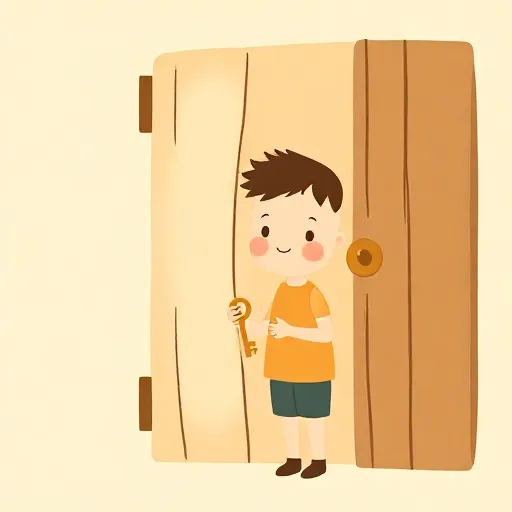
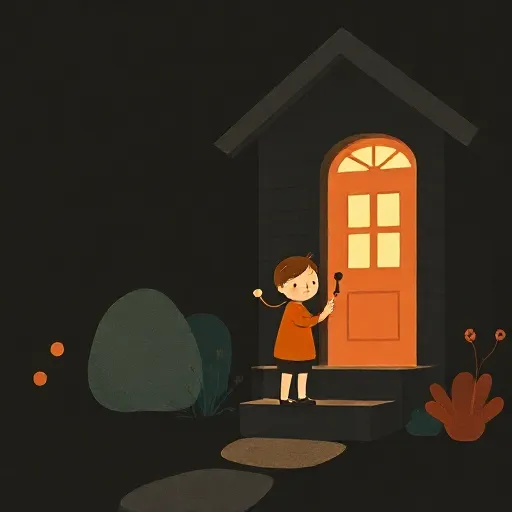
You’re standing in front of your house, the door is locked, and you haven’t got the key. To get inside without breaking a window or calling a locksmith, you must first use that key. Philosophers would say that using the key is a necessary condition for opening the door in a normal way. A necessary condition is something that absolutely has to happen for something else to happen — if you don’t have it, you can’t get the result.
Now flip the situation. If you actually did open the door normally, then you must have used the key. So “I opened the door” is a sufficient condition for “I used the key”. A sufficient condition is one that, if it occurs, guarantees that another thing also occurs. The door’s opening is enough to tell you the key was used.
These two ways of talking seem to fit together neatly. Many logic textbooks teach exactly this: a sentence of the form “If p, then q” means that p is a sufficient condition for q, and q is a necessary condition for p. That tidy rule is what some philosophers call the standard theory.
The ‘If’ That Reverses: Turning Keys into Guarantees
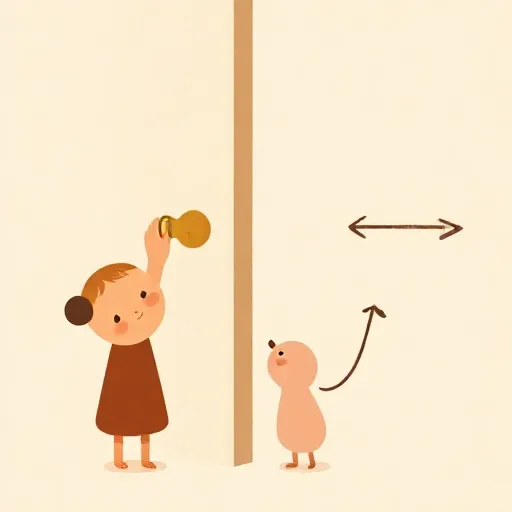
According to the standard theory, necessary and sufficient conditions are two sides of the same coin. If “I opened the door” is a sufficient condition for “I used the key”, then using the key is automatically a necessary condition for opening the door. This two‑way relationship is called reciprocity: B is necessary for A exactly when A is sufficient for B.
You can also say “I opened the door only if I used the key”, which sounds perfectly natural. So the standard theory treats “If p, then q” and “p only if q” as meaning the same thing. And there’s a neat logical pattern behind it. In classical logic, the sentence “If p, then q” is false only when p is true and q is false. That truth‑table rule, called the material conditional, makes the whole arrangement feel rigorous.
But that tidy picture starts to crack when you look more closely.
When ‘If’ Goes Crazy: Elephants and Gas
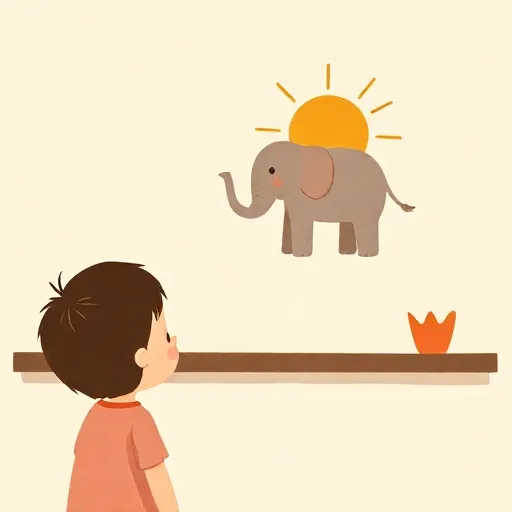
Here’s a strange result of the material conditional. Suppose two statements are both true: “Elephants have four legs” and “The sun is made of gas.” Then, according to the truth‑table, the sentence “If elephants have four legs, then the sun is made of gas” is true. But would anyone really say that the sun’s being made of gas is a necessary condition for elephants having four legs? That seems ridiculous.
It gets worse. On this rule, any true statement turns out to be a necessary condition for every true statement. And any false statement becomes a sufficient condition for any statement at all. For example, “If the moon is made of cheese, then two plus two equals four” would count as true, simply because the moon isn’t made of cheese. These are called the paradoxes of material implication. They show that the material conditional, when stretched to cover all uses of “if”, leads to very weird conclusions.
Screaming, Cellos, and Backward Logic
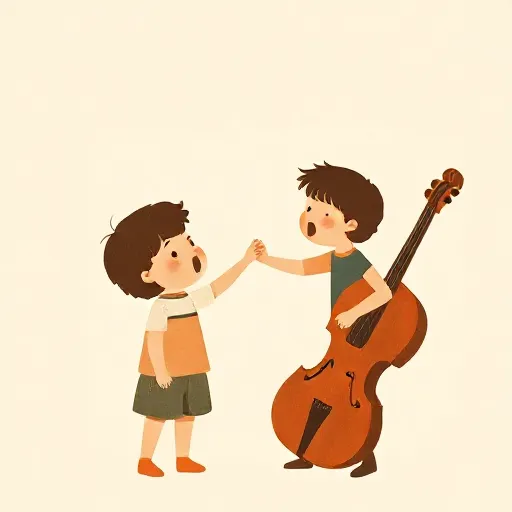
Even ordinary conversation resists the tidy swapping of the standard theory. The linguist James McCawley (1938–1999) gave this example:
If you touch me, I’ll scream.
Is my screaming a necessary condition for you touching me? Not in any natural reading. My scream depends on your touch, not the other way around. Yet the standard theory would insist that the consequent (“I’ll scream”) is a necessary condition for the antecedent (“you touch me”). That feels backwards.
A similar puzzle appears in a pair of sentences discussed by the philosopher David Sanford (20th century):
(iii) If he learns to play, I’ll buy Lambert a cello. (iv) Lambert learns to play only if I buy him a cello.
These two are not equivalent. Sentence (iii) states a condition under which I’ll buy the cello — perhaps Lambert needs to learn first. Sentence (iv) makes my buying the cello a necessary condition for Lambert learning to play. If the two were truly the same, then combining them would leave Lambert unable ever to get the cello, because each sentence would block the other. But they don’t cancel each other out; they just mean different things.
These examples suggest that the word “if” can signal different kinds of dependency — sometimes causal, sometimes evidential, sometimes something else — and the standard theory flattens them all into one.
The Sea Battle: Reasons Why vs. Reasons to Think
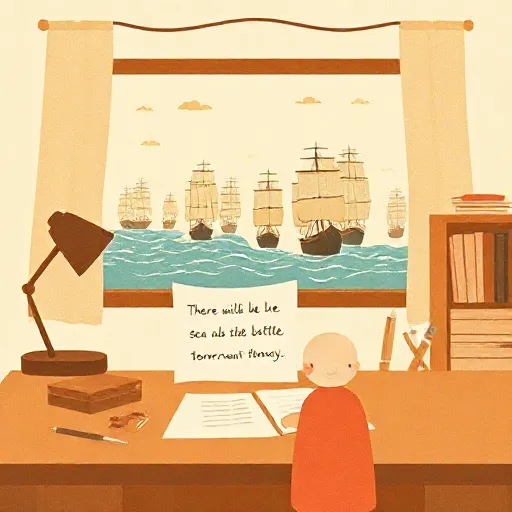
Consider a famous test case. Suppose someone says today, “There will be a sea battle tomorrow.” Now compare two claims:
(vii) The occurrence of a sea battle tomorrow is a necessary and sufficient condition for the truth, today, of that statement. (viii) The truth, today, of that statement is a necessary and sufficient condition for the occurrence of a sea battle tomorrow.
Most people find (vii) perfectly sensible: the battle makes the statement true. But (viii) sounds backward. As the philosopher David Sanford put it, the statement about the battle, if true, is true because of the battle; the battle does not occur because of the truth of the statement.
Philosophers mark a distinction here. The sea battle gives a reason why the statement is true. The statement’s truth, on the other hand, gives a reason for thinking — or a licence to infer — that the battle will happen, but not a reason why. This cracks the standard theory again: the notion of necessary and sufficient conditions can operate in at least two different ways, an inferential one (where reciprocity holds) and an explanatory one (where it doesn’t). In many everyday conditionals, the “if” clause offers an explanation, not just a logical guarantee.
So Many Kinds of ‘If’ — What’s a Philosopher to Do?
Once you notice the difference between reasons why and reasons for thinking, you start seeing it everywhere. Audrey wins the race and you celebrate — her win explains the celebration, but the celebration doesn’t explain her win. Solange attends a seminar that turns out to be good. In one story, her presence is the reason why it’s good; in another, her presence is just evidence that lets you infer the seminar will be good.
Even logic itself can be pulled in different directions. The standard theory’s tidy reciprocity works well for purely logical inferences: if a figure is a square, that is sufficient for it having four sides, and having four sides is necessary for being a square. But when the same words carry explanatory weight, the reversal often breaks down.
Philosophers who try to analyze big concepts — knowledge, memory, justice — want to state clear necessary and sufficient conditions. Yet if “if” is slippery, then writing something like “If you know that p, then p is true” demands care. Are we stating an explanation, a piece of evidence, or a purely conceptual link? The answer affects whether we can safely flip the sentence around.
Why It Still Matters: Thinking Clearly About “Because”
This isn’t just a puzzle for textbooks. In medicine, researchers talk about sufficient causes — conditions that, if present, guarantee a disease. But often they rely on a subtler idea from the philosopher J. L. Mackie (1917–1981): an INUS condition — an Insufficient but Necessary part of a condition that is itself Unnecessary but Sufficient for the effect. That kind of careful thinking helps epidemiologists understand why some people fall ill and others don’t. In law, proving causation often hinges on distinguishing what was necessary from what was merely enough.
In your own life, you use “if” to make promises, give warnings, and draw conclusions. If you say “If you study, you’ll pass,” are you offering a guarantee, or just a reliable recipe? Recognizing which kind of “if” is at work can keep you from being fooled by sloppy reasoning — and help you explain yourself more clearly. Language is one of the sharpest tools we have, but it can also trip us up. Philosophy exists to untangle those knots, one condition at a time.
Think about it
- Your friend says, “If you’re a great singer, you’ll win the talent show.” You do win. Does that mean you’re definitely a great singer? Why might it not?
- Can you think of a real‑life situation where “A only if B” sounds right, but “If A then B” sounds wrong — or the other way around? Try one involving a promise, a rule, or a threat.
- Imagine a bizarro world where every true sentence automatically made every other true sentence necessary. What would conversations sound like? Would you still trust the word “because”?